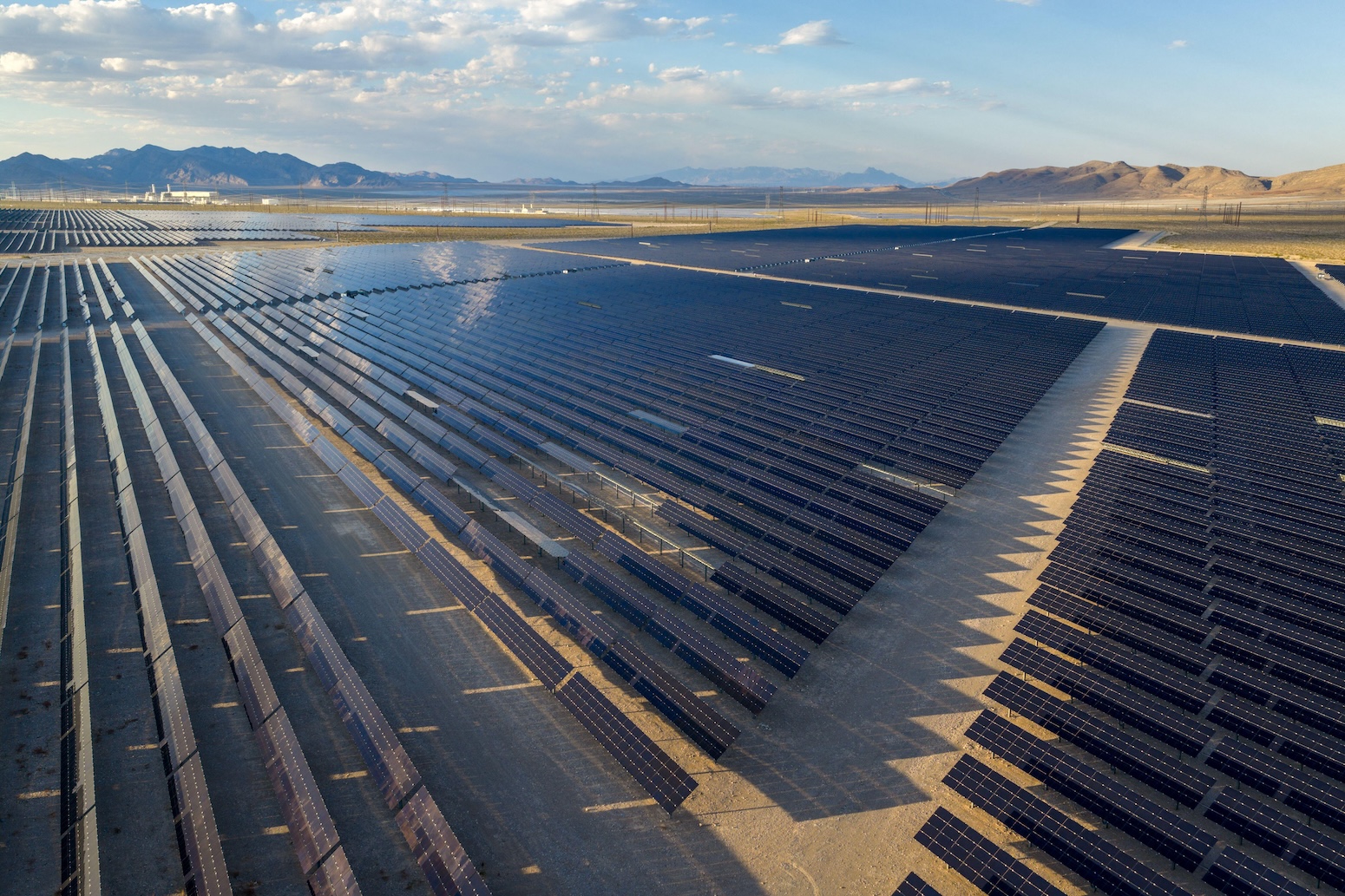
On a sunbaked plain in West Texas, rows of solar panels stretch to the horizon—part of a 1.5-gigawatt project that came online in early 2025, one of dozens fueling a quiet energy revolution. Despite a shift in federal policy toward fossil fuels, the United States is still sprinting toward a renewable future, driven not by mandates from Washington, but by economics, state action, and surging electricity demand. At the Center for Global Sustainability at the University of Maryland, our analysis of the latest energy data reveals a powerful truth: the transition is no longer negotiable—it’s inevitable.
After two decades of flat electricity use, demand is rising fast. Since 2020, it has already grown 7%, and projections show it could climb another 24% to 34% by 2035. Much of this surge comes from electrified transportation, AI-powered data centers, and cleaner heating and industrial systems. Meeting this demand affordably and reliably has made renewables the default choice. In 2024 and 2025, solar, wind, and battery storage accounted for more than 90% of all new electricity capacity added nationwide—47 gigawatts in 2024, 48 gigawatts in 2025. That’s enough to power over 15 million homes annually, built in just two years.
The numbers tell a clear story. Solar generation has nearly decupled in the past decade; wind has doubled. Together, they provided 19% of U.S. electricity in 2025, with solar at 9% and wind at 10%. Meanwhile, coal’s share has collapsed by more than half, even as temporary price swings nudged gas-fired plants and a few idled coal units back online. Over the last ten years, 112 gigawatts of coal capacity were retired—not because of sweeping federal bans, but because they couldn’t compete. Market forces, public health concerns, and state-level clean energy goals did what federal policy no longer prioritizes.
Natural gas still plays a role, supplying 39% of electricity last year, but its growth has plateaued. New gas plant construction remains low and steady, overshadowed by the plummeting cost of renewables. Solar panel prices have dropped 90% since 2010, battery storage costs have fallen 80% since 2015, and wind is now one of the cheapest sources of new power. These gains, accelerated by the Inflation Reduction Act and Bipartisan Infrastructure Law, have locked in momentum that policy shifts can’t easily reverse.
The message from the data is clear: the U.S. energy transition is being powered from the ground up. States, utilities, and investors are building a cleaner grid because it makes economic sense. As demand climbs and technology improves, the next decade won’t be about whether renewables can compete—it will be about how fast we can build them.