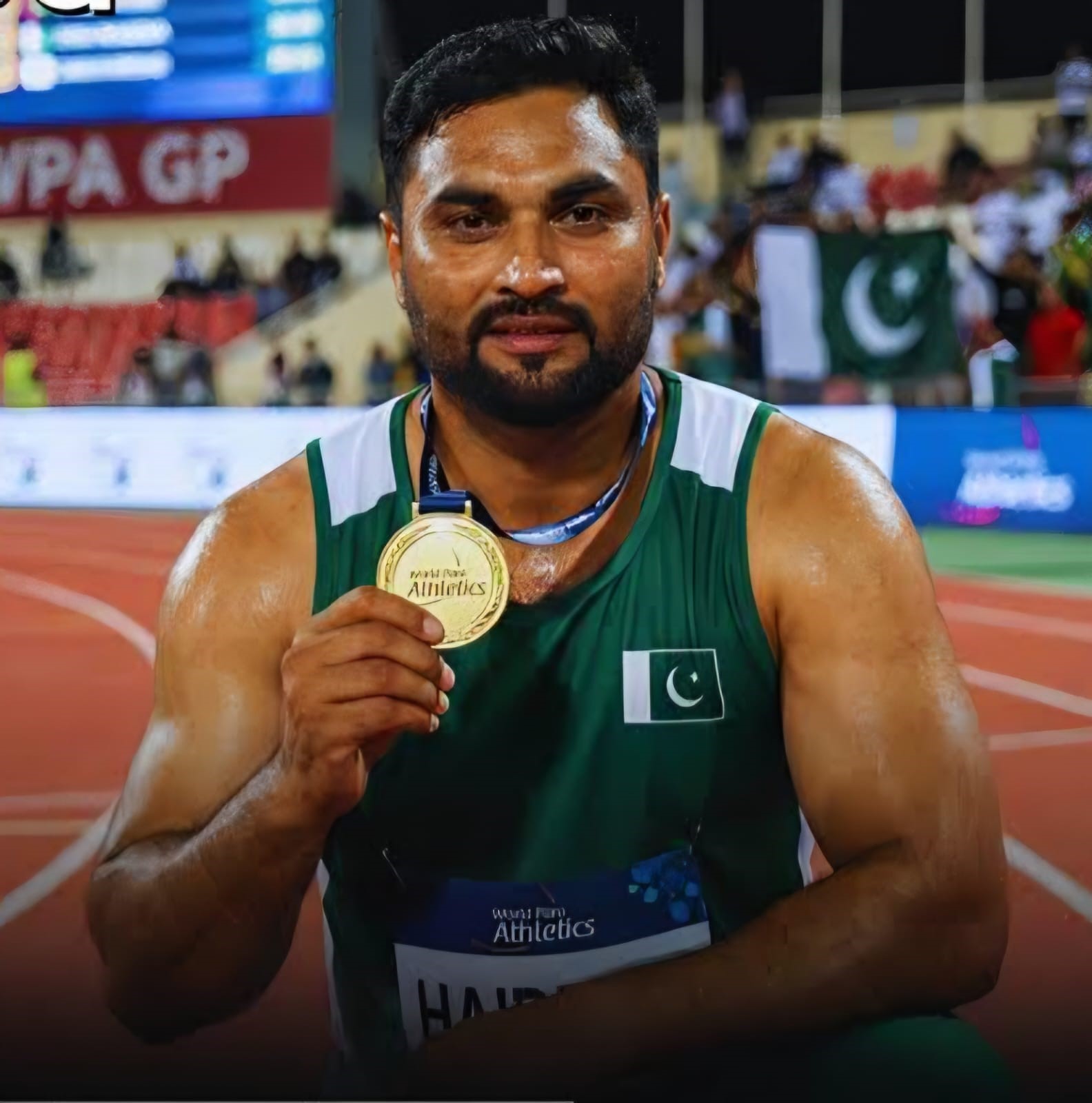
Haider Ali clutched Pakistan's Sitara-e-Imtiaz—one of the country's highest civilian honours—and his first words were not about himself, but about the two people who made the journey possible: his parents. The celebrated Paralympic athlete stood in Lahore and dedicated the prestigious award entirely to them, crediting their sacrifices, encouragement, and prayers as the decisive force that transformed him into one of Pakistan's most successful para-athletes on the global stage.
For Ali, the recognition represents far more than personal achievement. It is the fulfilment of a lifelong dream to serve his country and shine an international spotlight on Pakistan through sport. "It was always my dream to represent Pakistan and win international accolades for my country," he said. "Receiving the Sitara-e-Imtiaz is a proud moment for me, and I thank Almighty Allah, my parents, and everyone who supported me throughout this journey."
The athlete's rise to prominence has been bolstered by a constellation of supporters beyond his immediate family. The National Paralympic Committee of Pakistan stood by him throughout his career, providing the institutional backing essential for competing at the world's highest level. Pakistan WAPDA, the nation's water and power development authority, invested in his development with strong institutional support. And Rd. Rizwan Aftab Ahmed, CEO of ACTIVIT and Director at National Hospital DHA Lahore, played a vital role in ensuring Ali received proper medical care, nutritional guidance, and financial assistance—allowing him to focus entirely on performance without the distraction of logistical or health concerns.
"The support ensured that I received proper medical care, nutritional guidance, and financial assistance, allowing me to focus entirely on my performances and winning medals for Pakistan," Ali said, acknowledging the ecosystem of care that undergirds elite athletic achievement.
But even as he holds this honour, Ali's eyes are fixed firmly ahead. His biggest target now is the 2028 Summer Paralympics in Los Angeles, a goal he is pursuing with characteristic determination. In the nearer term, he is preparing for the Asian Para Games in October and the World Championship in Tashkent next year—competitions where he intends to add to his growing collection of international medals.
"My biggest target is the LA Paralympics 2028," he said. "I am working hard to continue winning medals for Pakistan and raising the national flag at the highest level of international sport."
What makes Ali's trajectory remarkable is not just his individual talent, but what it reflects about the power of sustained institutional and familial support. His story demonstrates that elite athletic achievement at the Paralympic level requires more than raw ability—it demands nutritional expertise, medical care, financial resources, and the unwavering belief of loved ones. In dedicating his award to his parents, Ali has honoured the foundation upon which his success rests, even as he charts a course toward even greater international recognition for his nation.