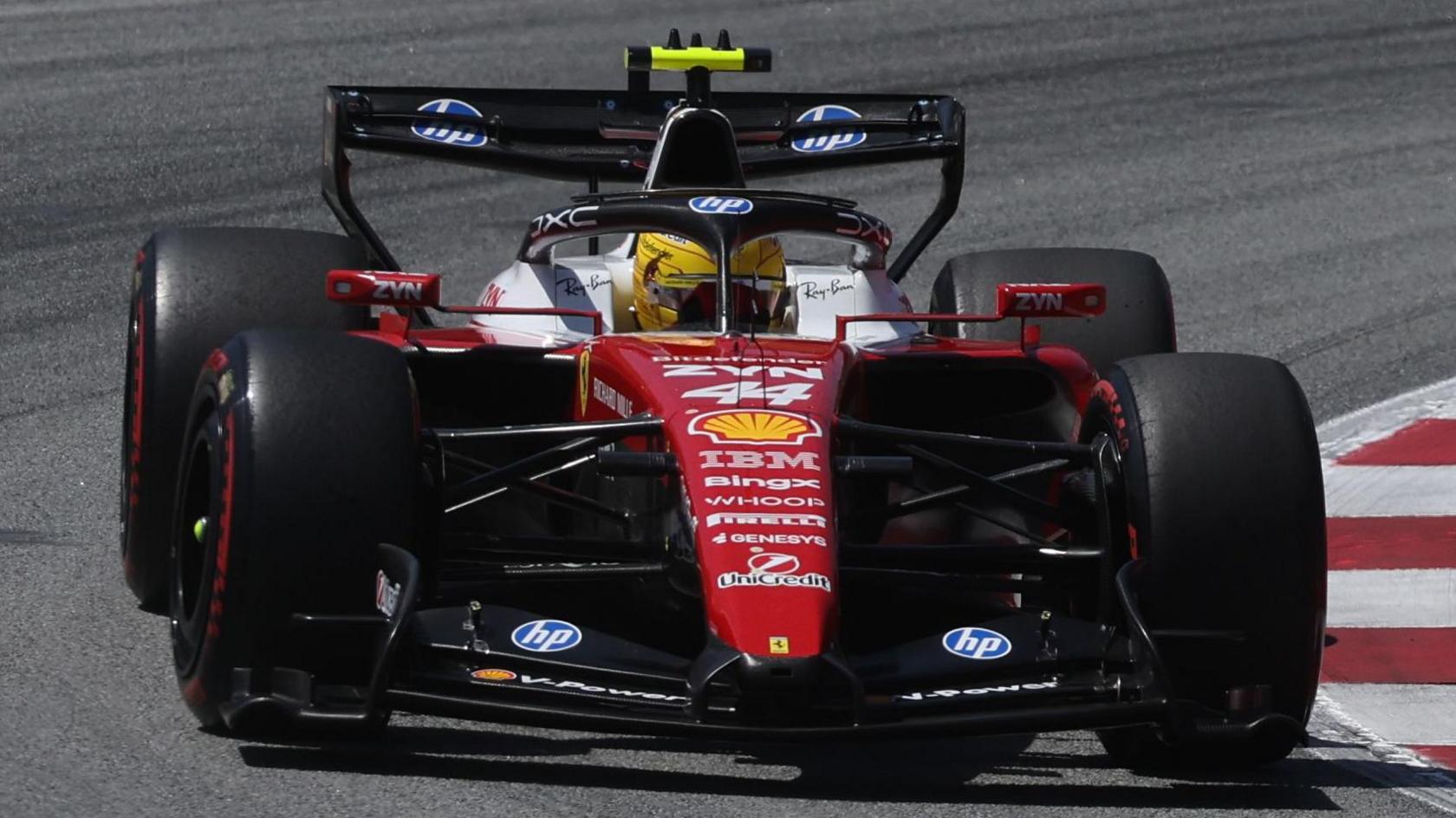
Lewis Hamilton's red Ferrari crossed the line at the Barcelona-Catalunya Circuit with the weight of history lifting from his shoulders—his first victory for the Scuderia, the team he had dreamed of joining for years, finally delivered on a sun-baked Spanish afternoon. The 2024 move from Mercedes came with questions and skeptics, but here, on one of Formula 1's most challenging circuits, Hamilton answered them with a performance that blended precision, strategy, and the kind of dramatic good fortune that great victories demand.
The race unfolded as a masterclass in tension. Hamilton had been chasing the summit since his last win at the 2024 Belgian Grand Prix, driving for Mercedes—a lifetime ago in the calendar, though only months in reality. At Barcelona, the championship leader Kimi Antonelli was flying, holding second place and hunting down the Ferrari driver with five laps remaining. Russell, driving for Mercedes, had been locked in a battle with Antonelli all race long, a testament to the fierce competition that defined this Sunday in Catalonia.
Then came the virtual safety car period, a moment that tilted the race's entire trajectory. While Antonelli and Russell were committed to their pit-stop strategies, Hamilton made the call to pit under the VSC—a different tactical approach that allowed him to retain his lead while resetting the tires. It was the kind of split-second decision that separates winners from runners-up, a strategic gamble that paid off completely.
With four laps to go, as Antonelli pressed forward having just overtaken Russell for second place, his car suddenly ground to a halt. A technical problem—the first retirement of the championship leader's year—robbed him of what could have been a breakthrough podium finish. It was the sort of twist that makes motorsport unpredictable and, for Hamilton, providential. Russell, salvaging what he could from the chaos, took second place for Mercedes, while McLaren's Lando Norris secured third.
What made this podium moment resonate beyond the lap times and pit-stop mathematics was its rarity: an all-British podium. The last time three drivers from the same nation topped the rostrum was 1968, at the US Grand Prix—more than half a century ago. That span of time underscores how exceptional this result is, a fleeting alignment of talent, circumstance, and national identity that few get to witness.
For Hamilton and Ferrari, the implications were immediate. Here was confirmation that the partnership could work, that the seven-time world champion could adapt to new machinery and a new team culture, and that Ferrari could still deliver when it mattered most. The doubters who wondered whether the move would yield fruit had their answer, at least in part. For Antonelli, the retirement stung, but the championship lead remained intact—a reminder that Formula 1 is as much about consistency across seasons as it is about individual triumphs. As the paddock processed the implications of Hamilton's red victory, one thing was clear: this was only the beginning of a story that will define the coming years in Formula 1.