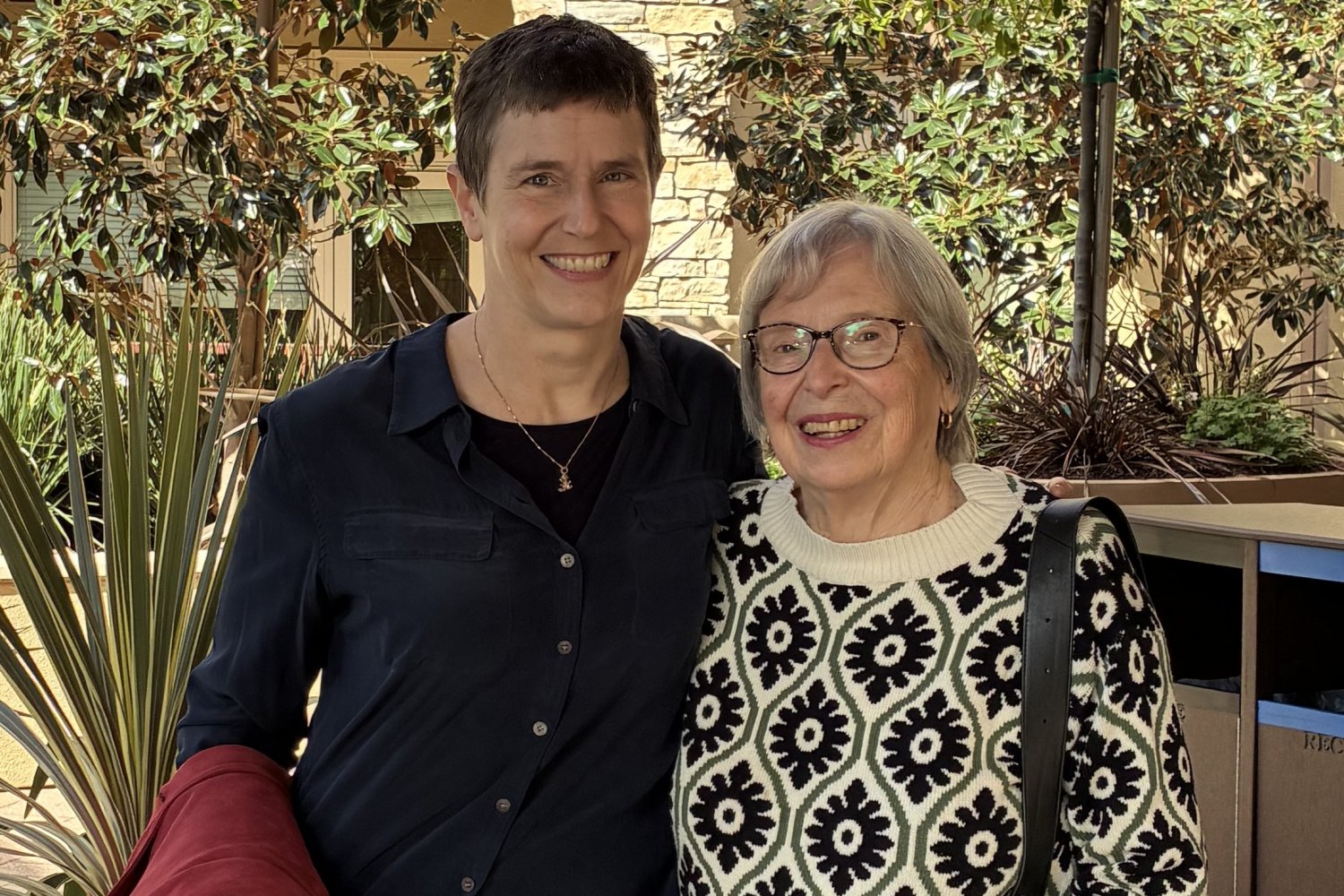
At 60 years old, when most scientists are planning retirement, Harriet Latham Robinson was just beginning one of her most significant chapters—becoming chief of microbiology and immunology at Emory University's Yerkes National Primate Research Center in Atlanta, Georgia. It was winter 1997, and Robinson was about to co-found GeoVax, a biotechnology company built on her groundbreaking preclinical research into HIV-1 vaccines. The achievement itself was remarkable enough; what made it extraordinary was how she had arrived there—blazing trails through a field that had consistently failed to see her as anything more than "Harriet" in rooms full of "doctors" and "professors."
Robinson's journey to the summit of molecular biology began in 1938, born in Ohio to parents from two different states, the second of four children determined to build a life of the mind. Her path to science was anything but inevitable. She attended the Girls' Latin School, a public magnet academy in Boston, where she encountered precisely two science classes—one semester of chemistry and a health course. Yet those slim offerings kindled something that would sustain her through decades of being the only woman in laboratories, classrooms, and conference rooms. At her 50th and 60th high school reunions, Robinson marveled at what her classmates had become: not only the wives, mothers, teachers, and nurses they were "supposed" to become, but physicians, lawyers, professors, politicians, and businesswomen.
When Robinson arrived at MIT for her master's program in biochemistry in 1959, the Department of Biology had only a handful of women, no female faculty members, and few ladies' rooms. It was transformative nonetheless. There she met Walter "Wally" J.K. Tannenberg, a medical student who, as she recalls, was "not at all taken aback by my becoming an educated woman." After earning her master's in 1961 and her PhD in 1965, both from MIT, Robinson pushed deeper into research. At UC Berkeley during her postdoctoral work, she met the man who would become her husband and father to her three sons, born 13 months apart.
Balancing ambition with motherhood required deliberate strategy. As a graduate student, Robinson had hired a housekeeper and committed to a conventional 9 a.m. to 5 p.m. workday—radical discipline in a field where male researchers could afford to blur those boundaries. She needed to both compete with her male counterparts and be present for her children before they entered primary school. That determination carried her through her entire career: the decades of being called by her first name while men around her claimed their titles, the constant navigation of a male-dominated field, the relentless work of proving herself again and again.
By the time she reached the Yerkes Center, Robinson had already demonstrated that a woman could excel in molecular biology without sacrificing the other dimensions of a full life. Her role at Emory and her founding of GeoVax represented not just personal triumph but a crack in the glass ceiling of American science. The young women now entering laboratories can see something their predecessors could not: that "Harriet" could be a chief, a co-founder, a scientist of consequence—all while remaining wholly herself.