When Brigham Young University-Hawaii launches phase two of its University Solar Project, it will flip a switch that transforms not just one campus, but an entire community's relationship with clean energy. The sprawling Laie campus is about to become a model of renewable ambition: generating 100% of its own electricity from the sun, with enough surplus power flowing to the Polynesian Cultural Center and the Laie Hawaii Temple.
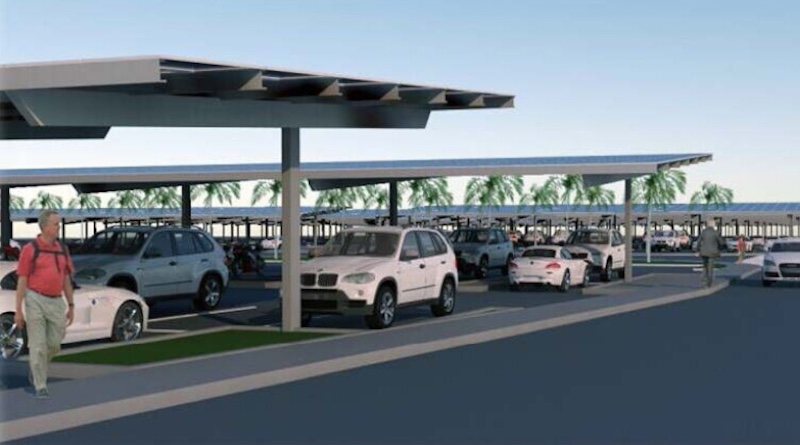
The university's solar journey began in 2022, when BYU-Hawaii installed three rooftop solar power systems, five solar carports, and 7 megawatt-hours of battery backup—a foundation that already covered 39% of the university's electricity needs. Now, phase two is scaling up that vision in ingenious ways. Instead of only looking skyward, the university is breaking ground on a ground-mount solar power system located southwest of campus. Equally innovative: solar canopies are being built across the parking lot in the southeast corner of campus, near the Pacific Theater, transforming idle asphalt into productive energy generators while providing shade for parked vehicles.
What makes this project resilient is its five-day emergency battery backup system—a cushion of stored energy that ensures the campus can weather grid disruptions or unexpected shortfalls. For an island community, energy independence isn't just aspirational; it's practical protection against supply chain vulnerabilities that shape daily life in Hawaii.
The scope of BYU-Hawaii's commitment reflects a deeper truth about the islands' renewable energy leadership. Hawaii has positioned itself at the forefront of clean energy adoption, driven by both environmental necessity and the economics of island living. Importing fossil fuels across thousands of miles of ocean is expensive; harnessing the sun that beats down year-round is increasingly the smarter choice. That shift is rippling outward, visible in community events like Honolulu's Electric Home Show, where residents and businesses are discovering the tools to make their own energy transitions.
What's remarkable about the University Solar Project is its generosity of purpose. The excess clean electricity isn't hoarded for campus use alone—it flows to the Polynesian Cultural Center, a major cultural institution, and to the Laie Hawaii Temple. This network effect means one institution's renewable investment strengthens the resilience of multiple anchors in the Laie community. It's a practical demonstration that clean energy transitions don't have to be zero-sum; they can multiply benefits across a place.
The University Solar Project also exemplifies a quiet shift happening across America's campuses. Universities are no longer waiting for policy mandates; they're building the future themselves. BYU-Hawaii's phased approach—starting with rooftop systems and carports, then scaling to ground-mount and canopy installations—shows how institutions can grow renewable capacity steadily, learning and adapting as they go. The five-year runway from phase one to phase two's completion gives the university time to optimize operations, troubleshoot systems, and build local expertise.
For visitors and residents in Laie, the physical landscape will gradually transform. Parking lots will shimmer with solar canopies. Campus grounds will host visible infrastructure dedicated to clean power. The Polynesian Cultural Center and Temple will draw energy from the sun rather than distant power plants. It's the kind of change you can see, touch, and feel—proof that renewable energy isn't theoretical or distant, but tangible and close to home.