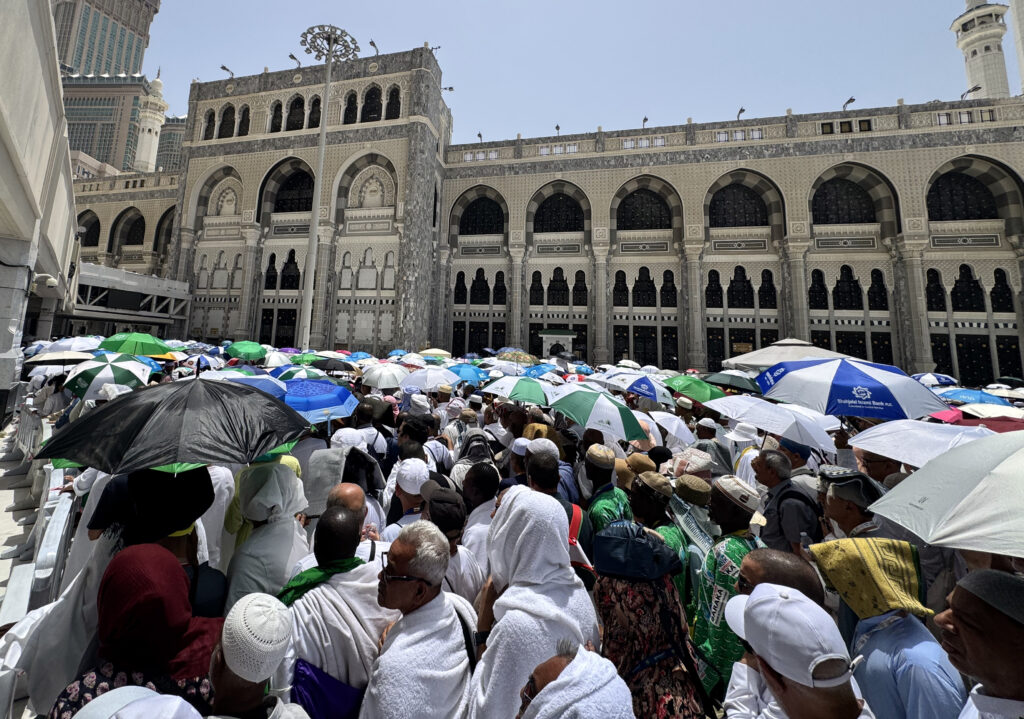
More than 1.7 million pilgrims gathered in Mecca last week for the annual Hajj—one of the world's largest mass gatherings and a mandatory spiritual duty for Muslims. Yet as these millions made their sacred five- to six-day trek through the Saudi Arabian desert, they faced an increasingly menacing threat that no act of devotion can override: heat so intense it threatens to make the pilgrimage impossible.
The stakes became brutally clear during last June's Hajj, when temperatures soared above 125 degrees Fahrenheit and humidity climbed to unusually high levels. More than 1,300 people died, many from heat-related illnesses. A study published last year found that human heat tolerance was exceeded for a total of 43 hours across the six days of that pilgrimage alone—a level of stress that would challenge even those in peak physical condition. The majority of Hajj participants are traveling from other parts of the world and many are older than 65, factors that make them particularly vulnerable. Without acclimatization to the extreme desert temperatures, their bodies suffer physiological strain far more acutely than local residents.
This year's Hajj, held in spring, offered temporary relief—but with a troubling twist. While temperatures stayed below the catastrophic levels of 2024, a new analysis by World Weather Attribution researchers found something alarming: average daily temperatures in May were almost as high as the average summertime temperatures from 1970 to 1990. The region is running hot even in its historically cooler months. As climate scientist Clair Barnes from Imperial College London observed, "Climate change has once again shown us that expectations based on a climate that no longer exists can be thrown out of the window." The analysis shows very clearly that less of the year is now safe for the millions of Muslims who wish to undertake the Hajj.
Saudi Arabia has not been passive. In recent years, the country introduced comprehensive heat-action plans featuring shade structures, free water and umbrellas, air-conditioned buses, and misting areas. A 40-year analysis found these interventions significantly reduced cases of heat stress and exhaustion. Yet a critical vulnerability remains: not all pilgrims have access to these protections. During the 2024 tragedy, the vast majority of those who died were unregistered pilgrims without permits, making them ineligible for cooling resources. Securing a Hajj permit is difficult due to high demand, quotas, and costs—leaving many unable to access potentially life-saving measures.
The researchers' conclusion is sobering: intensifying heat may be outpacing current mitigation efforts, signaling a need to recalibrate existing approaches. Hajj is not scheduled to fall during summer months again until around 2050, offering a window of relative safety. But that reprieve is deceptive. Without addressing the root cause—carbon emissions driving global temperature rise—even fall and spring months will become increasingly inhospitable.
For Inas Gamal, a pilgrim traveling from Egypt this spring, the heat already forced compromise. "I can't adapt," she told France 24. "I had planned to perform all my prayers at the Grand Mosque, but I couldn't go down for the prayers held during the day." Her words capture an intimate truth: climate change doesn't just threaten lives—it threatens the ability to practice faith itself. The solution, experts agree, lies not in better umbrellas or more water stations, but in confronting the global emissions warming the world.