Eight endangered Asiatic lions collapsed and died at a Gujarat national park in late May, and officials initially suspected a familiar culprit—a tick-borne parasitic disease that had claimed lions there before. When the Gujarat government announced over that weekend that extreme heat, not parasites, had killed the animals, it added another name to a growing ledger of species felled by the planet's warming.
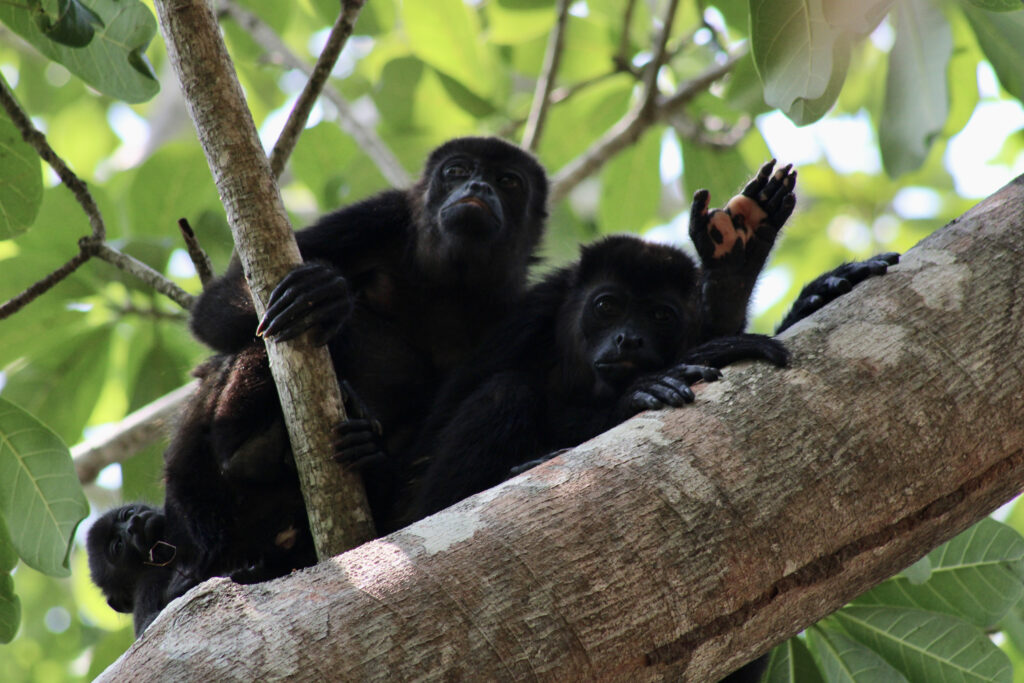
The deaths matter because they illustrate a crisis unfolding silently across the animal kingdom. Howler monkeys have suffered heat stroke and fallen from trees in Mexico. Thousands of flying foxes perished during a heat wave in Australia. Between 2014 and 2016, millions of marine creatures died when ocean temperatures skyrocketed off the West Coast and Alaska. As climate change accelerates, researchers warn that thousands of species could face extinction by 2100 due to extreme heat alone, compounded by habitat loss.
Yet predicting where and when these heat catastrophes will strike has remained maddeningly difficult. While scientists can model long-term climate trends, they've lacked tools to forecast near-term dangers—the critical window where conservation action might actually save lives. "There was a gap here between these two worlds," says Josep M. Serra-Diaz, an ecologist at the Botanical Institute of Barcelona, describing how analyses often focus only on the past or the distant future.
A new early warning system published Monday in Nature Climate Change is attempting to close that gap. Serra-Diaz and his collaborators combined forecasts from NASA's Goddard Earth Observing System with temperature tolerance data for over 30,000 species of mammals, birds, reptiles, and amphibians. The result is a tool that can predict which terrestrial vertebrates will face extreme heat exposure up to nine months in advance.
Testing the system against 2024—the hottest year on record globally—the researchers found striking results. Between May 2024 and February 2025, more than 3,500 species were predicted to experience temperatures higher than any previously recorded in their known ranges. Amphibians and reptiles showed the highest percentage of their geographic ranges in dangerous heat zones, while birds faced lower proportions. Mexico emerged as among the most vulnerable regions, particularly Tabasco state, where howler monkeys died that year.
The implications are profound. The study found that many regions could have received warnings three to five months in advance—time enough to establish heat refuges, provide emergency resources, or implement other preventive measures that might have protected nearly 500 conservation-priority species across their ranges during that same period.
But Serra-Diaz acknowledges limitations. The current model identifies global patterns but lacks the localized precision needed to guide specific conservation actions on the ground. He's also cautious about interpretation: higher temperatures don't guarantee a species will perish. "We don't predict the impact itself, we predict that species will be under a very extreme heat that maybe the species have never seen before," he explains. "Maybe they can cope, maybe not, but it's a very red flag."
Eric Riddell, a biologist at the University of North Carolina who was not involved in the study, calls the work urgent and necessary. "Trying to make predictions that are much closer to our current time so that they could be more helpful to us on the ground and making conservation and management decisions is an urgent issue that we need to address," he says. The tool doesn't solve the underlying problem of rising temperatures, but it offers something previously unavailable: a fighting chance.