Sergeant Taylor Johanson had been in Nashville for barely ten minutes when he pulled off Interstate 440 to adjust the music in his rental Jeep Wrangler—a small decision that would place him at the exact moment an American police officer's life hung in the balance.
It was around 8pm on May 7 when the 34-year-old British officer from Ashford, Kent, spotted Officer Peter Kinsey being brutally assaulted on the exit ramp. A 43-year-old pedestrian was pinning the cop face-down, head-butting him, punching him, biting him—and, more terrifyingly, had managed to grab Kinsey's gun and fire a round while it remained holstered. Johanson had been with the Kent Police Community Safety Unit for nine years, but nothing in his training could have prepared him for what he was witnessing on a holiday meant to be relaxing.
He stopped his car and ran toward the struggle. "Natural instinct kicked in—and that fight or flight," Johanson would later reflect. He tackled the suspect and held him down with raw determination, allowing Officer Kinsey the space he needed to deploy his taser and handcuff the assailant. Johanson's girlfriend, Emily—also a police constable in England—called for backup while he kept the suspect restrained, her steady voice requesting help in an American accent over a local radio channel. Six minutes. That's how long Officer Kinsey had been pinned before Johanson's intervention, six minutes that felt endless in what would become a trauma that would reshape how Kinsey understood his own mortality.
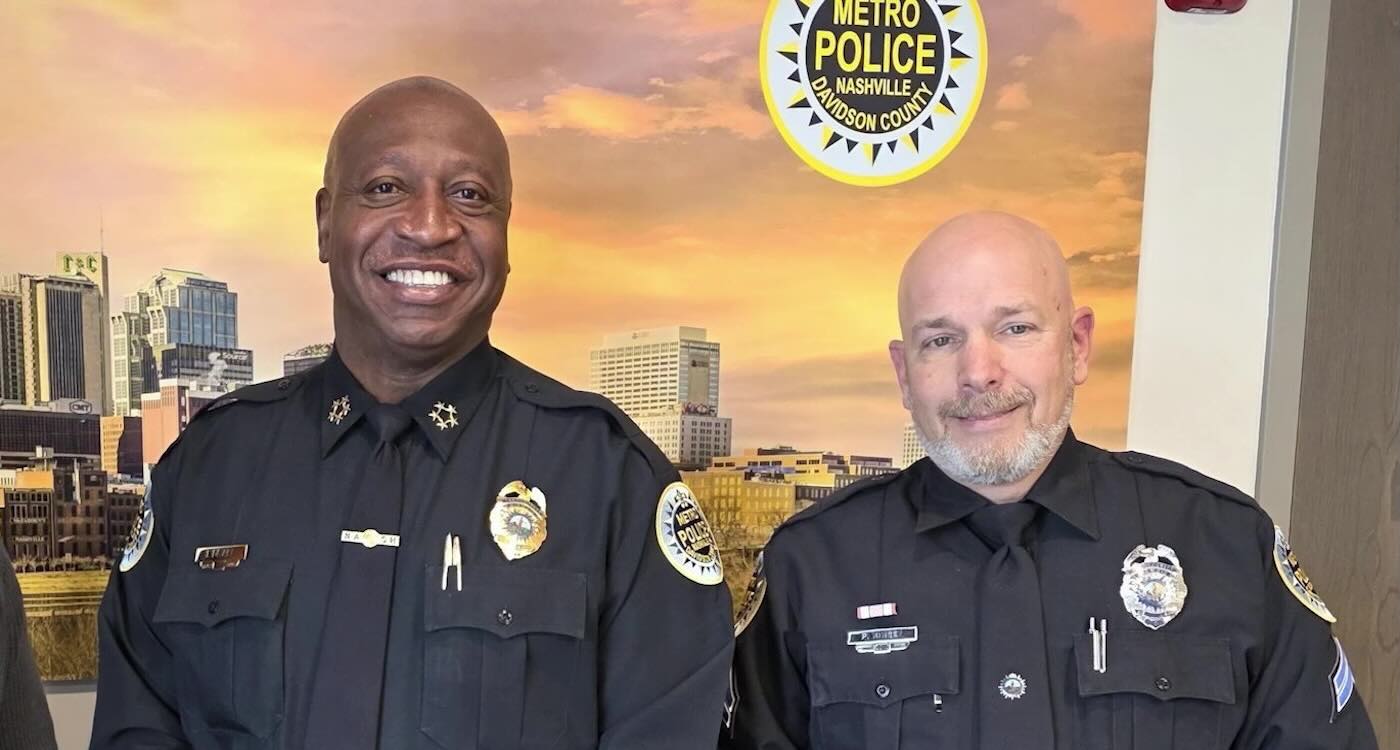
"It's probably the closest near-death experience I can say I have had, and probably the most traumatic," Officer Kinsey said afterward. "I knew he was going for my gun." He has since credited Johanson with saving his life—a conviction shared by Police Chief John Drake of the Metropolitan Nashville Police Department. "He miraculously appeared when Officer Kinsey needed him," Chief Drake said. "I believe he likely saved our officer's life." The department honored Johanson with challenge coins, a police blanket, and an engraved watch—the kind typically reserved for officers celebrating 30 years of service.
What makes Johanson's intervention remarkable is not merely the physical intervention itself, but the choice to stop at all. He and his girlfriend were visiting Nashville on a six-day trip to see his sister and explore the city. Everyone else was driving past. Everyone else saw nothing or saw trouble and kept driving. Johanson saw a fellow officer in danger and acted on a principle that transcends borders: "You are a police officer all the time whether you are on holiday or not."
The Kent officer has since returned home but remains in touch with his new colleagues across the Atlantic, already joking about the free dinners awaiting him on his next visit. In a world where news often highlights what divides us, Johanson's story speaks to something deeper—the instinctive human bond between people who've chosen to serve and protect, regardless of which side of the Atlantic they call home. It's a reminder that heroism often wears the face of someone simply willing to stop, to see, and to act.