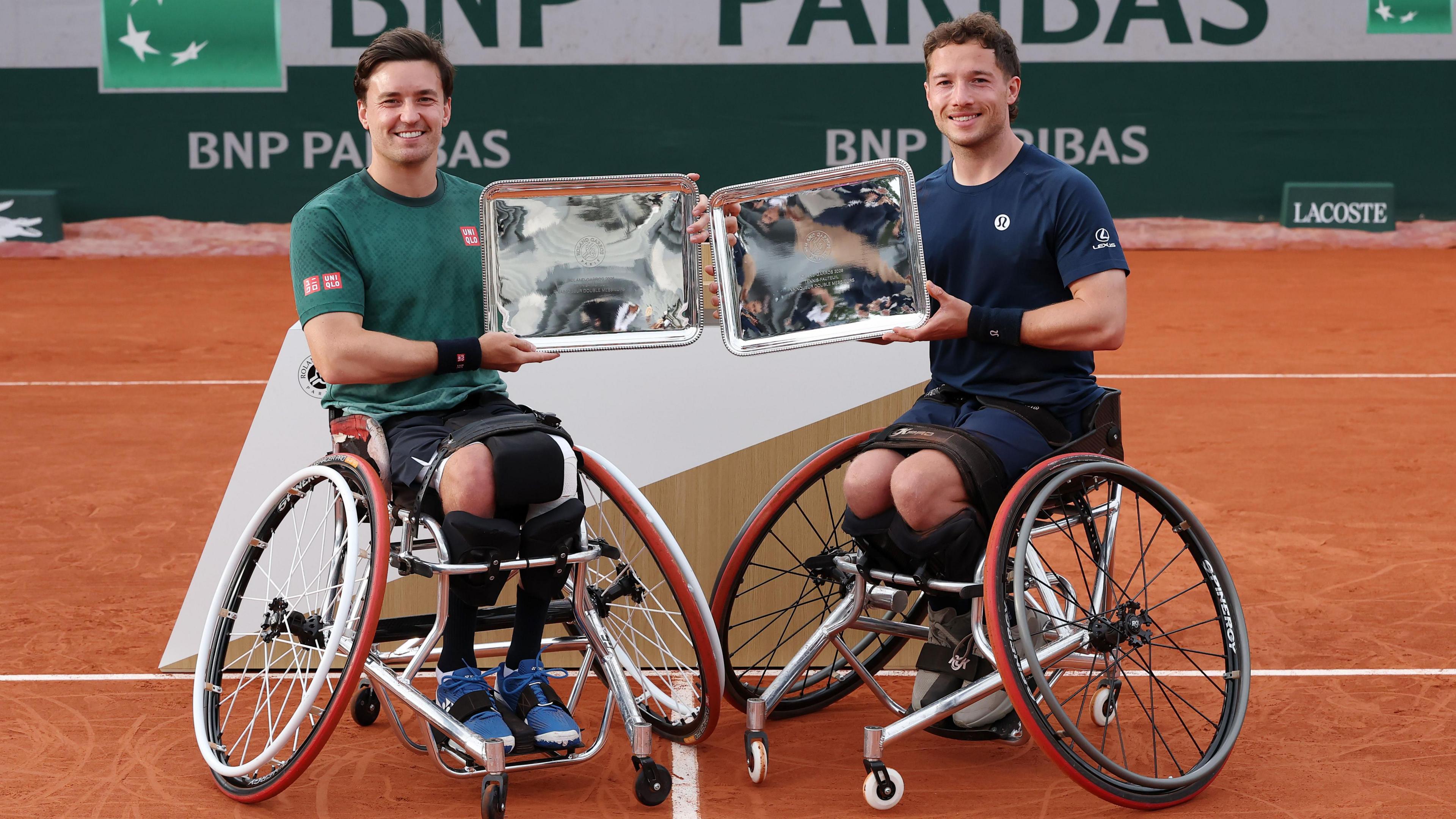
Alfie Hewett and Gordon Reid stood holding the French Open trophy for the seventh consecutive year, a feat that would seem almost routine if it weren't so extraordinary. The British pair defeated Spain's Martin de la Puente and France's Stéphane Houdet 6-2, 6-3 in the wheelchair doubles final in Paris, claiming their 24th Grand Slam title together and etching their names deeper into the history books of adaptive tennis.
What makes this particular victory remarkable is the journey that preceded it. When Hewett and Reid first began playing doubles together, the French Open was their white whale — they struggled for years before finally breaking through. Now, seven consecutive titles later, they have transformed what was once a barrier into their greatest stage. The irony wasn't lost on Hewett as he reflected during the trophy presentation: "This was one of the toughest tournaments we faced when we first started playing doubles with each other and it took us a fair few years to get our hands on this trophy."
The tennis itself was clinical and convincing. Playing against a home crowd that favored Houdet, Hewett and Reid dominated through precision and depth. They unleashed 29 winners compared to their opponents' 14, and claimed 55% of points on the French-Spanish pairing's first serve — the kind of controlling statistics that speak to mastery of their craft. The crowd's allegiance to the home player only underscored the mental fortitude required to perform at that level under pressure.
Yet for Reid, the significance of this moment transcends the scoreline. Wheelchair tennis is marking its 50th anniversary this year, a milestone that has prompted reflection across the sport about how far it has come. When Reid speaks to the pioneers who created wheelchair tennis half a century ago, he hears the same refrain: amazement at the trajectory of the sport, the caliber of competition, and the stages where it now competes. "It's a big year in wheelchair tennis," Reid said. "When we see interviews of the people, the guys who created this sport, everyone says they are amazed by where we are now and how far the sport has come."
For Hewett, the occasion felt like vindication of that progress. Standing on a French Open court in front of thousands of spectators, holding a Grand Slam trophy alongside a partner he has grown with over years of competition, he could appreciate the simple fact of being there. "To be on a court like this, having this sort of atmosphere, it's an absolute pleasure and long may it continue," he said.
The partnership between Hewett and Reid reveals something deeper about sustained excellence in sport — it requires not just skill and determination, but the willingness to evolve. "We've been a team for a long time now but we are finding new ways to play and new ways to enjoy it," Reid reflected. That capacity to stay fresh, to discover new dimensions in a partnership, is perhaps what separates a great team from one that merely wins. Seven consecutive French Open titles is a record that speaks for itself, but the real story is two athletes who have chosen to grow together rather than rest on their achievement.