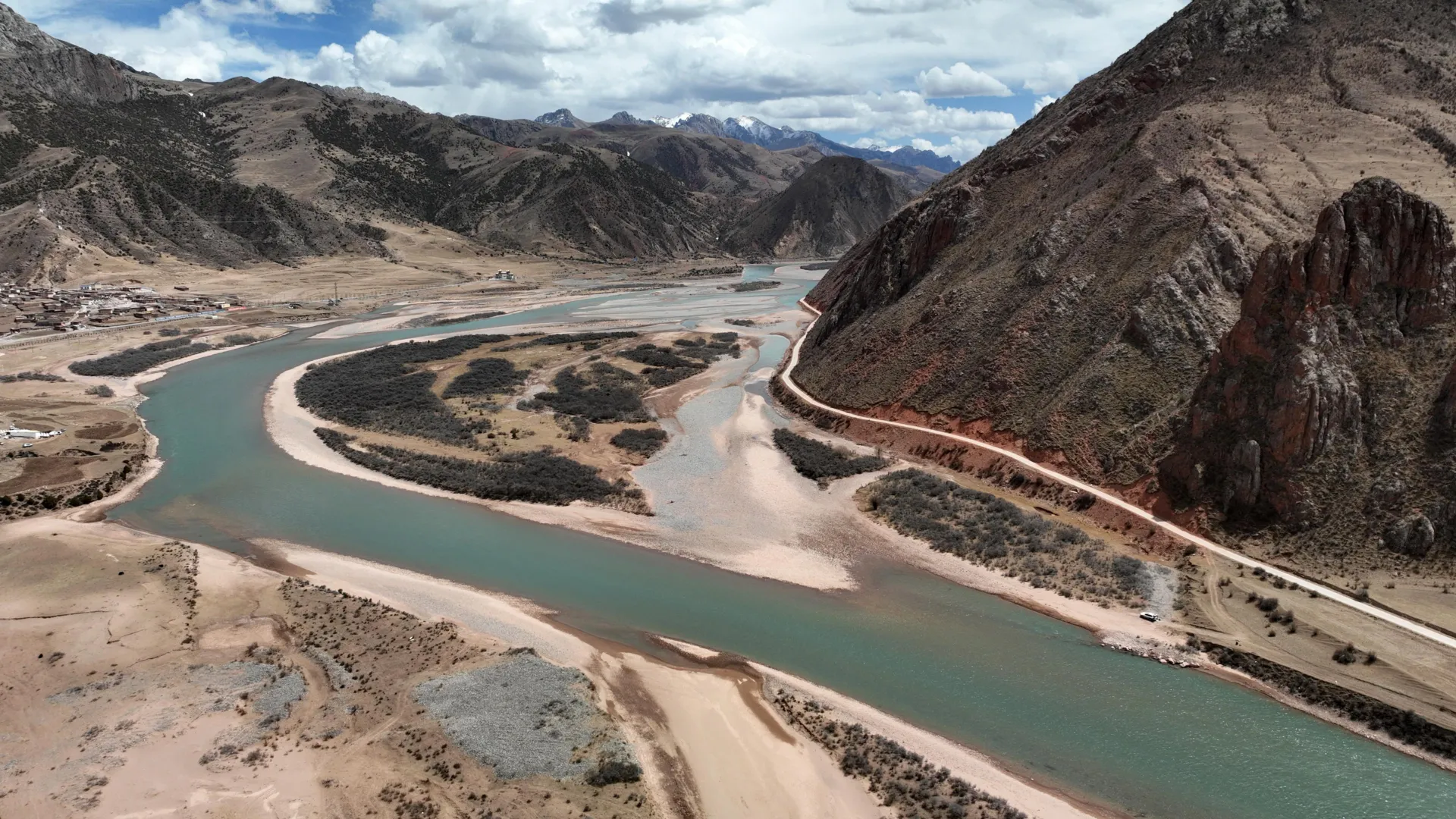
Liwei Zhang stood knee-deep in a glacial river on the Qinghai-Tibet Plateau, where the air is thin and the ground hums with change—permafrost that has frozen for millennia is now thawing, reshaping not just the landscape but the very balance of carbon in the atmosphere. While much of the world sees thawing permafrost as a one-way ticket to more greenhouse gases, Zhang and an international team have uncovered a hidden counterforce: rocks quietly breathing in CO2. Their study, conducted across 50 rivers on the world’s largest high-altitude cryosphere outside the poles, reveals that as frozen soils degrade, newly exposed minerals trigger chemical weathering—a natural process that pulls carbon dioxide from the air. This geological response isn’t just a footnote; in some areas, it fully cancels out the CO2 bubbling from rivers, and in others, it surpasses it.
For years, scientists have warned that thawing permafrost releases ancient organic carbon, which microbes convert into greenhouse gases, accelerating climate change. But this research, led by scientists from Umeå University in Sweden and East China Normal University in China, shows that another story is unfolding beneath the surface. As meltwater seeps through fractured bedrock and weathered minerals, it transforms CO2 into dissolved inorganic carbon, effectively locking it away in river systems. Using isotopic tracers and geochemical models, the team found that the more fragmented the permafrost, the stronger this carbon uptake becomes. In regions where permafrost has shifted from continuous to patchy, weathering processes absorbed enough CO2 to offset 100% or more of river emissions.
On average, across the plateau, rock weathering offsets 35% of the CO2 released by rivers—carbon accounting that has been missing from most climate models. The implications are profound. While biological processes release carbon from thawing soils, geological ones are simultaneously drawing it back. "We found that river CO2 emissions decline while carbon uptake through rock weathering increases as permafrost cover decreases," Zhang explains. This interplay means that the net climate impact of permafrost thaw isn’t as straightforward as once thought. Yet the researchers caution against seeing this as a climate fix: not all weathering reactions absorb CO2, and the long-term stability of this sink remains uncertain.
Still, the discovery forces a reevaluation of how we model carbon in a warming world. "To understand whether thawing permafrost ultimately amplifies or dampens climate warming, we need to consider both the carbon released from ancient soils and the carbon consumed through rock weathering," says Jan Karlsson of Umeå University. As the cryosphere retreats, the Earth may be marshaling its own subtle defenses—one mineral reaction at a time.