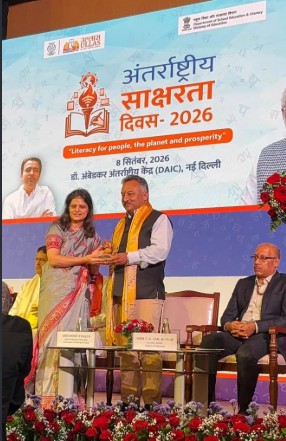
When Education Minister Rohit Thakur accepted a national award in New Delhi on September 8, he was holding proof of a mountain state's remarkable climb: Himachal Pradesh had just reached a 99.55 percent literacy rate, making it India's second-most literate state. Only Goa, at 99.7 percent, sits higher.
The moment carried extra weight because it landed on International Literacy Day, the annual September 8 reminder that literacy belongs to everyone, not just schoolchildren. For Himachal Pradesh, the recognition capped a journey that began in earnest in 2025, when the state was officially declared fully literate at 99.3 percent. The new figure shows the progress didn't stop there.
That steady climb matters because literacy is more than a classroom statistic. It is the foundation for earning a living, taking part in community life, and learning new skills throughout a lifetime. For a state carved out of steep Himalayan terrain, where people live scattered across remote villages, simply getting education to everyone has taken years of patient, community-level effort.
A big reason for the latest gains is a national program called ULLAS — the Understanding of Lifelong Learning for All in Society. Launched across India in 2022, ULLAS focuses on adults aged 15 and older who never got a formal education. Instead of measuring success only by school enrolment, the program gives grown-ups a second chance to learn reading, writing, and practical skills. Himachal Pradesh's experience shows how such efforts can lift an entire state.
The achievement also reflects a shift in how people think about learning. For a long time, literacy meant children arriving at school and finishing basic grades. But adult literacy matters just as much — it influences whether someone can read a government notice, use public services, navigate digital tools, and help their own children with homework. Programs like ULLAS treat education as a lifelong process rather than something that ends in adolescence.
Behind the numbers stand teachers, students, volunteers, and government officials who worked community by community. Government programs provide the framework, but literacy campaigns ultimately succeed because local people put in the effort — often with flexible, locally tailored approaches rather than rigid classroom formats.
Reaching 99.55 percent doesn't mean the job is finished. The next stage involves holding onto those gains while expanding digital and functional literacy, helping residents navigate online services, understand information, and build employable skills. Himachal Pradesh's recognition is therefore both a destination and a starting line — evidence that when a nation treats literacy as a lifelong priority, even its most challenging landscapes can climb to the top of the class.