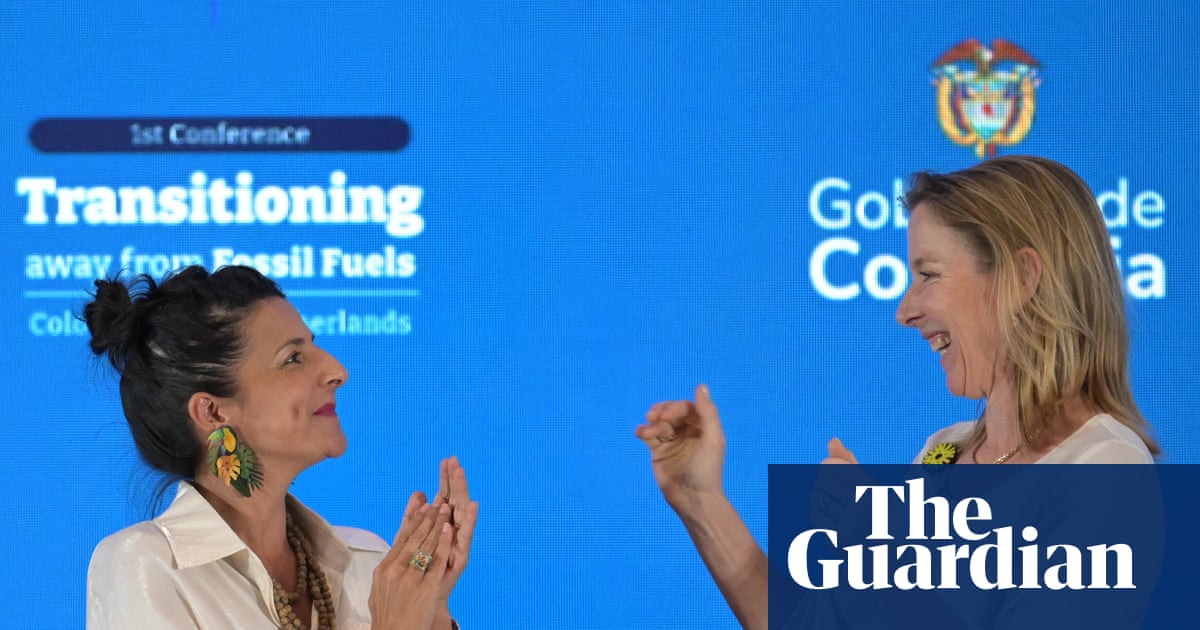
In a conference room in Santa Marta, Colombia, nearly 60 governments made a choice that broke three decades of global climate stalemate: they committed to developing voluntary national roadmaps that chart a concrete path away from coal, oil, and gas. This inaugural conference on transitioning away from fossil fuels marked a departure from annual UN climate negotiations, which have run since the 1990s while global emissions continued their relentless climb.
The absence of the world's largest emitters—the United States, China, India, Russia, and major petrostates including Saudi Arabia, Qatar, and the United Arab Emirates—shaped a fundamentally different kind of negotiation. Rather than seeking consensus among nations with competing interests, the participants assembled what observers called a "coalition of the willing": countries prepared to prioritize climate action over fossil fuel profits. This group, representing more than half of global GDP, nearly a third of global energy demand, and a fifth of fossil fuel supply, includes almost half of the world's fossil fuel producers themselves. Those nations will be expected to detail how they intend to wind down their own production—a remarkable commitment for economies historically dependent on extraction revenues.
Irene Vélez Torres, Colombia's environment minister and chair of the talks, reframed what's at stake: "When people look back on us from the future, they will not remember only this conference. They will remember whether or not we rose to the challenge of our time." Her words captured why this gathering felt different from the exhausted cycles of UN climate summits, where consensus rules have repeatedly allowed fossil fuel interests to block direct discussion of phaseouts.
The roadmaps themselves remain flexible—there are no stipulations on structure and no binding deadlines for the transition. This flexibility was deliberate. Stientje van Veldhoven, the Netherlands' minister for climate and green growth, explained the reasoning: "There will be different speeds between countries. We should allow for this and acknowledge that countries start from a different position, have different challenges, so that it cannot be one size fits all." Colombia published a draft roadmap during the conference and established a scientific panel to advise participating nations. France, notably, became the first developed country to release a complete national roadmap to phase out fossil fuels.
The conference also tackled what existing climate plans, known as nationally determined contributions under the Paris agreement, had sidestepped: the climate impact of fossil fuel exports. Previous NDCs focused only on domestic emissions, allowing producing nations to export their carbon responsibility. The new roadmaps demand accountability across the entire value chain.
Beyond the roadmaps themselves, participants agreed to support poorer countries with the expertise needed to develop transition plans, to scrutinize fossil fuel subsidies, and to collaborate on trade policy and financial reform—critical because the transition requires resources that vulnerable nations don't possess. A second conference will convene early next year on the Pacific island of Tuvalu, co-hosted by Ireland, giving countries time to draft concrete plans.
Tzeporah Berman, founder and chair of the Fossil Fuel Non-Proliferation Treaty Initiative, called Santa Marta "a historic breakthrough—the first time we bring together a group of nations willing to act." The breakthrough wasn't in binding commitments, but in breaking the deadlock itself. For the first time in decades of global climate negotiations, the conversation shifted from whether phasing out fossil fuels was possible to how, concretely, it might be done.