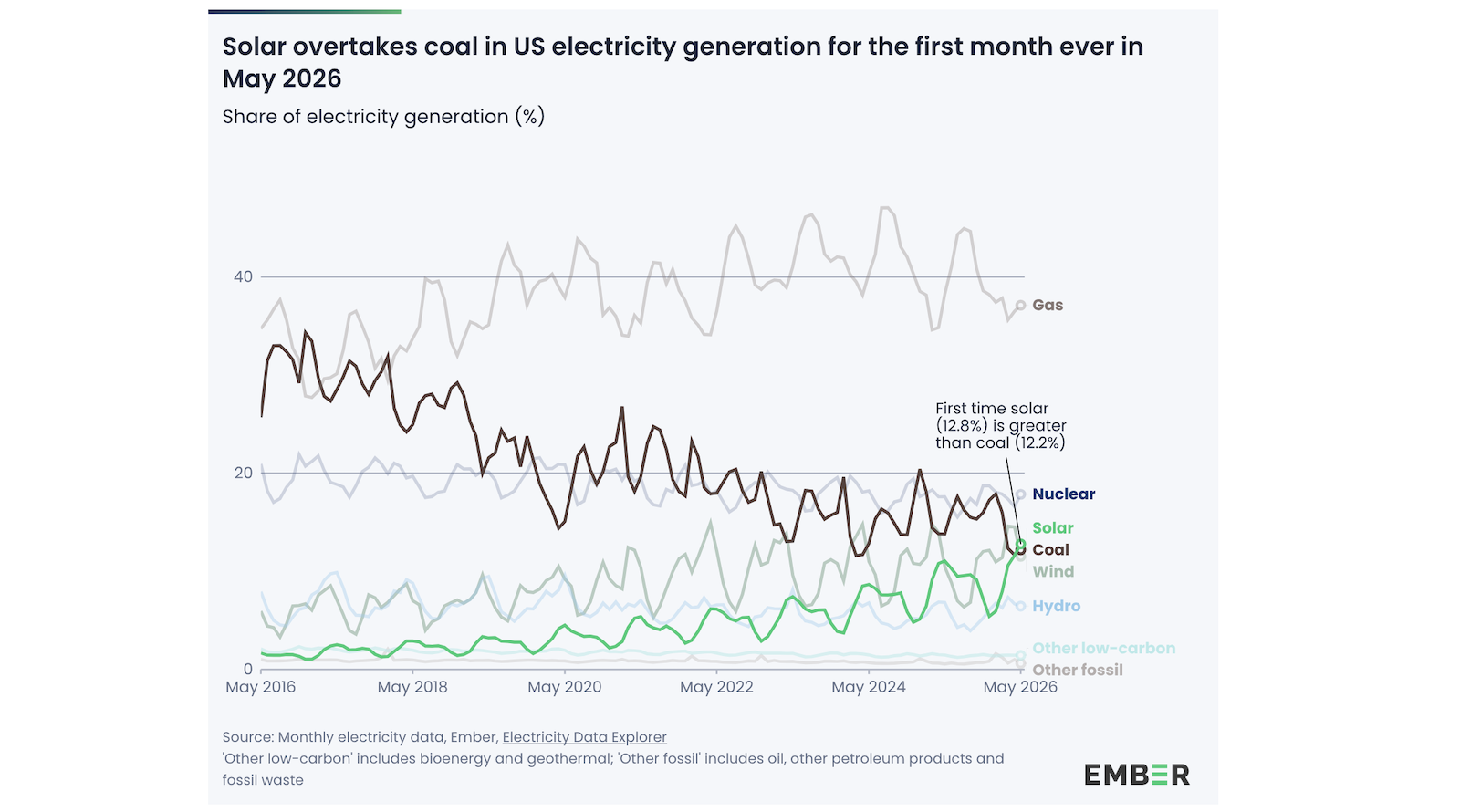
On a bright May morning in 2026, something extraordinary happened across the American grid: for the first time in history, the sun powered more of the nation than coal. Solar energy generated 45.5 terawatt-hours (TWh) of electricity—12.8% of the U.S. total—edging out coal’s 12.2%, marking a quiet but seismic shift in the country’s energy story. This milestone isn’t just symbolic; it’s the culmination of a decade-long transformation, visible in the steady climb of solar panels across rooftops, deserts, and farmland from Texas to California.
For years, coal was the backbone of American electricity, even as its dominance slowly eroded. In May 2021, it still accounted for nearly 20% of the nation’s power. By May 2026, that share had nearly halved. Meanwhile, solar’s contribution more than doubled, rising from 5.4% to 12.8% in just five years. The data, compiled by energy think tank Ember, reveals a clear trajectory: solar is no longer a niche player but a central pillar of the grid. In fact, it has now become the third-largest source of electricity in the U.S., trailing only natural gas and nuclear power.
The timing of this shift is no accident. May is a sweet spot for solar—days are long, skies are often clear, and electricity demand hasn’t yet spiked from summer air conditioning. But the record-breaking 45.5 TWh generated in May 2026 isn’t just a seasonal blip. It’s 17% higher than the same month the year before and surpasses even the previous summer peak. Experts expect the summer of 2026 could set another record, as new solar installations continue to come online at a rapid pace.
This transition isn’t happening in isolation. Across the country, markets are betting big on solar. In ERCOT, Texas’s power grid, solar is on track to exceed coal generation for the first time in 2026, reflecting a national trend. Wind and solar together are reshaping the energy landscape, with renewables collectively gaining ground as coal plants retire and face stiffer competition. The decline of coal—down 11% year-over-year—shows no signs of reversing.
Nicolas Fulghum, Senior Data Analyst at Ember, put it plainly: 'US solar power continues to set new records. Overtaking coal for the first month on record shows just how far solar has come, from a niche contributor to the third-largest and fastest-growing source of power in the US electricity system.' That growth is not just technical—it’s cultural, economic, and increasingly irreversible. As solar panels spread and storage solutions improve, the days when coal defined American energy are fading. The sun, once a distant hope, is now lighting the way forward.