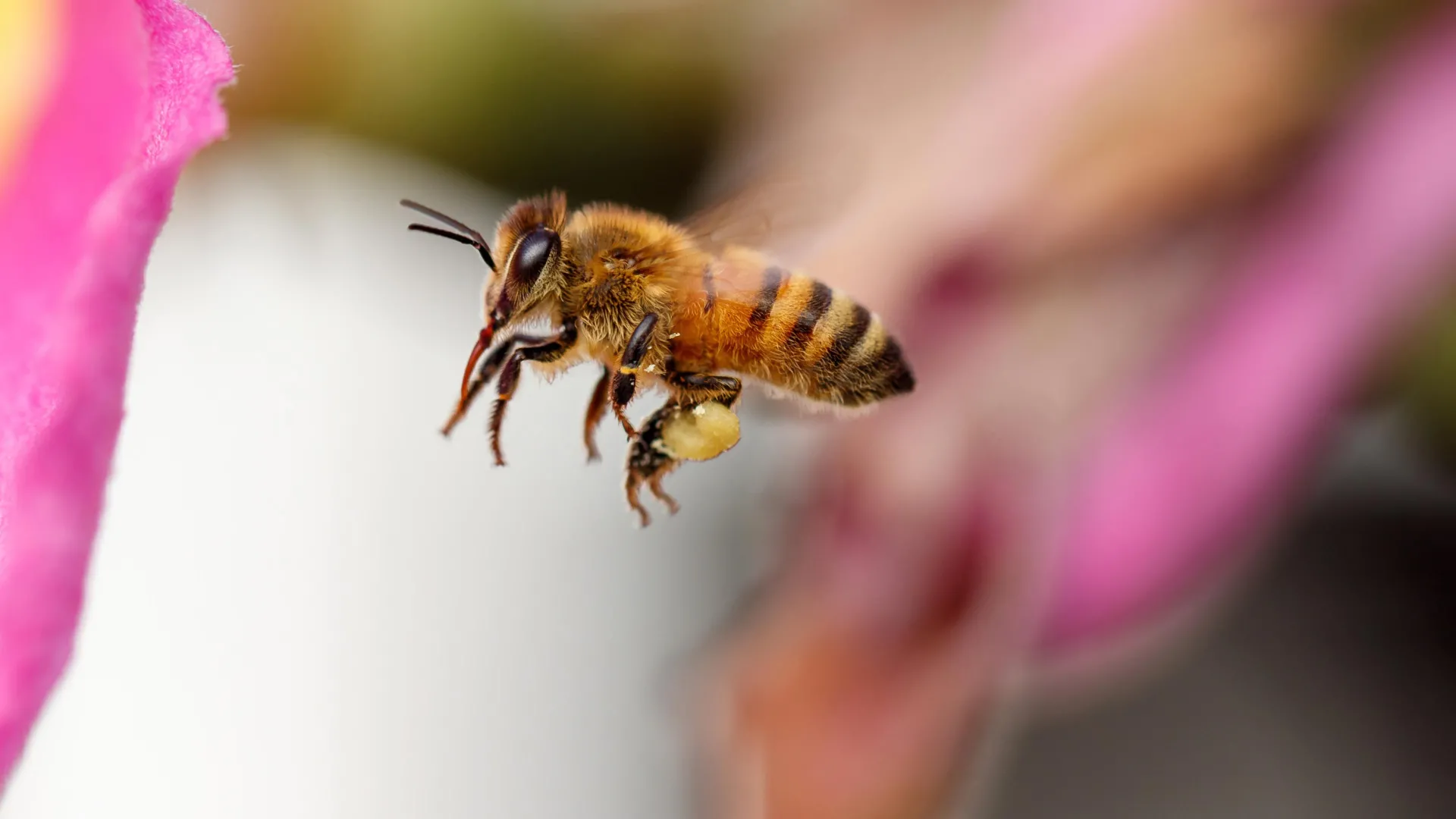
On a quiet stretch of farmland near Kaiserstuhl, Germany, a single honey bee named in data logs as 'Bee 143' flew the same path to a sugar-water feeder three times in one morning—each flight separated by just two centimeters from the last. This wasn’t luck or instinct on autopilot. It was precision, personality, and memory in motion. In a groundbreaking study led by neurobiologist Prof. Dr. Andrew Straw at the University of Freiburg, researchers have revealed that honey bees don’t just navigate—they memorize, personalize, and perfect their routes with astonishing accuracy. Using drone-based 3D tracking, the team recorded 255 individual flights of bees traveling between their hive and a food source 120 meters away, uncovering a hidden layer of sophistication in one of nature’s most vital pollinators.
For decades, scientists have marveled at the waggle dance—the intricate figure-eight movement honey bees use to communicate food locations. But the dance has always carried a mystery: its directional signal can be off by as much as 30 degrees for targets 100 meters away. Some interpreted this as a flaw. Straw’s research flips that idea on its head. The bees aren’t bad navigators—the dance is just an imprecise message. Once a bee knows a route, it flies it with near-laser accuracy, guided by landmarks like hedges, a lone tree, and field edges. The team used a custom-built system called Fast Lock-On (FLO) Tracking, which relies on tiny reflective markers on each bee and a high-speed camera on a drone to capture flight paths in 3D at millisecond resolution. What emerged was not a swarm of interchangeable insects, but individuals with distinct, repeatable routes—some hugging the left side of a tree, others skimming the edge of a cornfield.
The data showed that bees flew within centimeters of their previous paths, especially near visual landmarks. Near the tree in the study area, flight consistency was highest. Over the featureless cornfield, variation increased—proof that bees rely on sight, not just internal compasses. This isn’t just about efficiency; it’s about survival. In a world where habitat fragmentation and monoculture farming erase natural cues, such precision becomes vulnerable. Yet the discovery also offers hope: by understanding how bees actually navigate, we can design landscapes that support their cognitive maps—planting hedgerows, preserving trees, and creating visual signposts in open fields.
Straw’s conclusion is as elegant as the flight paths he recorded: 'Our results allow us to conclude that the inaccuracy of the waggle dance is not due to the bees' limited navigational abilities. Rather, individual animals are spatially much more accurately oriented than their dance communication would suggest.' This isn’t just a win for bee science—it’s a reminder that even the smallest minds can hold complex, individualized knowledge. And as we reshape the world, perhaps it’s time we start designing it with their eyes in mind.