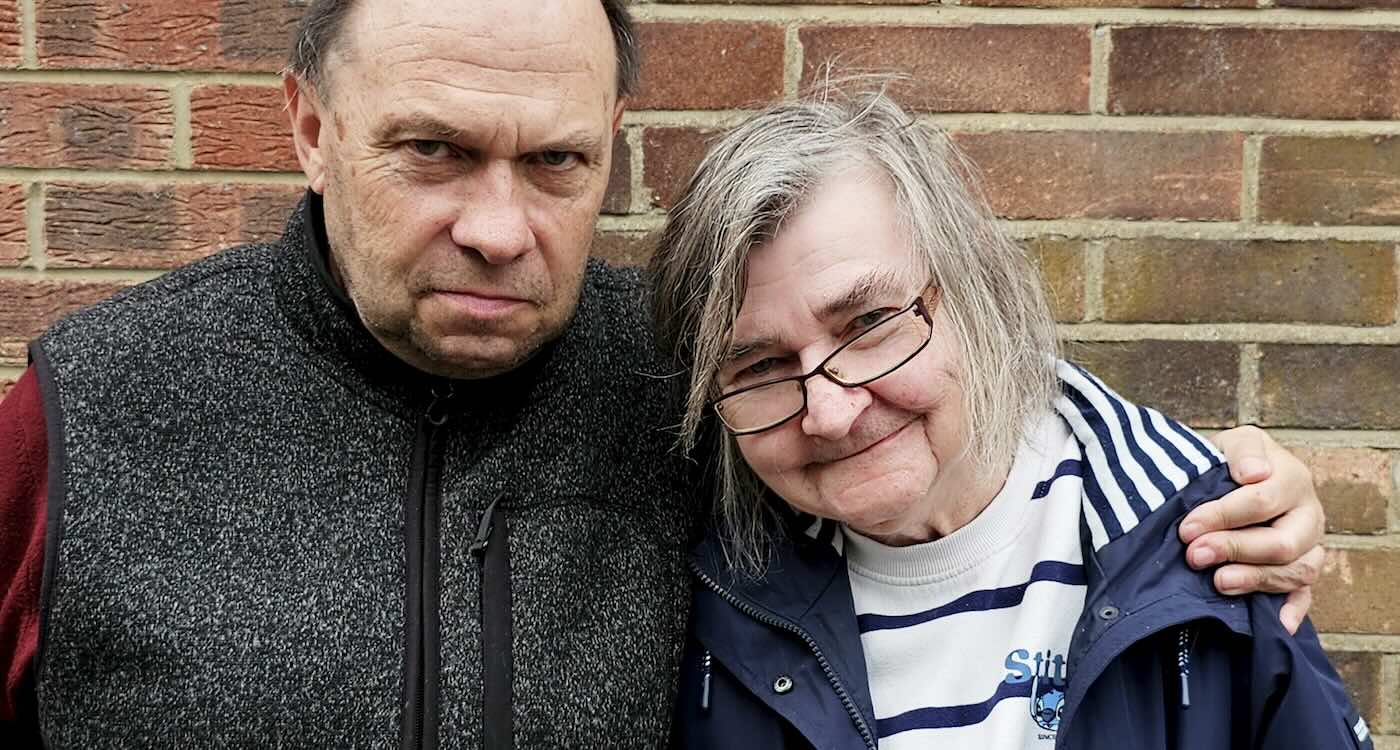
Muriel Bujega arrived at St. Christopher's Hospice in South London withdrawn and grieving, having lost her husband Joseph not long before her breast cancer diagnosis in 2023. But when she expressed one wish to the hospice staff—to be reunited with her brother Colin, whom she hadn't seen in almost 15 years—nurse specialist Phoebe Mooney took on the search as if it were a sacred task.
What unfolded over the following months was less a detective story than an unlikely stroke of grace. After jumping through administrative hoops and finally connecting with an occupational therapist who knew Colin well, Mooney discovered something almost impossible to believe: Colin was already part of the St. Christopher's community, volunteering in one of their fundraising shops. The two siblings, both of whom have learning disabilities, had lost contact years earlier when Colin was forced to move after the caretaker he shared a home with passed away.
The reunion, when it came, was everything Muriel had hoped for. "He couldn't believe it was me," she recalled. "I was in tears, crying on his shoulder. I'd missed him a lot." For the 73-year-old from South London, seeing her brother again after nearly a decade and a half fulfilled what had seemed like an impossible dream.
What's remarkable isn't just the coincidence—though the odds that a hospice staff member would think to search for a family member and find him already volunteering in their own shops are staggering. It's what the reunion reveals about how hospice care has expanded beyond pain management into something more holistic: a place where dying wishes matter, where staff listen to what truly matters to their patients, and where they actually try to make it happen.
Since arriving at St. Christopher's, Muriel has become a familiar and beloved presence. She works out on the gym treadmill, attends art sessions where she's painted pictures of Joseph, and participates in Namaste wellness sessions, often having her nails painted to match her outfit. "Coming here completely changed her life," Mooney said. "She absolutely loves it and says it gives her purpose. She's got to know everybody so well." Muriel herself feels the shift: "Since I've been coming here, I feel more relaxed… I love coming here."
The reunion story carries extra weight given what new research commissioned by St. Christopher's has revealed. Only 20% of people know that hospices can help reconnect patients with loved ones and family members. For many, the word "hospice" still conjures only end-of-life care in its narrowest sense—managing symptoms, easing pain. But as Helena Talbot-Rice, the hospice's rehabilitation and wellbeing lead, explained, the philosophy goes deeper: "By asking people 'what matters to you', we shift the question away from simply asking 'what's the matter with you.' This can have a profound impact on a person's engagement and overall experience."
Muriel and Colin's story is just one example of what becomes possible when that question is asked—and when staff actually listen and act. In their case, it meant a woman facing the end of her life got the gift of time with her brother, of being held and understood and no longer isolated. Sometimes the most important healthcare a hospice can provide isn't medical at all.