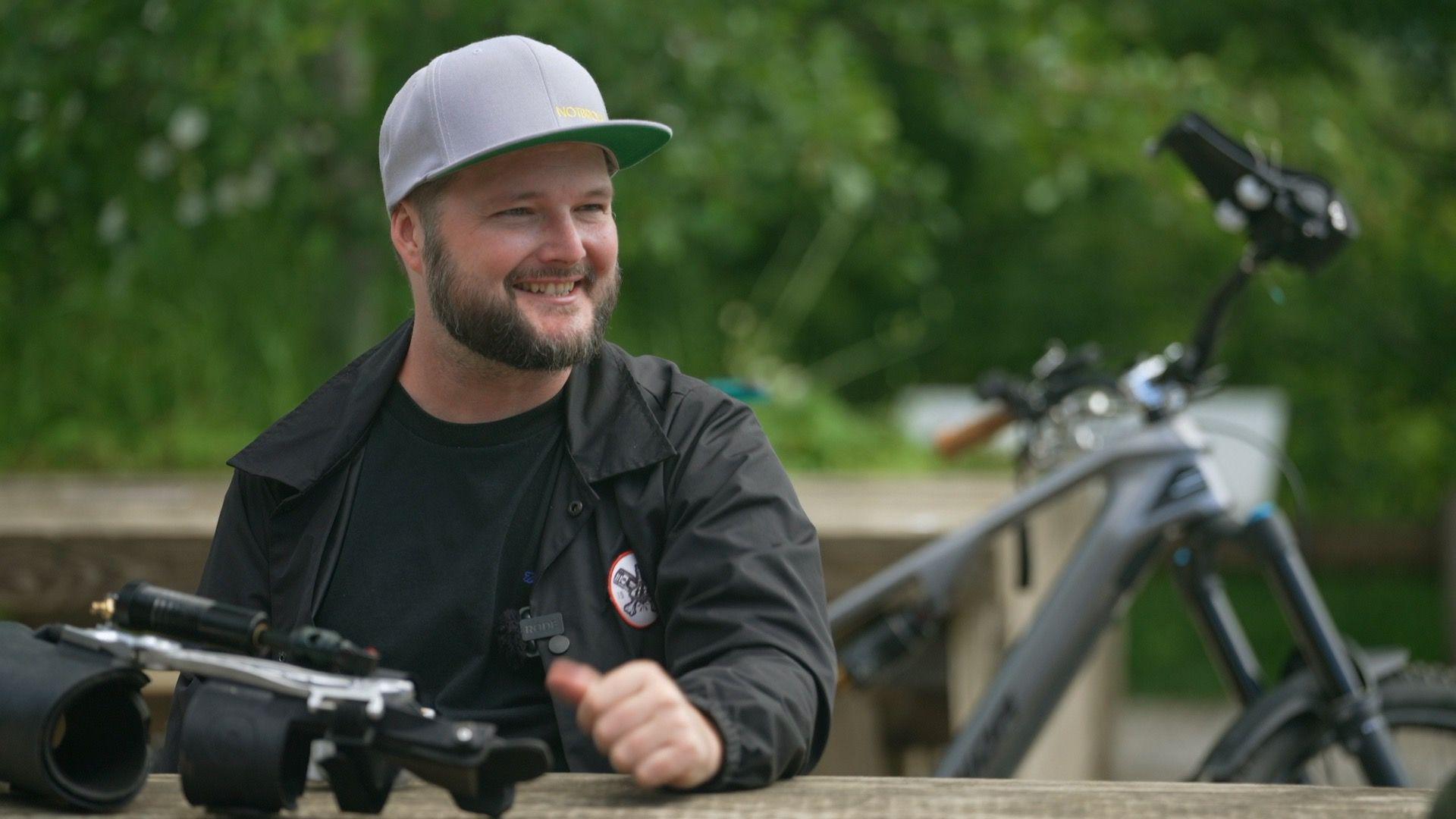
Tom Wheeler still remembers the moment his life changed forever—a mountain bike crash that left him with nerve damage so severe he thought his riding days were over. Fifteen years later, the British cyclist is not only riding again, he's transformed adaptive mountain biking for disabled athletes worldwide, creating innovative technology that's attracting global attention and giving riders like Morgan Jones capabilities they never imagined possible.
Wheeler's story matters because it reveals an overlooked gap in adaptive sports: the equipment simply didn't exist for disabled mountain bikers to compete safely and confidently. When Wheeler began designing a custom brace to help himself ride again, he quickly discovered he wasn't alone. "It became really super apparent early on that this stuff doesn't exist," he explained. "Almost instantly I'd got people reaching out going 'I want what you've got'." What started as a personal solution became a mission to equip adaptive riders around the world.
One of Wheeler's most remarkable innovations is a custom-designed hand that integrates directly into existing prosthetics, giving one-armed riders precise brake and handlebar control they previously lacked. Morgan Jones, a former Wales Para-athlete who finished fourth in the T47 100m track sprint at the 2018 Commonwealth Games on Australia's Gold Coast, discovered mountain biking during the Covid pandemic and sought out Wheeler's expertise. The transformation was immediate. "I was getting into riding myself and starting to look for advice or support on how to get the most out of riding with one arm. This has transformed my riding," Jones said.
The impact goes far beyond technical specifications. Jones, who now holds the tongue-in-cheek title of "top tester" at Wheeler's operation—a role he attributes to being "the most frequent crasher"—describes a newfound confidence that extends into his social life. "I feel so much more confident with it, able to keep up with my mates in a way that I never have before," he said. That shift from isolation to belonging, from limitation to possibility, is what Wheeler's work has unlocked for disabled riders globally.
For Wheeler himself, the past 15 years represent a journey from despair to unexpected fulfillment. "I still have to pinch myself. I can do stuff now I never thought would be possible," he reflected. His designs have caught the attention of adaptive sports communities worldwide, creating a ripple effect of accessibility for riders who were previously excluded from mountain biking entirely. What began as a hospital dream—a way to reclaim his own passion—has become something far larger: proof that one person's innovation can democratize sport and restore joy to countless others.