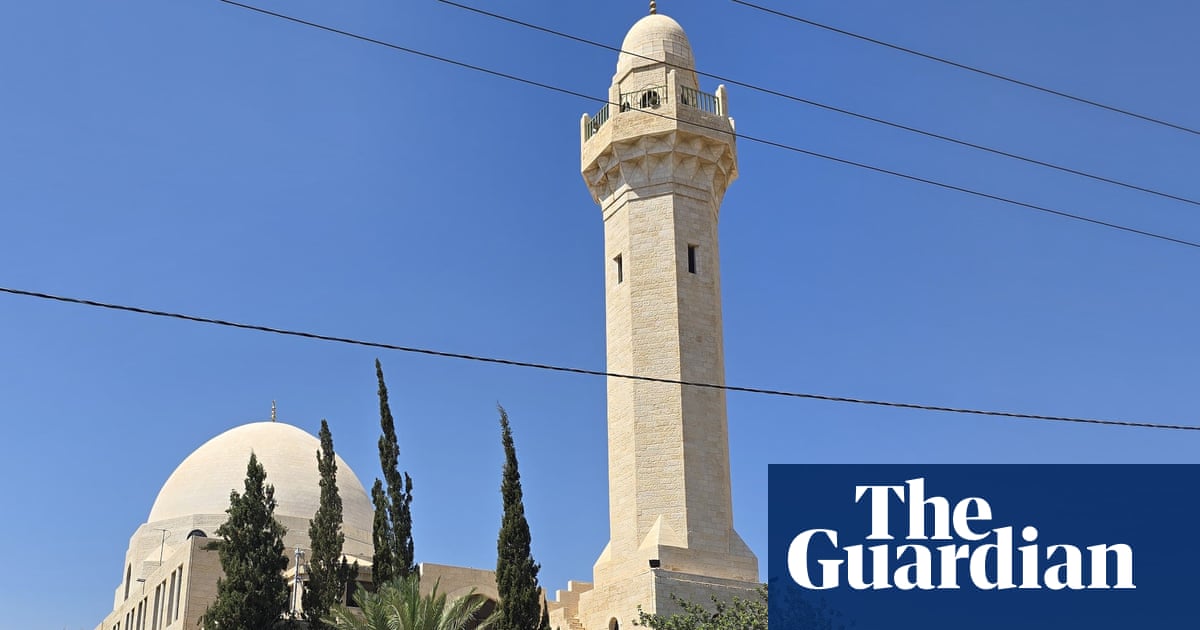
At Abu Obeida Mosque in Deir Alla, green trees and flowerbeds stand out against Jordan’s bare, ochre hills. Their drip-irrigation lines carry water from an unexpected source: the taps where worshippers wash before prayer.
The mosque sits in Balqa, in one of the hottest and driest parts of the Jordan Valley. Jordan has only 61 cubic metres of renewable fresh water per person each year, less than one-eighth of the United Nations’ threshold for absolute water scarcity. Municipal water is rationed, and in some places arrives through pipes for as little as 12 hours a week. Reusing water that would otherwise flow into sewers can help gardens grow without drawing more from that strained supply.
Before each of the five daily prayers, Muslims perform wudu, washing their hands, faces and feet. At Abu Obeida, pipes beneath the washing area collect this used water and carry it to a treatment unit. It is cleaned and filtered, then sent outside to irrigate the mosque’s bushes and trees.
Ahmed al-Rawsan, founder of the Jordanian Aqua Conservation Association, which manages the system, says the water can be treated with natural settling and five layers of gravel and sand. Worshippers do not use soap during wudu, he says, so chemicals do not complicate the process. A sign on the mosque’s stone wall describes the project’s aims: conserving water and improving the mosque’s surroundings. The Ministry of Awqaf, Jordan’s religious affairs ministry, is a partner.
The idea is simple, but spreading it has taken time. The association has worked on water reuse since 2008. Over 18 years, the effort reached 18 mosques and schools, held back by costs, technical challenges and uncertainty over who would maintain the equipment. Al-Rawsan says systems sometimes lacked upkeep because responsibility had not been clearly assigned between mosque imams and caretakers.
The Ministry of Awqaf has also backed training and wider conservation efforts. Spokesperson Mohammad al-Tawalbeh says programmes have reached 1,200 muezzins, who call people to prayer, 750 female preachers, 110 imams and 28 technicians. From 2017 to 2024, the ministry carried out rainwater-harvesting projects at more than 50 mosques. More than 35 mosques are already using ablution water for irrigation and cleaning.
The potential is part of a much larger challenge. A 2025 peer-reviewed study estimates that 3.6 million mosques around the world use 22.5 million cubic metres of water for ablution each year. Jordan has more than 7,600 mosques. Former irrigation minister Mu’tasim Sa’idan cautions that the amount from ablutions is smaller than people may assume. Jordan already reuses about 150 million cubic metres of wastewater annually, with about 90% going to irrigation.
Al-Rawsan says the project is meant to show that a mosque can practise the conservation it teaches. For worshippers such as Abdullah Khaled, the next step is making that lesson part of daily life: he says people may hear a Friday sermon about saving water, then go home and leave a tap running or a rooftop tank overflowing. Reusing washing water offers one practical example—but lasting change also depends on what happens beyond the mosque garden.