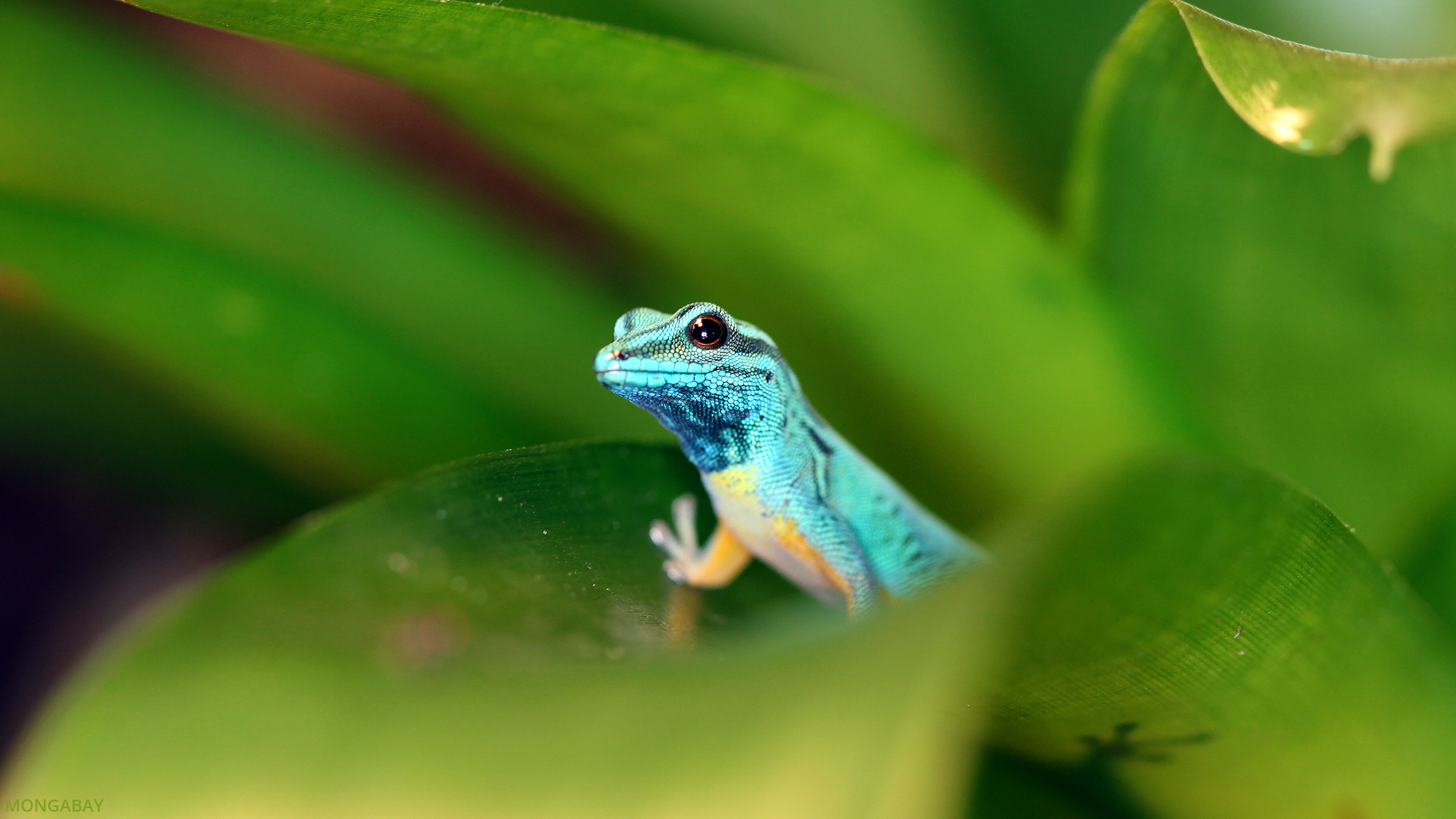
Rhett Butler’s camera caught it first: a flash of electric blue clinging to a screwpine in Tanzania’s Kimboza Forest, no bigger than a child’s thumb, yet glowing like a shard of sky. This is Lygodactylus williamsi, the Williams electric blue day gecko—a jewel of a reptile found in just two forest reserves on Earth, and now, against long odds, making a quiet comeback. Its story is not one of grand interventions, but of precise, persistent care: stopping illegal trade, removing invasive trees, and empowering local communities to become guardians of a fragile ecosystem.
Endemic to the Kimboza and Ruvu Forest Reserves in central Tanzania, this gecko depends entirely on screwpine trees for survival—its home, its pantry, its nursery. But that specialization became its Achilles’ heel. By 2009, tens of thousands had been stripped from the wild, poached for Europe’s exotic pet trade. Traders would cut down screwpines just to reach the geckos, devastating the habitat in the process. By 2017, the species was listed as critically endangered, and international commercial trade was banned under CITES, the global wildlife trade convention. That legal shift was crucial, but the real change began on the forest floor.
In Kimboza, forest ecologist Charles Kilawe joined forces with villagers and rangers to wage a quiet war against Spanish cedar, an invasive tree that had choked out native vegetation. Since 2016, they’ve felled nearly 100,000 cedar trees, slashed forest fires by about 80%, and planted roughly 5,000 native trees each year. These aren’t flashy numbers, but they’re transformative on the ground. Screwpines are returning. So are the geckos. And with them, other forest dwellers: blue monkeys swing through the canopy, white-chested alethes flit in the understory, and trumpeter hornbills echo their calls across the treetops.
The recovery of Lygodactylus williamsi proves that even species with the tiniest ranges can rebound when conservation is targeted and inclusive. It’s not about saving everything at once—it’s about saving the right things, in the right places, with the people who live there. As trade pressure stays low and habitat grows, the gecko’s electric blue flicker is becoming a little more common. And in that small, steady return, there’s a quiet promise: that with care, even the most fragile lives can find their way back.