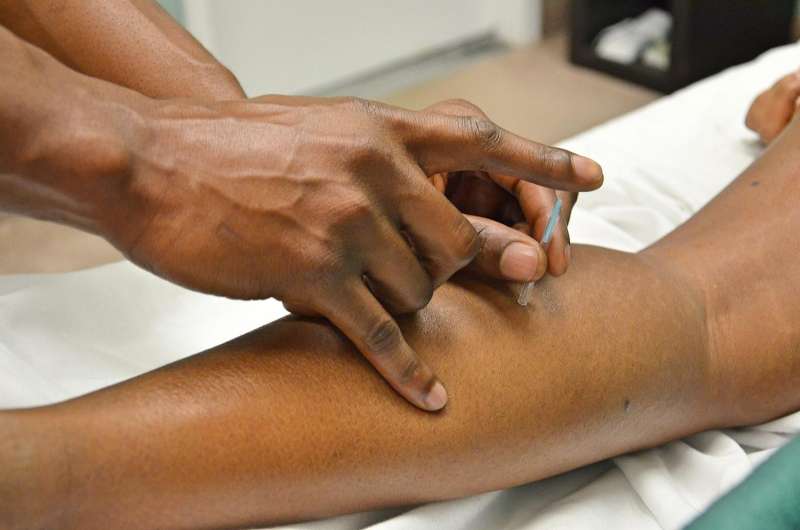
One side of the body goes rigid. The hand won't open. The leg won't respond. For millions of stroke survivors, this paralysis becomes a lifelong reality—but a new study offers evidence that acupuncture may help unlock motor function that seemed permanently lost.
A randomized trial published in CNS Neuroscience & Therapeutics demonstrates that acupuncture can significantly improve muscle function recovery in patients recovering from stroke, with the therapeutic gains directly linked to measurable changes in brain structure. This finding bridges ancient practice and modern neuroscience, revealing how the brain physically rewires itself in response to treatment.
The study enrolled 56 stroke patients and divided them in a 2:1 ratio: some received true-acupoint acupuncture over two weeks, while others received sham treatments as a control. Only patients in the true-acupoint group showed significant improvements in motor function tests. The difference was decisive and measurable.
What makes this discovery particularly striking is what the researchers found when they looked inside the brain. Using multimodal MRI imaging, they identified increases in gray matter volume in three critical regions: the right opercular inferior frontal gyrus, the postcentral gyrus, and the cerebellar region. These aren't random areas of the brain—they're precisely the zones responsible for initiating movement, executing it, controlling it, and coordinating complex actions. In the patients who improved most, these structural brain changes directly correlated with their motor recovery gains.
The mechanism points to how acupuncture may work at the neurological level. "These [brain] modulations may improve motor initiation, execution, control, and coordination, representing a potential central mechanism underlying acupuncture's therapeutic effect," the study authors noted. In other words, the needle isn't just providing temporary relief—it appears to trigger the brain's own neuroplasticity, the remarkable ability of neural tissue to reorganize and forge new connections after injury.
Stroke remains a leading cause of disability worldwide, and current recovery options are limited. Physical therapy and pharmaceutical interventions help many patients, but outcomes vary widely, and gains often plateau months after the initial event. A non-invasive approach that activates the brain's own healing capacity could expand possibilities for the hundreds of millions of people living with post-stroke motor deficits.
The implications extend beyond individual patients. If acupuncture can reliably restore motor function by promoting gray matter growth in motor control regions, it suggests a pathway for enhancing rehabilitation protocols. The technique is accessible, affordable, and generally well-tolerated—qualities that matter enormously in global health.
Of course, a single study of 56 patients is a beginning, not an ending. Larger, multicenter trials will be essential to confirm these findings and determine optimal treatment timing, duration, and patient selection. But the convergence of functional improvement with structural brain change—measured by neuroimaging—strengthens the case that acupuncture's effects are genuine and neurobiologically grounded.
For stroke survivors facing the prospect of permanent disability, the possibility that needles and neuroplasticity might work together to restore lost movement offers something increasingly rare in medicine: genuine hope, backed by evidence.