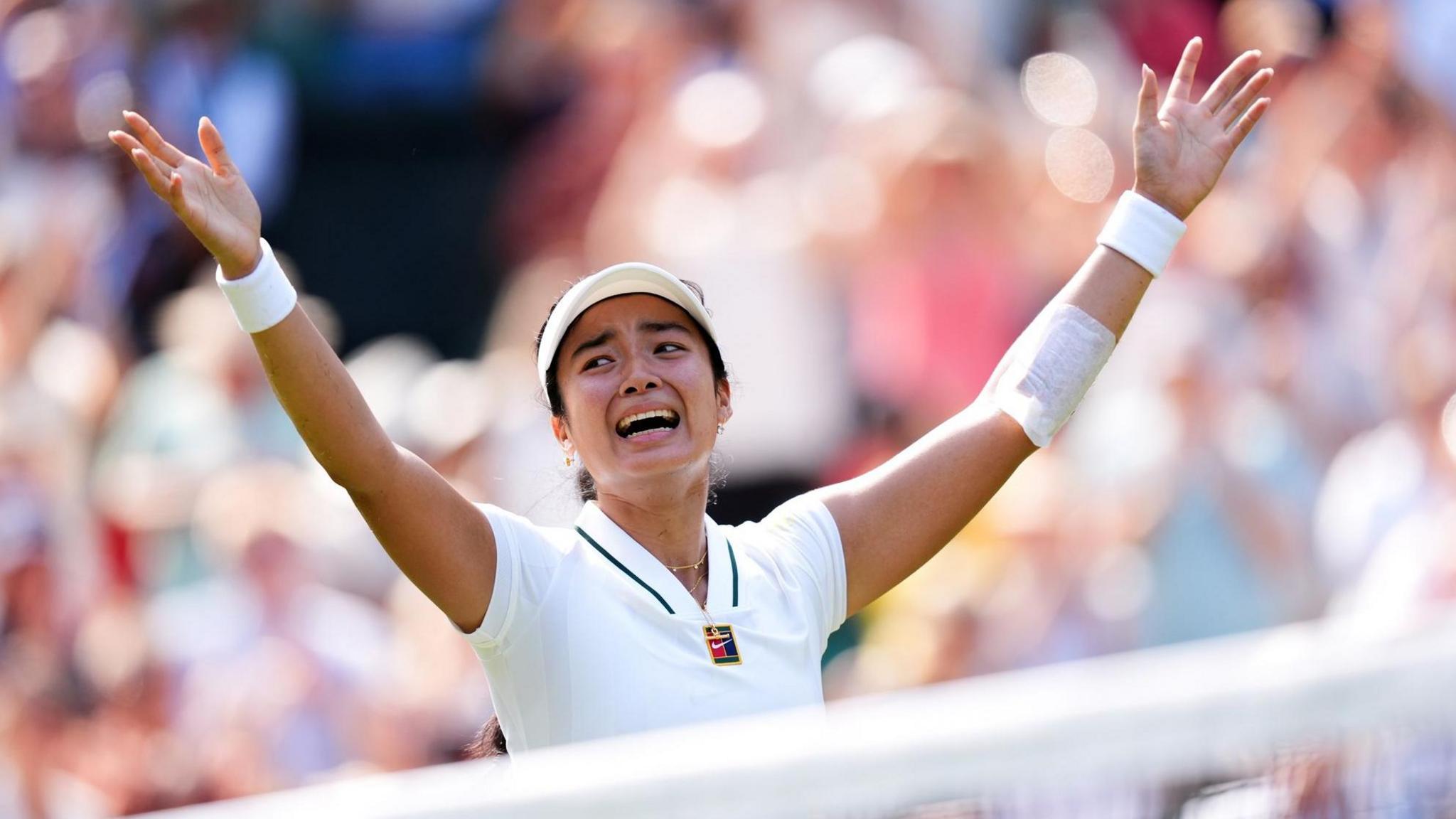
When 21-year-old Alex Eala stepped onto Centre Court at Wimbledon last July, she carried more than just her racket. She carried the hopes of 112 million people watching from across the globe.
Eala became the first Filipino ever to reach Wimbledon’s fourth round, defeating defending champion Iga Swiatek of Poland along the way. It was a run that sparked something real across the Philippines — not just pride, but a genuine burst of love for tennis in a country where courts had mostly gathered dust.
Back home in Manila, the impact was immediate. President Ferdinand Marcos Jr. hosted a hero’s welcome for Eala at Malacañang Palace, the official presidential residence. “I’m so grateful that I am able to share my triumphs, most especially my recent run at Wimbledon, with the country,” Eala said at the reception. “As we say, this is our victory.”
For young players watching from the sidelines, Eala’s moment felt like permission to dream bigger. Fourteen-year-old Maristella Torrecampo had been following every match on her phone. She had already traveled 13 hours by bus from her hillside hometown just to compete in Manila that same week, a journey her crowdfunded budget could barely cover. When she stepped onto the court, she played with something extra.
“Like Ate Alex, I want to win at Wimbledon, WTA, and various tournaments around the world,” Torrecampo said, using the Filipino word for elder sister. She crushed her Omani opponent in straight sets, 6-1, 6-1. “She inspired me so much. I looked up to her since I was little.” Torrecampo has already competed in the Philippine National Games and in tournaments in Cambodia and Sri Lanka.
Eala is not the Philippines’ first tennis player, but she may be the one who changed the game. Since reaching the semi-finals at the Miami Open last year, she has reignited interest in a sport that had taken a back seat to basketball, boxing, and beauty pageants — the three B’s that have long dominated Filipino sports culture.
Yet this tennis renaissance has also revealed how difficult the sport still is for everyday Filipinos to access. Court rentals in Manila cost around 2,000 pesos (about $32 or £19) per hour — half a day of play costs roughly half the minimum wage. Tennis courts tend to cluster in wealthier neighborhoods, and equipment stays pricey.
Tennis coach Jovy Barce knows this struggle firsthand. He started as a ball boy at age six in Caloocan city, picking up balls on the court for 100 pesos (about $2) per session, which he split with his mother for groceries. At eight, he found a discarded racket in the trash and taught himself to play. No coach, no sponsors, no money for international travel. “I started from nothing, but I tried my best to learn everything because I really wanted to become a coach,” Barce said. He eventually put himself through college on a sports scholarship and began coaching with just 40 tennis balls.
Eala’s victory has not erased those barriers. But for the first time in a generation, Filipino families like Torrecampo’s are asking whether tennis might be for them too. And that question, sparked by one young woman’s courage on a Wimbledon grass court, may be the most important win of all.