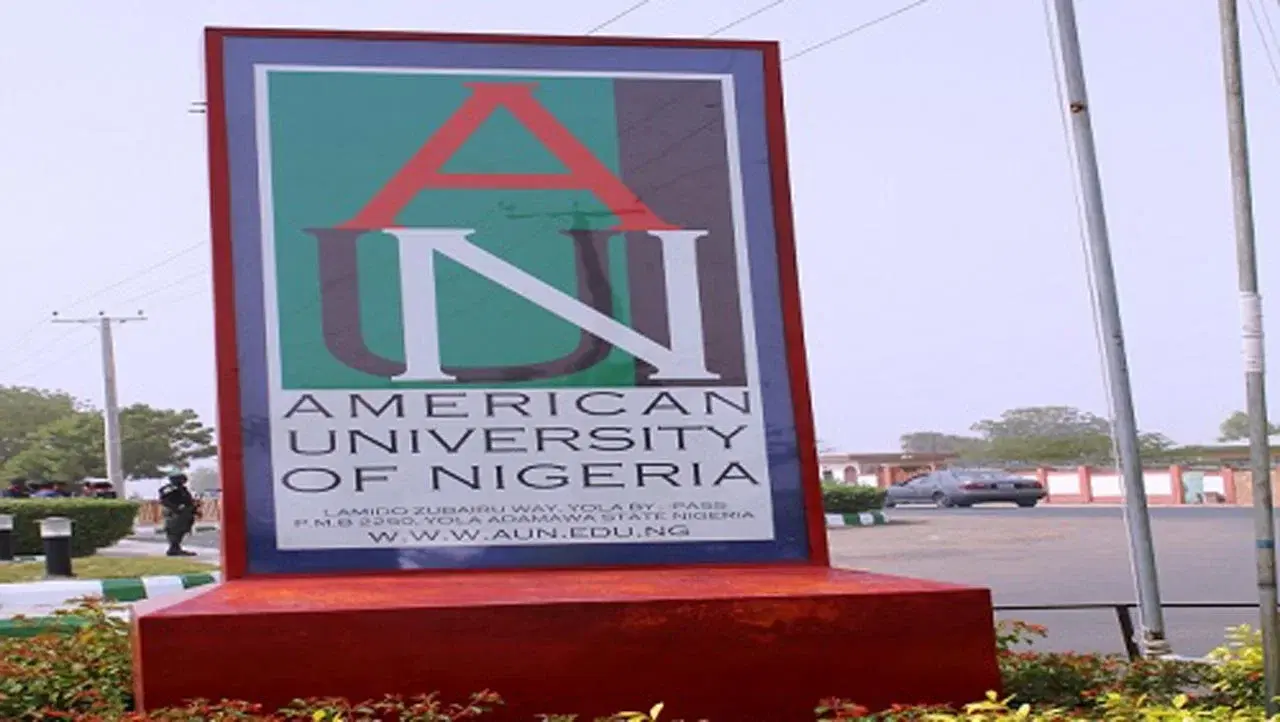
In the fall of 2014, a bus carrying Margee Ensign, then president of the American University of Nigeria (AUN), and members of the Adamawa Peace Initiative rolled through the dusty roads of Mubi, returning from a meeting that would change everything. Inside sat five hundred women and girls, their voices trembling with grief—husbands dead, sons kidnapped by Boko Haram. One woman’s words cut through the silence: “Boko Haram killed our husbands and kidnapped our boys.” It was not just a cry of loss, but a warning. And because of the trust built between AUN and its community, that warning arrived in time.
The American University of Nigeria, nestled in Yola, a rural and deeply impoverished region in northeastern Nigeria, was never meant to be just another campus. Founded with the bold vision of being “Africa’s development university,” AUN under Ensign’s leadership became a lifeline for a region under siege. In a place where suspicion of Western education ran high—fueled by Boko Haram’s very name, meaning “Western education is evil”—AUN’s survival depended on deep community integration. It wasn’t enough to teach students; they had to serve the people.
In 2012, when fuel subsidy cuts sparked national unrest, AUN didn’t retreat. Instead, it launched the Adamawa Peace Initiative (API), uniting Muslim and Christian leaders, youth, and businesspeople around shared values: education as society’s foundation, women as central to development, and religion as a force for peace. From that coalition emerged transformative programs. The Feed and Read initiative fed street children—many Almajiri, vulnerable to extremist recruitment—while AUN students taught them literacy and numeracy. Peace through Sports brought together youth from divided communities on football fields, building bridges where bullets once flew. And the Technology-Enhanced Learning for All (TELA) radio program, born from an AUN media class, taught over 20,000 displaced children how to read, broadcasting hope across war-torn regions.
When hospitals in the region struggled with spotty internet and no access to medical research, AUN’s librarians loaded vital health information onto flash drives—Library on a Flash—delivering knowledge where it was needed most. And when 21 young women escaped the clutches of Boko Haram, AUN offered them scholarships, not just education, but a future.
These weren’t side projects—they were the curriculum. Students and faculty turned local crises into classroom challenges, designing real-world solutions to hunger, illiteracy, and disease. The university didn’t just survive the Boko Haram crisis; it became a sanctuary because it had already become family to the community.
Today, AUN stands as proof that education, when rooted in trust and service, can be a shield as much as a ladder. In a world too often divided, it reminds us that the most powerful classrooms are not behind walls—but in the heart of where help is needed most.