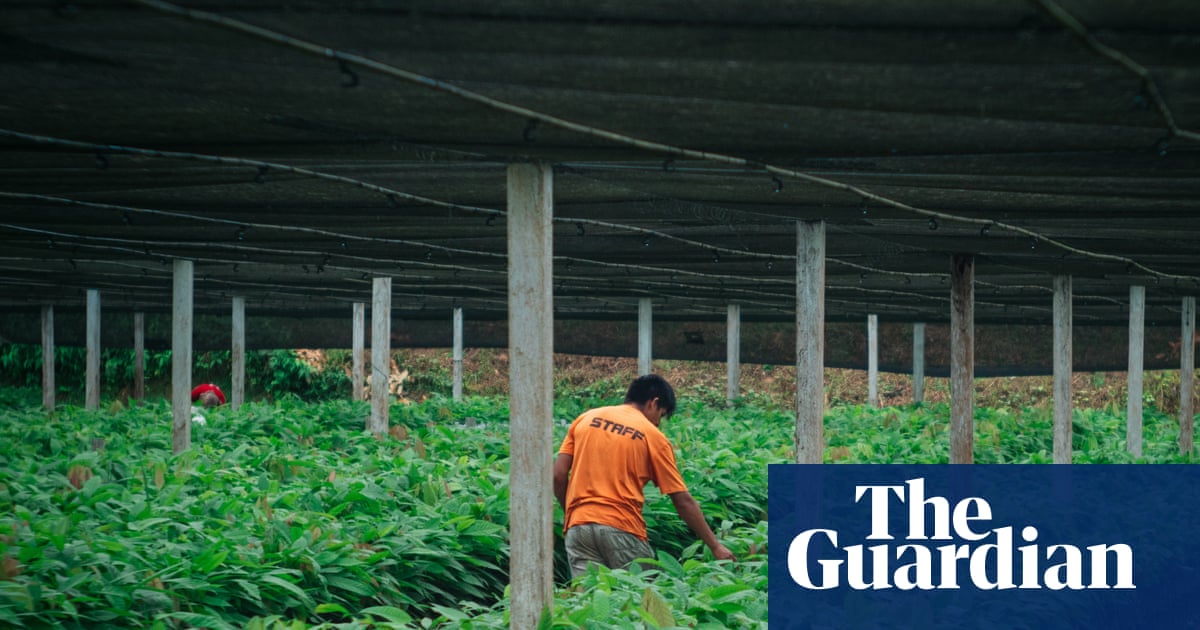
Cacao pods, deep purple and heavy with promise, dangle from trees shaded by towering mahogany on Herminio Mamani’s farm in Palos Blancos, Bolivia. A former president of El Ceibo, the country’s largest organic cacao cooperative, Mamani walks among his agroforestry plot where cacao, bananas, and native timber grow in harmony—a living shield against the encroaching threat of gold mining. Just 20 miles away, the Kaka River churns under the assault of dredges and excavators, rerouted and poisoned by a gold rush that has devastated ecosystems in one of the world’s most biodiverse regions. But here, thanks to hard-won local laws passed in 2021, Mamani’s land remains untouched. The bans in Palos Blancos and neighbouring Alto Beni were born from years of grassroots resistance, sparked in 2017 when a mining dredge appeared on the Boopi River. Farmers watched as nearby towns like Mayaya suffered plummeting water levels and vanishing fish. 'People gathered in mass protest and issued a warning: “Leave, or we burn your machinery,”' recalls Nancy Chambi, a farmer and councillor in Alto Beni. The miners left. The communities organized, driven by the knowledge that even small-scale mining could bring mercury contamination, jeopardizing their organic certifications and global market access. 'Even if small-scale mining were permitted, it’s a slippery slope,' Mamani warns. 'Contamination would be unavoidable, and if we lost our certifications, the price of our cacao would plummet.' After four years of pressure, both municipalities passed binding mining bans—defying national policy. A 2024 departmental law later affirmed their authority. The impact has been profound: in 2025, El Ceibo exported 2,000 tonnes of cacao, mostly to Europe and the US, offering economic stability amid Bolivia’s deepening crisis. 'With the country’s economy in such bad shape, people here are a bit more at ease,' says producer Jesús Tapia. For Roberto Gutierrez and Nancy Chambi, who sell cacao, bananas, and papaya through a smaller cooperative, the victory is both economic and ecological. 'If Mayaya has yellow gold, we have purple gold,' Gutierrez says, holding a ripe cacao pod. Now, at least 10 other municipalities and Indigenous territories are pursuing similar bans. 'This is the beginning of the fight,' says Pablo Solón, former Bolivian ambassador to the UN. 'We have to build a wall to prevent mining from coming down the river.'
← News
Economic Alternatives Economic Alternatives Frontiers
How Bolivia’s cacao farmers took on the gold mining industry – and won
2,000 Tonnes Cacao exported in 2025
1,300 Members of El Ceibo cooperative
At Least 10 Municipalities pursuing mining bans
2021 Year mining bans passed
64% gold price increase