When Jamel Musiala walked onto the pitch before a Germany match, the Beats logo on his headphones had been covered with masking tape. FIFA, the tournament's governing body, had made sure of it. But within hours, Beats had posted Musiala's photo to its millions of followers with a simple caption: "Spoiler alert: it's a b." It was a teaser for an unreleased headphone model nobody knew existed. FIFA had just handed Beats a global product launch—for free.
This is the paradox at the heart of the Qatar World Cup's most unexpected story: the brands that weren't supposed to be there have ended up generating more conversation than brands that paid tens of millions to be there officially. Levi's, Heinz, and Beats found themselves at the center of a phenomenon sports marketing experts call the Streisand Effect—a term coined after Barbra Streisand discovered that her attempts to remove a photograph of her Malibu home from the internet only drew more attention to it. When you try to suppress something, you often make it more visible. FIFA appears to be living this reality in real time.
The tournament's official sponsors pay substantial sums for exclusivity, and part of that deal is protection from brands seeking association without contributing financially. FIFA has built an elaborate system to control visibility—renaming stadiums, restricting what players and fans can wear, even controlling typeface and language. Yet fan attention is slippery, and brands have always found side doors into the conversation. This tactic, known as ambush marketing, has been in play since at least 1994.
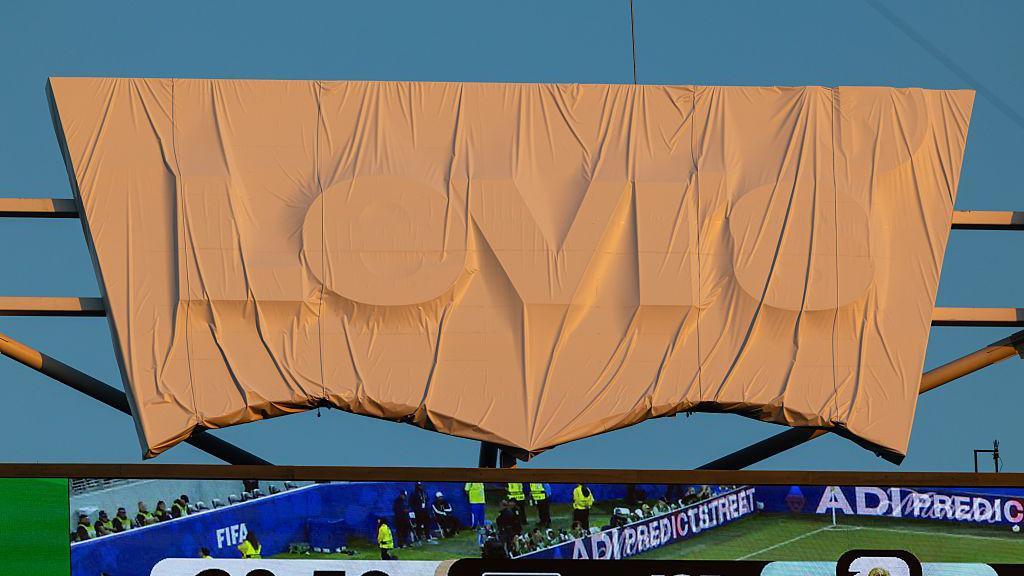
The results have been remarkable. Heinz turned a taped-over ketchup bottle into a limited-edition product release. Levi's didn't need a stunt at all—just pointed everyone toward its covered logo. A single social post generated hundreds of thousands of interactions. One TikTok of the white tarpaulin covering Levi's iconic patch amassed nine million views. The brand has since rolled out the "tarp logo" across stores in London, Paris, Milan, Berlin, Hong Kong, Brazil, and Mexico. The cover-up became the campaign.
Historical precedents suggest this pattern was almost inevitable. In 2006, Netherlands fans were ordered to remove trousers bearing Bavaria's logo—Budweiser was the official sponsor. One fan watched the match in his underwear, and the story went worldwide. Bavaria paid nothing. By 2014, Sony, an official FIFA sponsor, had Beats banned from every stadium and media event. Sony sent athletes free headphones, but star players wore Beats on the team bus, in training, through the tunnel—everywhere FIFA couldn't control. The enforcement, not the brands being protected or excluded, became the story.
What's emerged from Qatar is a reminder that in the attention economy, visibility often matters more than validation. Official sponsors still receive rights, access, and hospitality that ambushers cannot replicate. But these three brands have shown that sometimes the fastest path to being heard is letting someone else try to silence you.