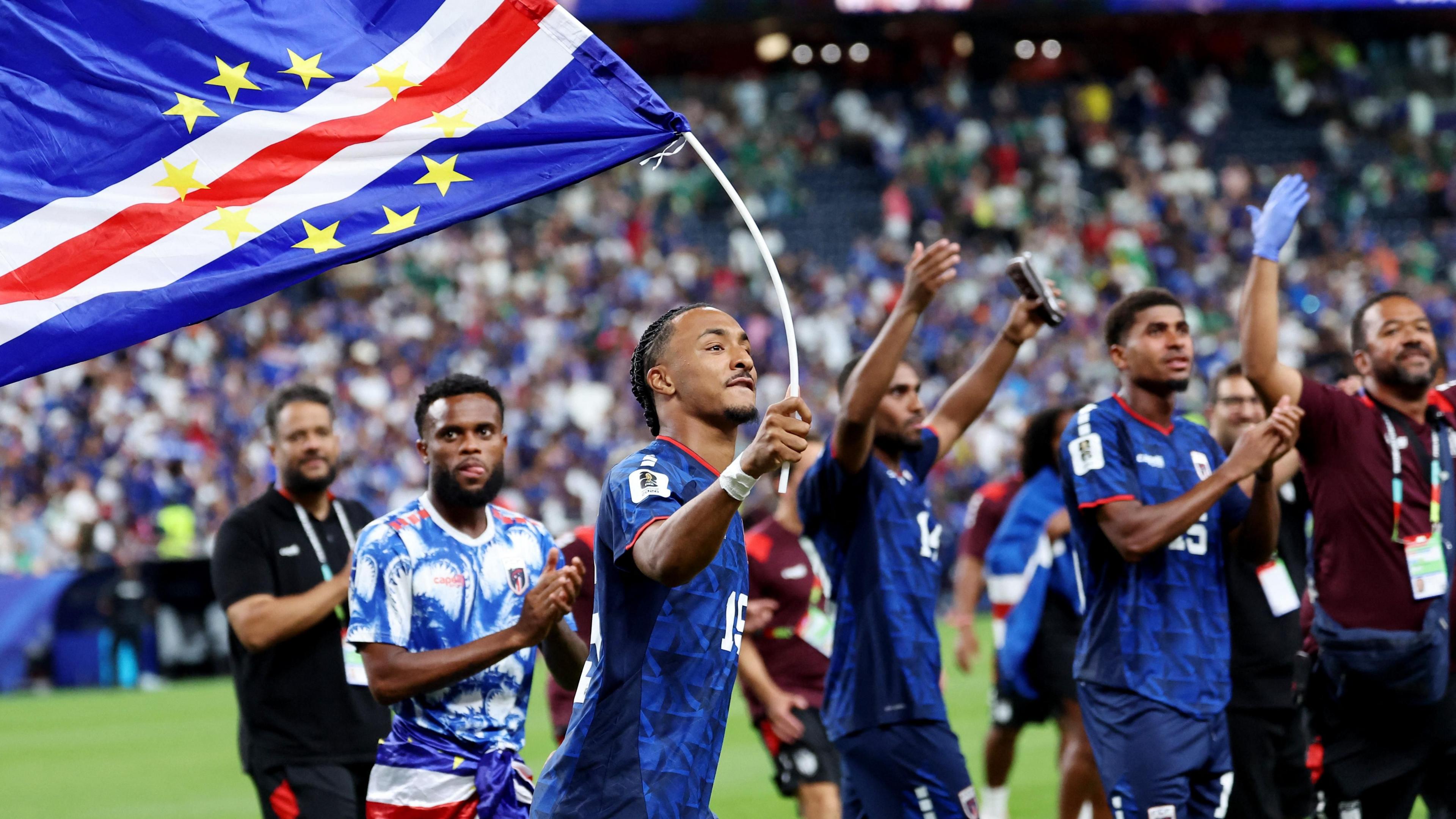
When the final whistle blew on Cape Verde's goalless draw with Saudi Arabia, players didn't rush to celebrate — they huddled on the pitch, phones raised, watching Spain's match against Uruguay unfold. They needed that result to confirm what felt impossible: they had qualified for the knockout stages of the World Cup. When the moment came, tears of pride flowed freely, not just among the players, but in the stands as well. It was, as one commentator put it, the moment of the tournament.
Cape Verde — a nation of just 525,000 people spread across 10 islands in the Atlantic Ocean — has become the smallest country in history to reach the World Cup knockout rounds. Their reward? A last-16 tie against Argentina, the defending champions.
The journey to this point defied every expectation. Cape Verde drew 0-0 with Spain in their opening match, a result made remarkable by 40-year-old goalkeeper Vozinha, who made seven saves to keep the 2010 champions at bay. They followed that with a 2-2 draw against Uruguay — two-time World Cup winners — before their nervy final draw with Saudi Arabia sealed their progression as Group H runners-up.
But how does a nation smaller than many cities achieve the improbable on football's biggest stage? The answer lies partly in a bold strategic decision by the Cape Verdean football federation: reaching into the diaspora. Fourteen of their 26-man World Cup squad were born abroad, with six coming from Rotterdam alone — a legacy of the severe droughts that prompted mass emigration from the islands to the Dutch port city in past centuries. One of those players, forward Dailon Livramento, scored the decisive goal in their qualifying victory over Cameroon last September. Another, centre-back Roberto Lopes, was recruited via LinkedIn in 2019.
Yet talent alone doesn't explain it. Coach Bubista, a former international who took charge in January 2020, has built a side defined by discipline and unity. In that stunning draw with Spain, the Blue Sharks committed just one foul — the fewest recorded by any team in a World Cup match since 1966. "We always train and play as one unit," defender Sidny Lopes Cabral told the BBC. "This is our personality as a team."
Bubista was recently named the Confederation of African Football's Coach of the Year for 2025, recognition for a project that has also seen Cape Verde reach the quarter-finals at the 2023 Africa Cup of Nations. "We have done really well considering how small our country is," he told BBC Sport Africa before the tournament. "I think in the future we'll be at the World Cup."
That prediction has become reality. And now, as the smallest nation ever to reach this stage, Cape Verde faces Argentina — not as underdogs seeking sympathy, but as proof that vision, unity, and decades of quiet belief can take a group of islands to the world's grandest football table.