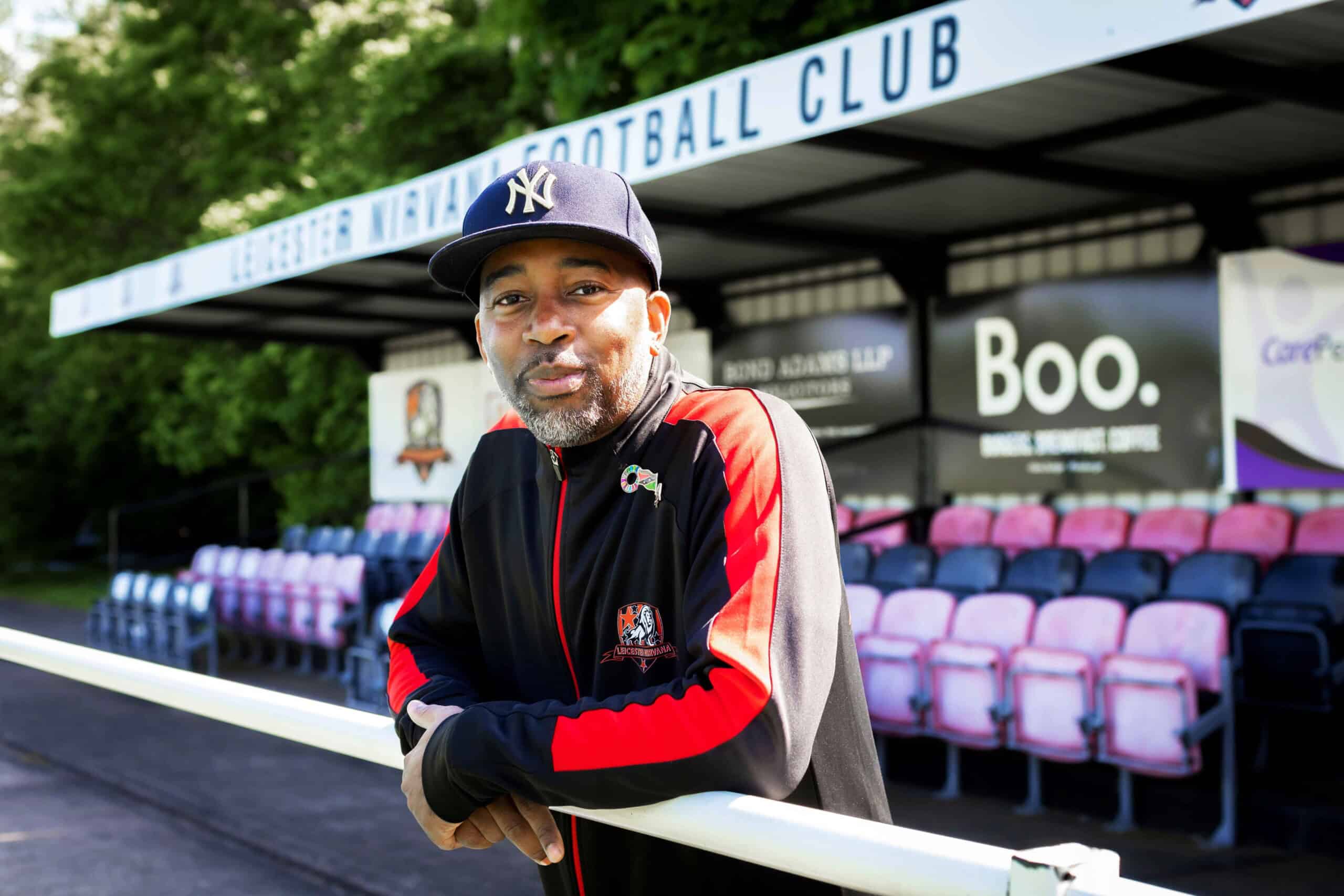
The rain was pouring down on a Saturday morning in Leicester, but one teenager didn't mind. He was running around with a group of kids, laughing, coaching — totally dedicated. A few months earlier, police had caught him carrying a knife multiple times. Now, officers could hardly believe it was the same person.
"They said: 'What? He came to training voluntarily?'" recalled Ivan Liburd of Leicester Nirvana FC. "Yes. Because these young people just react differently when they're in the community, with someone who's not perceived as a threat to them."
Liburd took on the young person as part of a pilot scheme, letting him help with Saturday morning training sessions. The change was so dramatic that police struggled to recognize him.
Before moving to its current location, Leicester Nirvana was based at Highfields in Leicester's inner city — a place with row upon row of Victorian red brick terraced housing, little greenery, and no proper playing fields. "We grew up in these areas," Liburd said. "There was no proper organised sport, it was all concrete, 40% of young people were in poverty."
Now, weekend mornings at a quiet spot on the edge of the city come alive with kids from as many as 70 countries shouting words of encouragement to each other. Black banners with "NO Racism" fly at the entrance, and a clubhouse built on land the council let them use has become a trusted space for young people who might not respond to formal authority.
"Some of those same kids that misbehave at school will come to football and they'll be good as gold with their coach," Liburd said. "Communities like ours can access these young people at their best, we can connect with them and hopefully make them better people."
Grassroots football is increasingly being used by police and club charities as a tool to prevent knife crime, antisocial behaviour, and youth violence. Through the Premier League Kicks Police Partnerships Fund, nearly £1 million in Premier League funding is being matched by £1.2 million from police forces and Violence Reduction Units — creating more than £2 million over two years for 43 football club charities across England and Wales.
Research by the Carnegie School of Sport found that 93% of Kicks programme participants believed it helped them get into less trouble. In Merseyside, where more than 30 free sessions now run each week for young people aged 8 to 19, Everton in the Community reports that antisocial behaviour and crime fall by 75% to 82% during Premier League Kicks session times.
"When young people are given something positive to be part of, supported by consistent role models and clear expectations, we see real and measurable drops in antisocial behaviour and crime, that benefit whole neighbourhoods," said Merseyside Police and Crime Commissioner Emily Spurrell, who made grassroots football a formal part of her crime reduction strategy.
For Liburd, the lesson is simple: clubs can become more than places to play. They can become places where young lives genuinely change direction — even in the rain.