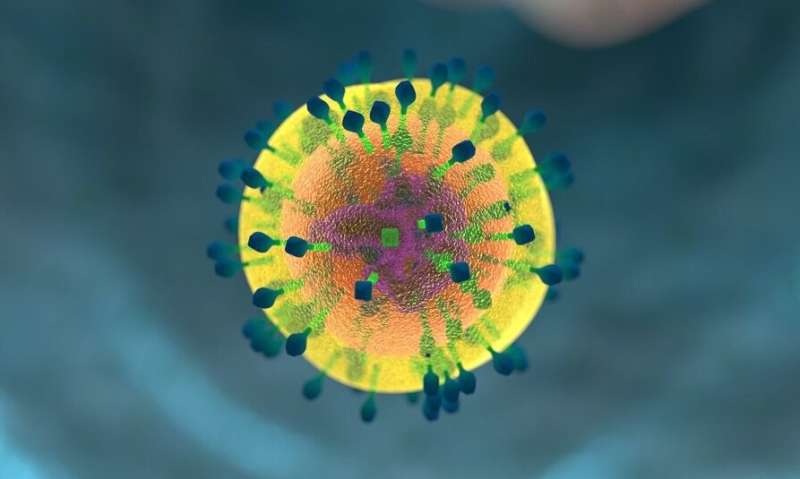
For nearly two decades, scientists have known that a mysterious protein called Themis played a critical role in T cell development—but not how. Now, researchers at VIB, Ghent University, and VUB have finally solved this long-standing puzzle, revealing the intricate molecular dance that keeps our immune system in balance.
T cells face a stringent selection process in the thymus, the gland where these crucial immune cells mature before entering the bloodstream. The stakes are high: this developmental checkpoint must distinguish between genuine immunological threats and the body's own healthy tissues. When this process goes wrong, the consequences are severe—autoimmune diseases or dangerous immune deficiencies can take hold. Understanding how T cells make this life-or-death distinction has been central to immunology for decades.
Dr. Danielle Clancy, first author of the study at VIB-UGent Center for Inflammation Research, describes Themis as "something of an enigma." Scientists knew it was essential, but the structural understanding of how it actually worked remained locked away at the molecular level. The breakthrough came through cryo-electron microscopy, a technique that allowed the research team to visualize the three-dimensional structure of Themis bound to Grb2, a multifunctional protein involved in numerous signaling pathways inside cells.
What they discovered was far more sophisticated than anyone had anticipated. Themis doesn't simply grasp at Grb2; it wraps around the protein in an unexpectedly intricate embrace, stabilized by multiple cooperative contact points. Even more ingeniously, part of Grb2 remains flexible within this complex, acting as a dynamic signaling hub that can recruit other proteins when T cells are activated. As Prof. Savvas Savvides, senior author of the study, explains, "The interaction is much more sophisticated than anyone anticipated, involving multiple cooperative contact points that stabilize the resulting constitutive complex."
To confirm their structural insights weren't merely architectural curiosities, the team went further. They disrupted the Themis-Grb2 interaction and observed the consequences: important signaling events were derailed, confirming that this protein partnership is absolutely essential for proper T cell development. The findings appear in Nature Communications, published in 2026.
The implications extend far beyond basic science. By providing what Clancy and Savvides describe as "a structural blueprint for a key signaling hub in the immune system," this work opens new doors for understanding immune dysfunction. It may eventually lead to novel treatments for autoimmune diseases, immune deficiencies, and other immune-related conditions that affect millions of people worldwide.
The elegance of this discovery lies in its simplicity once revealed: two proteins working in concert, their partnership fine-tuned over millions of years of evolution, ensuring that our immune cells develop the wisdom to know what to attack and what to protect. Understanding this molecular conversation is the first step toward being able to correct it when it goes wrong.