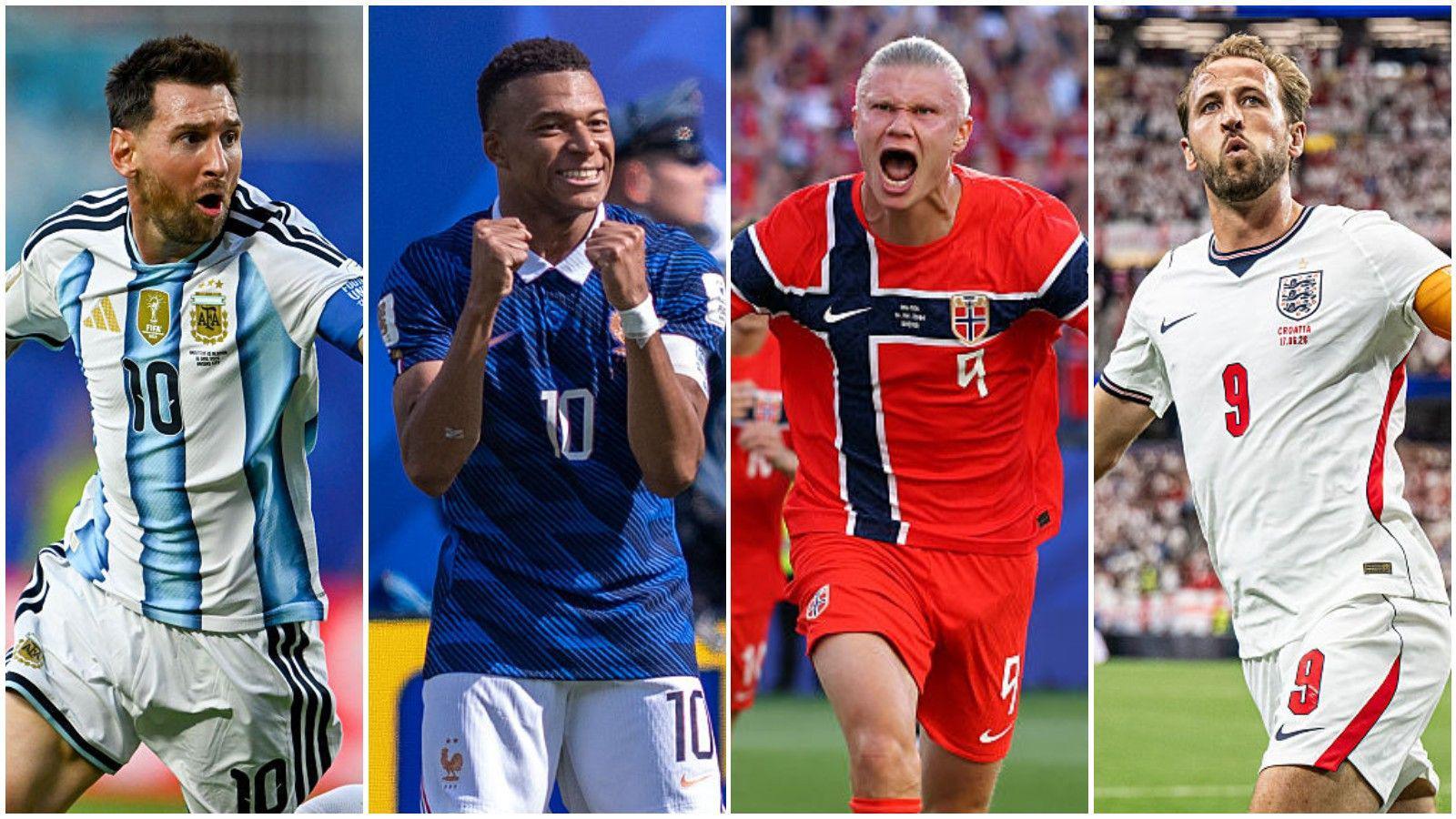
Lionel Messi, eyes sharp and movements precise, curled his third goal of the night into the top corner as Argentina’s bench erupted—just 72 hours after turning 38, the Inter Miami forward was rewriting history books. His hat-trick against Algeria not only sealed a 3-0 win but drew him level with Miroslav Klose as the World Cup’s all-time top scorer, now with 16 goals. That same week, Kylian Mbappe fired France past Senegal with two clinical finishes, Erling Haaland announced his long-awaited tournament debut with a brace in Norway’s 4-1 victory over Iraq, and Harry Kane struck twice as England edged Croatia 4-2. In just seven days, football’s most lethal strikers had reignited the global stage, each delivering performances that blend artistry, power, and relentless precision. This isn’t just a World Cup of underdog stories—it’s becoming a showcase for the enduring brilliance of elite forwards who continue to defy time, expectation, and defensive schemes.
Stopping them, however, is a near-impossible calculus. Former Everton and Wales defender Ashley Williams, who once shadowed Mbappe in a 2017 friendly, knows the challenge firsthand. "It’s more of a team effort," he told BBC Sport. "You’re hoping for a bit of luck." For Messi, it’s about containment through geometry—defenders must use body shape and angles to guide him into less dangerous zones, though Williams admits even that has limits. "He’s got the low centre of gravity, great balance, his touch is exceptional," he said. "He can manipulate the ball and get you into a place you don’t want."
Mbappe, in contrast, demands a different rhythm. "You stay locked in with him," Williams said. The 27-year-old’s pace is relentless, his dribbling charged with explosive intensity. But the real danger lies in France’s depth—focus too much on Mbappe, and players like Ousmane Dembele or Michael Olise will exploit the gaps. Haaland presents yet another puzzle. The 25-year-old Leeds-born striker, finally making his tournament debut, thrives in the spaces behind the line. "He’ll beat you without the ball," Williams warned. "As soon as you leave space in behind, he’s going to exploit it." That means coordinated pressing, a high defensive line, and constant communication.
Yet for all the tactical breakdowns, one truth remains: when players of this caliber are in form, defense becomes an act of hope as much as strategy. Their records speak louder than any playbook. And as the tournament deepens, the question isn’t just how to stop them—but how long the world gets to watch them shine.