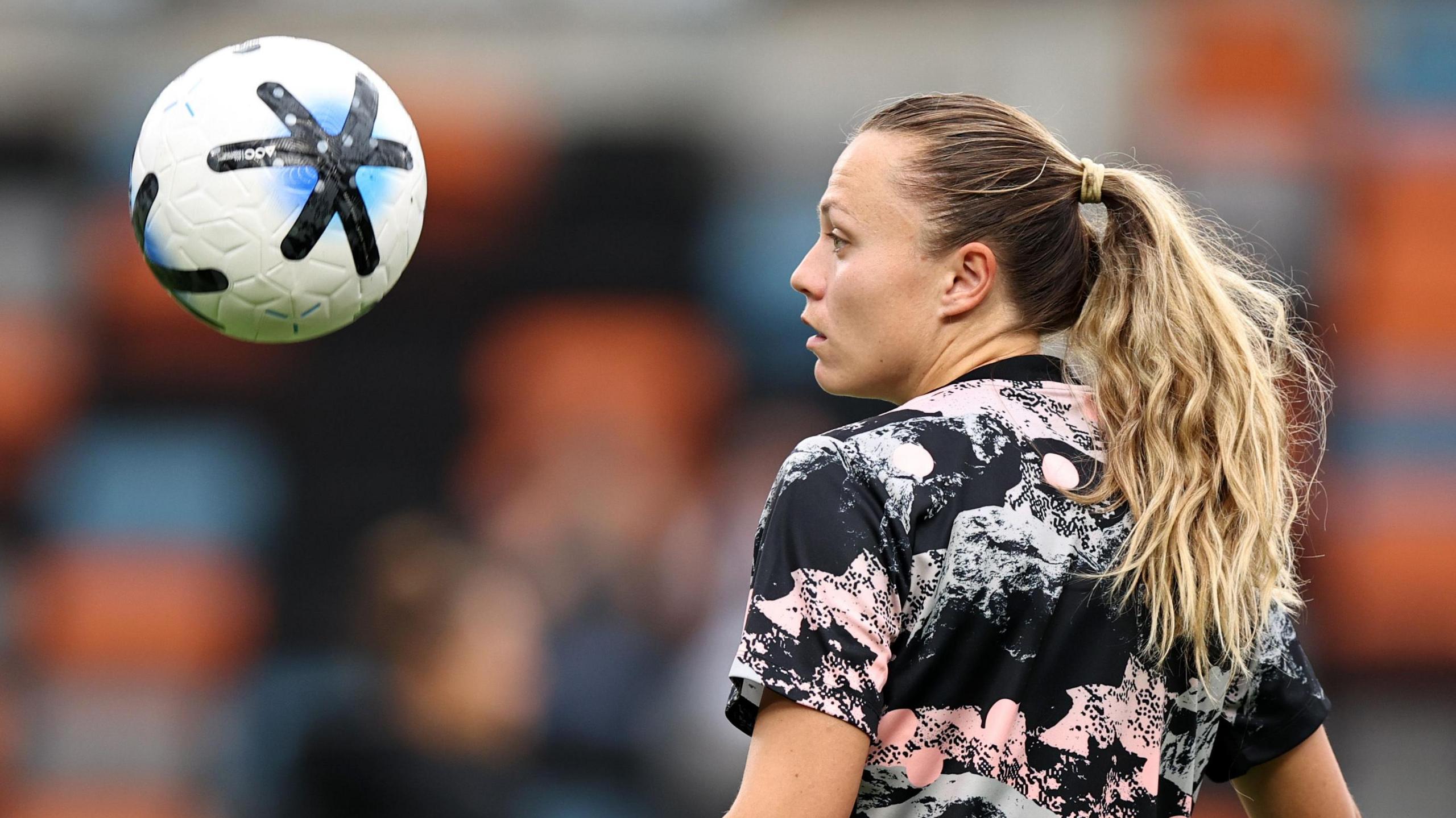
Claire Emslie's waters broke mid-exercise at the gym. Within hours, the 32-year-old Scotland forward was holding her newborn son, Jamie. Six months later, she was back in Budapest in a Scotland jersey, charging down the wing in a World Cup qualifier.
For female footballers, the journey back from motherhood has long been shadowed by doubt—both institutional and self-imposed. Emslie's swift return to elite competition matters because it signals something quietly revolutionary: with proper support, the timeline from pregnancy to World Cup football can collapse. She didn't just return to the pitch; she was trusted from the start as a core player, not a sympathy recall.
The sequence speaks to both her determination and her club's commitment. Angel City, the Los Angeles-based side, backed Emslie throughout her pregnancy, allowing her to train almost until delivery. "My body was able to do so much more than we expected," she recalled. When Jamie arrived two weeks early in mid-December—"I was just thinking, 'please don't come on Christmas,'" Emslie said—she and her husband Jonny found themselves unprepared but electrified. A Caesarean section, routine in medicine but rarely followed by elite-level sport, became the opening act of her comeback.
The recovery was methodical, not miraculous. Three weeks after surgery, Emslie began pelvic floor physiotherapy. Her focus narrowed to one specific challenge: rebuilding her abdominal muscles. "My main recovery was getting my abs back together. Everything else was intact and it was just getting the abs back together and allowing my body time to recover." By mid-January, she was back in structured training. On May 10—Mother's Day in the United States—she returned to competitive football with Angel City.
Then came the bigger test: Scotland. Last Friday, wearing the dark blue for the first time in over a year, Emslie played the full match as Scotland thrashed Israel 6-0 in World Cup qualifying. Scots manager Melissa Andreatta didn't ease her in. She started her.
Now Scotland faces Israel again on Tuesday, with Belgium lurking nearby in Group B4. The stakes are high: finishing top means qualification for the 2026 World Cup in Brazil. For Emslie, that prize has crystallized into something almost spiritual. "As a footballer, playing for Scotland is the best thing," she said. "Going to a World Cup doesn't get better than that. And to do it in Brazil, the footballing country, would be incredible."
What makes her story transcend the personal is the structural support it reveals. Angel City didn't just tolerate Emslie's pregnancy—they championed it. The pelvic floor physio, the patience, the trust to start her in a qualifier: these are choices. Elsewhere, they remain luxuries. Emslie's rapid ascent from labour ward to World Cup qualification suggests that when clubs and countries invest in mothers, mothers deliver—literally and metaphorically. Jamie's early arrival may have been unplanned, but his mother's return was inevitable.