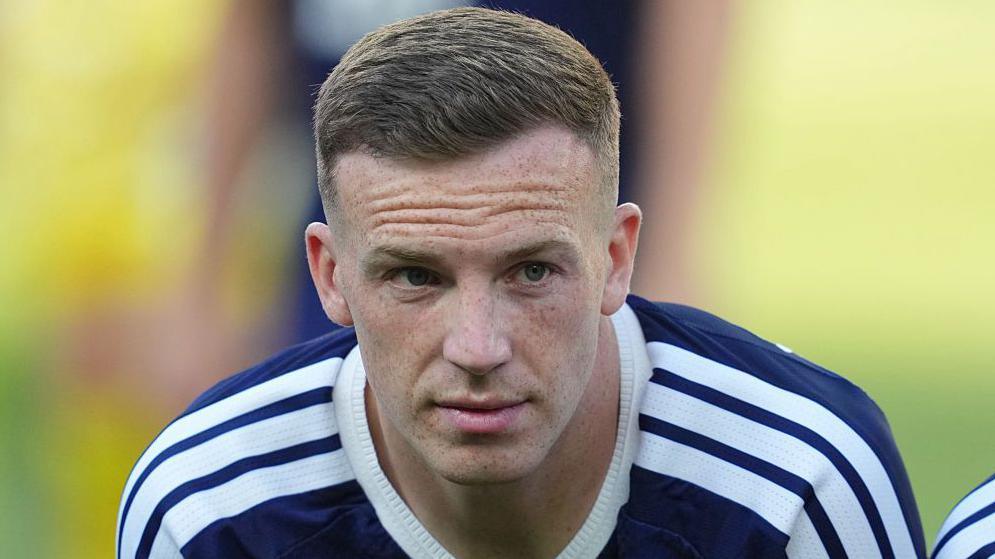
Lewis Ferguson offered himself to receive a pass 76 times in Scotland’s World Cup clash against Morocco — more than double any of his teammates — carving out a quiet revolution in the heart of midfield. Once released by Rangers as a youth player, Ferguson has forged a career defined by resilience, now finding himself at the center of Scotland’s boldest World Cup campaign in decades. With four seasons of Serie A experience as Bologna captain and a Coppa Italia title to his name, he arrived in Qatar with pedigree, yet international recognition remained elusive — until Billy Gilmour’s knee injury opened the door. Stepping into the holding role behind Scott McTominay, Ferguson didn’t just fill a gap; he redefined it. His 15 forward breaks against Morocco were the most by any Scottish player, blending defensive discipline with relentless energy. “The unselfish bit, I enjoy it,” Ferguson told BBC Scotland. “I’m representing my country — I’ll play any role.”
His footballing roots run deep. His father, Derek, a former midfielder for Rangers, Hearts, and Sunderland with two Scotland caps, became his first coach and fiercest believer. When young Lewis was cut from Rangers, it was Derek who assured him that hard work could still lead to the top. “If it wasn’t for him I wouldn’t be here,” Ferguson said. “I owe him the world.” His uncle, Barry Ferguson, captained both Rangers and Scotland, and though a World Cup remained out of reach for him, he now watches his nephew fulfill a shared dream from afar — Lewis sent him a Father’s Day message from Miami, a moment layered with pride and legacy.
Ferguson’s game thrives on commitment — tackling, covering ground, and enabling others. But as former Scotland international Leanne Crichton noted, the holding role may be limiting his natural box-to-box strengths. With Kenny McLean’s impactful cameos offering a potential solution, a midfield pairing between the two could unlock more of Ferguson’s attacking instincts in the decisive match against Brazil. Scotland needs just a point to advance — a tall ask against the five-time champions — but Ferguson’s presence offers more than tactics; it’s a symbol of perseverance. From rejection to redemption, from Italy’s top flight to the World Cup stage, he’s playing not just for himself, but for a family whose blood runs blue with football.
As the final group match approaches in Miami, Ferguson stands ready — a quiet engine with a thunderous work ethic, proving that sometimes the most influential players aren’t the ones who score, but the ones who make everything possible.