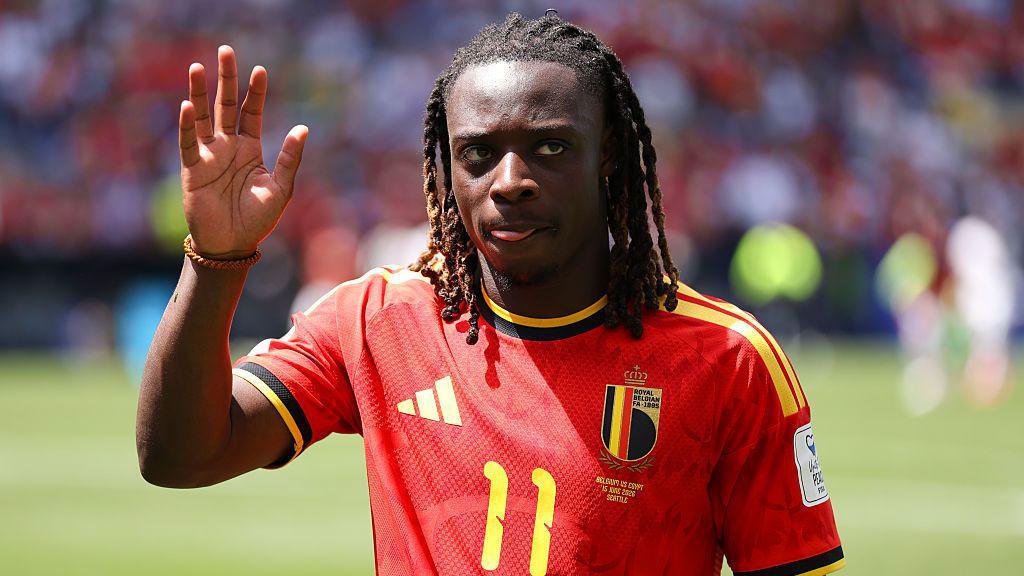
Jeremy Doku sat on the bench at the Stade Geoffroy-Guichard in Saint-Étienne, not because of injury or suspension, but because his wife Shireen was about to give birth to their first child—possibly during the Olympic quarter-finals. The 24-year-old Belgian winger, who played 86 minutes in Belgium’s 1-1 draw with Egypt, stepped away from the squad’s next match, officially due to illness, but the truth was more personal. “If you ask me what I want, my answer is that nobody wants to miss the birth of their first child,” Doku told Reuters. His dilemma has become a rallying point for a broader conversation: should professional athletes be expected to choose between historic career moments and once-in-a-lifetime family ones?
The support for Doku has been swift and resounding. England striker Ollie Watkins, a father of two, called criticism of Doku’s choice “disgusting,” adding, “It only happens once—welcoming your first child to the world—and it is a blessing.” The Professional Footballers’ Association echoed this, stating that players should be supported in balancing professional duties with “important life events.” The Fatherhood Institute’s Jeremy Davies put it more starkly: “We want these men to be these heroic figures who exist for our entertainment. They get paid lots of money, but there are some things that are worth a lot more.”
While FIFA mandates a minimum of 14 weeks of paid maternity leave for female players—eight weeks post-birth—there is no equivalent rule for paternity. That leaves male athletes navigating personal milestones through informal arrangements. History shows they’re not alone: in 2018, Fabian Delph left England’s World Cup camp in Russia to be present for his daughter’s birth. David Silva missed two Manchester City matches after his son was born prematurely the same year. David de Gea took extended leave during the pandemic in 2021 when his partner Edurne gave birth. Yet not all have had the chance—Norway’s Leo Ostigard watched his son’s birth via FaceTime from the World Cup, and Wolves’ Ruben Neves viewed his third child’s arrival on a phone in the team bus, still in full kit after a match.
One manager, now in the Championship, once coached a game from a hospital waiting room, relaying instructions via earpiece before rushing in as his wife went into labor. “We scored, I knew we won the game, and we came right in. Our daughter was born two hours later,” he recalled. These stories reveal a quiet shift: the game is still demanding, but the culture is softening.
Doku’s choice isn’t just about one man’s moment—it’s about redefining what support looks like in elite sport. As the Olympics unfold, the real victory may not be on the pitch, but in the quiet recognition that some moments simply can’t be rescheduled.