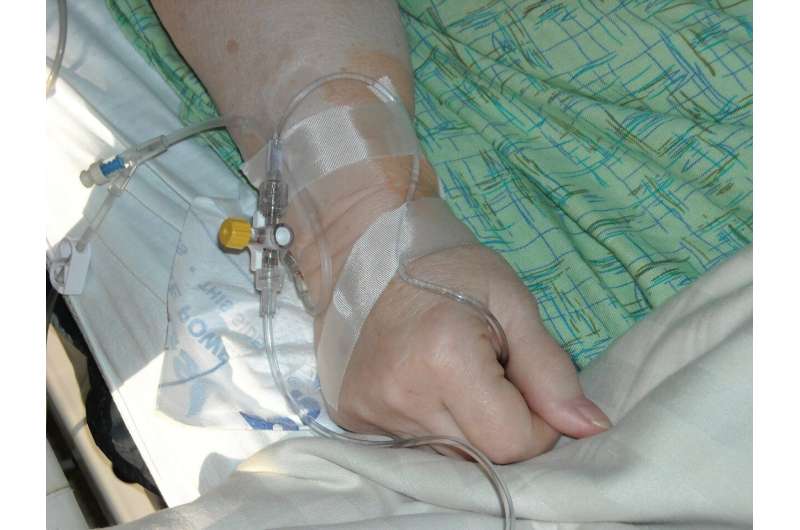
When emergency physicians assign themselves to patients with dementia, the simple rotation of who happens to be on shift that day may shape the next three months of that patient's life—and their medical bills. A landmark study by researchers at Kyoto University and UCLA has found something counterintuitive about hospital care for people with dementia: admission increases healthcare spending by roughly $2,500 in the 30 days that follow, yet produces no clear evidence of improved survival.
The question matters because people with dementia are admitted to hospitals at higher rates than older adults without the condition, yet hospital environments are notoriously disorienting for their brains. Previous research suggested that admitted patients fared worse—but there was a catch. The sicker patients were already more likely to be admitted in the first place, making it impossible to know whether the hospital itself caused the decline or simply received the sickest people. Ryo Ikesu and his team set out to untangle this knot.
Their approach was elegant: they leveraged the randomness built into emergency rooms. Because emergency physicians differ in how readily they admit patients, and because which doctor a patient encounters depends largely on shift schedules, the researchers could compare people seen by high-admitting physicians with those seen by low-admitting physicians. This instrumental variable method allowed them to isolate the causal effect of admission itself, stripped of the confounding bias that sicker patients get admitted more often.
What they discovered was sobering in its specificity. Hospital admission for people with dementia showed no clear benefit for mortality at 30 days or 90 days. But healthcare spending told a different story. Admitted patients accumulated roughly $2,500 more in costs within 30 days—money that flowed primarily into home health services and nursing facility care in the weeks after discharge. The pattern held at the 90-day mark, suggesting that hospital admission may lock patients into a more expensive care trajectory that persists long after they return home.
The findings do not suggest that hospitals fail people with dementia categorically. Rather, they point to a critical gap in how decisions are made at the emergency room door. For patients whose need for hospitalization is genuinely uncertain—the borderline cases where admission could go either way—the study implies that alternatives deserve serious consideration. Home-based acute care, intensive outpatient follow-up, and other community-based approaches might deliver comparable health outcomes without the downstream cost surge and the disorientation that hospital stays inflict on vulnerable minds.
This research, published in the Annals of Internal Medicine, reflects a growing recognition that more medical care is not automatically better care, especially for older people with cognitive decline. The insight is particularly timely as emergency departments face mounting pressure and hospitals grapple with readmission penalties. By carefully studying where hospitalization truly helps and where alternatives might suffice, clinicians gain a clearer lens for protecting both the wellbeing and the dignity of people with dementia when they are most vulnerable.