When coral restoration biologists plunged beneath the waters of India's Gulf of Mannar in 2002, they weren't just hoping to reverse decades of reef damage—they were attempting to pioneer a technique that would eventually spread across the country's most vulnerable coastal ecosystems. More than two decades later, their persistence is reshaping what was thought possible for dying reefs.
Coral reefs occupy less than 1% of the ocean floor yet shelter over 25% of all marine species, from seahorses to sea turtles. They are the rainforests of the sea, and India's coast hosts them across nearly 2,375 square kilometres. But since the 1950s, the world's living corals have declined by half, ravaged by rising ocean temperatures, acidification, pollution, and destructive fishing. India's reef ecosystems—spanning the Andaman and Nicobar Islands, Lakshadweep, the Gulf of Kachchh, and the Gulf of Mannar—face the same pressures. The Andaman and Nicobar Islands alone contain 1,021 square kilometres of coral, the nation's richest reserve, yet even these are under threat.
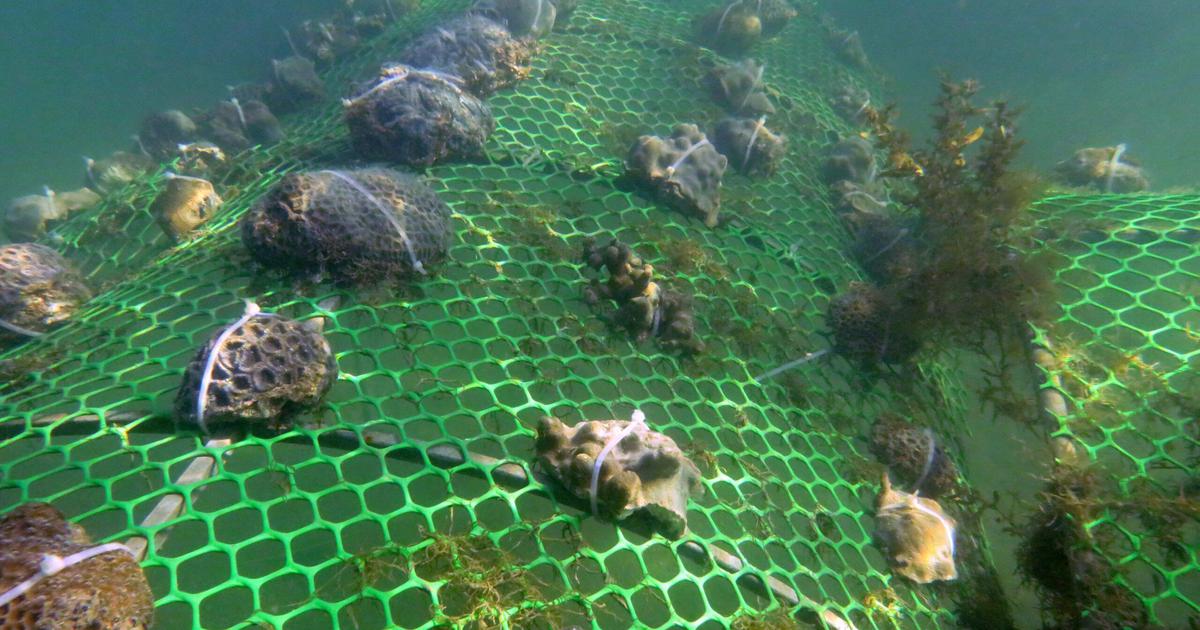
The Suganthi Devadason Marine Research Institute transformed this challenge into action. Over 20 years, the team deployed 5,550 artificial substrates and transplanted over 51,000 coral fragments representing 20 native species across 40,000 square metres of degraded reefs. The method is elegantly simple: fragments are attached to specially designed concrete frames and cement slabs, then anchored to the seafloor. What emerges is less a artificial reef than a carefully tended underwater garden. The visual results are striking—photographs of Acropora muricata corals just a year after transplantation show vibrant branching colonies, proof that damaged reef zones can recover.
The Gulf of Mannar Marine National Park, a 560-square-kilometre protected area spanning 21 islands, became the pilot ground for this work. Recognizing that restoration alone cannot succeed without legal safeguards, India grants corals the highest protection under its Wildlife Protection Act, 1972, making trade or possession of live or dead coral punishable by three to seven years imprisonment. The Coastal Regulation Zone Notification of 2019 further bans development in fragile reef zones. These laws reflect an understanding that restoration must go hand in hand with prevention.
Success in the Gulf of Mannar has sparked expansion. In 2024, the restoration programme stretched into the adjacent Palk Bay, while smaller-scale initiatives have taken root in the Lakshadweep Islands, the Gulf of Kachchh, and the Andaman and Nicobar Islands. The Mithapur Coral Reef Recovery Project demonstrates this scaling: 2,310 artificial reefs supported by 57 coral garden nurseries, where fragments are nurtured on rescued coral boulders before transfer to deeper waters.
The stakes could not be higher. These reefs sustain millions of coastal livelihoods and shield shorelines from storms. They are tourism anchors and genetic repositories of resilience. India's restoration efforts—methodical, science-backed, and expanding—offer a template that other nations facing similar losses are beginning to study. The corals transplanted beneath Indian waters today will take decades to mature fully, but each fragment represents a refusal to accept the ocean's decline as inevitable.