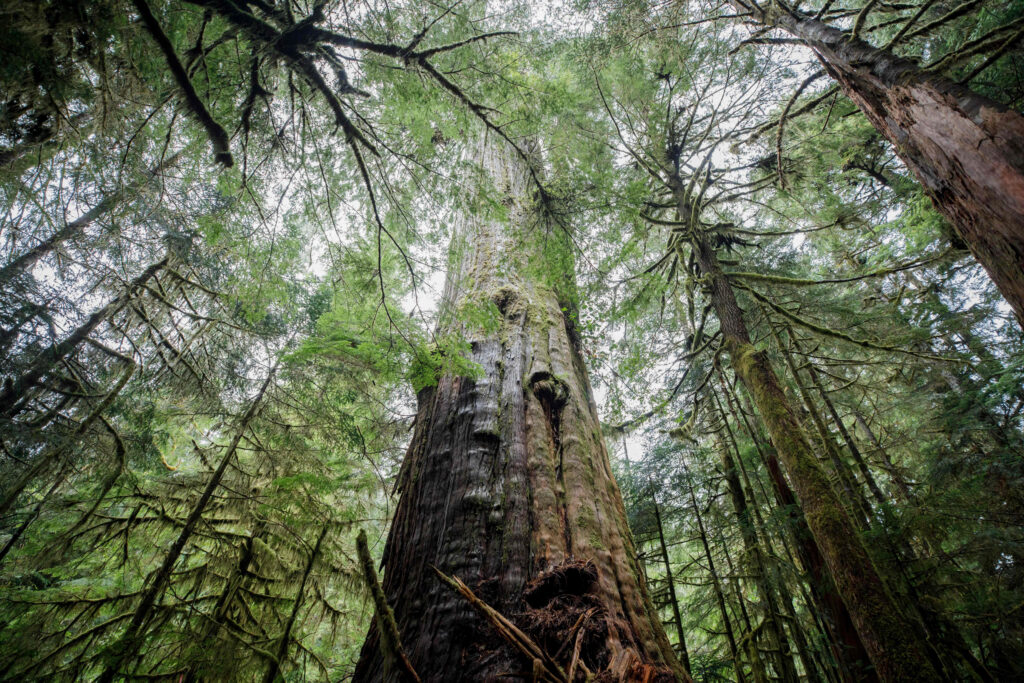
Deep in British Columbia's towering forests, something remarkable happens beneath the soil. The oldest, biggest trees—called "mother trees" by forest scientist Suzanne Simard—act like living lifelines, feeding young seedlings through an underground network of fungi. It's a discovery that changed how scientists understand forests, and now Simard is working to protect what remains of these ancient, connected places.
Simard grew up following her grandparents through old-growth forests in British Columbia. Her family were horse loggers who carefully selected small trees from these ancient woods. "That's all I knew," she says. But when she became a forester herself, she had to unlearn much of what she was taught in school. European-trained foresters viewed old-growth forests as inefficient and pushed to replace them with predictable "normal forests"— plantations where all trees grow to the same size and type.
"They didn't understand forests and ecosystems very well," Simard explains. "They came over and colonized North America, and then taught from their perspective of what they'd done in Europe, and that didn't match up with the natural ecosystems of Canada." Meanwhile, Simard already knew what her grandparents had shown her: that forests are deeply connected places.
Determined to prove it, Simard and her colleagues at the University of British Columbia mapped underground fungal networks called mycorrhizal networks. These networks link tree roots to fungi that gather nutrients and water from the soil. What they found was striking: the biggest, oldest trees were the most connected hubs in the network. Young seedlings tapping into these networks received food, water, and nutrients from their giant neighbors.
"Because of the size, age and regenerative process of these old trees, we started calling them mother trees," Simard says. Her research, detailed in her New York Times bestselling book "Finding the Mother Tree," showed that these ancient giants nurture the next generation of forest through underground connections.
Today, logging has left only 3 percent of British Columbia's original old-growth trees. Simard is now focused on saving what's left and developing logging methods that let mother trees survive. She also works with Indigenous communities whose knowledge of forest connection aligns with what her science has revealed.
In her new book "When the Forest Breathes," Simard continues documenting how older trees nurture younger ones—and why that matters for all of us. Healthy, connected forests store carbon, clean our water, and support countless species. By protecting mother trees, Simard argues, we're not just saving trees. We're protecting the living networks that keep our planet breathing.