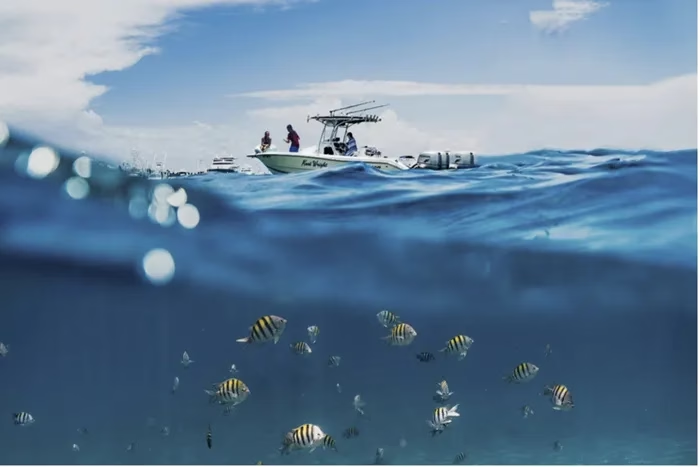
The Great Barrier Reef Marine Park stands as one of the world's most compelling demonstrations of how deliberate protection can restore what seemed lost. Stretched across Australia's northeastern coast, this vast underwater landscape shows that when we establish marine protected areas and enforce them seriously, ocean life bounces back.
Marine conservation has become urgent because human activity—overfishing, pollution, habitat destruction—continues to threaten the health of our oceans at an accelerating pace. Yet across the globe, a constellation of initiatives is proving that we can reverse course. Marine protected areas, or MPAs, are designated ocean regions where human activity is carefully regulated. These underwater sanctuaries prevent overfishing, reduce pollution pressure, and give habitats space to heal. The Great Barrier Reef Marine Park exemplifies this approach: by limiting fishing and managing human use, the park has become a refuge where endangered species recover and fish stocks rebound.
Beyond geographic protection, species-specific programs target the most vulnerable marine life. Conservation efforts focused on sea turtles and marine mammals have yielded promising results, with populations rebounding in areas where protective measures took hold. These programs combine legal safeguards with hands-on habitat restoration, tackling extinction risks directly while strengthening entire ecosystems in the process.
The fishing industry itself is undergoing a quiet transformation. Sustainable fishing practices—techniques that minimize bycatch, reduce seafloor damage, and use selective gear—are increasingly recognized as essential for keeping fish populations healthy long-term. Overfishing remains a serious threat, disrupting marine food webs and collapsing stocks, but the shift toward responsible methods shows that economic activity and ocean health need not be at odds.
What makes these efforts stick, though, is community participation. When local people become invested in marine conservation—through volunteer cleanups, education programs, and stewardship initiatives—the work gains momentum and cultural weight. This grassroots engagement transforms conservation from a top-down mandate into a shared commitment. Public awareness campaigns and local clean-up efforts address one of the ocean's most visible threats: pollution. Plastics, contaminants, and other waste devastate marine habitats, but pollution reduction initiatives that tackle the problem at its source and promote responsible waste management create lasting change.
Technology has become a conservation game-changer. Satellite tracking, underwater drones, and remote sensing allow researchers to monitor marine species and habitats with unprecedented precision. These tools generate the data needed for smarter management decisions and more effective strategies tailored to specific ecosystems and species.
Citizen science brings another dimension: ordinary people contribute to data collection efforts, turning observation into conservation action. The combination of MPAs like the Great Barrier Reef Marine Park, species protection programs, sustainable fishing practices, community engagement, technological innovation, and pollution reduction creates a comprehensive approach—one that recognizes ocean conservation as both urgent and achievable. The evidence from protected areas worldwide suggests that when we commit to safeguarding marine ecosystems, life responds. That momentum matters now more than ever.