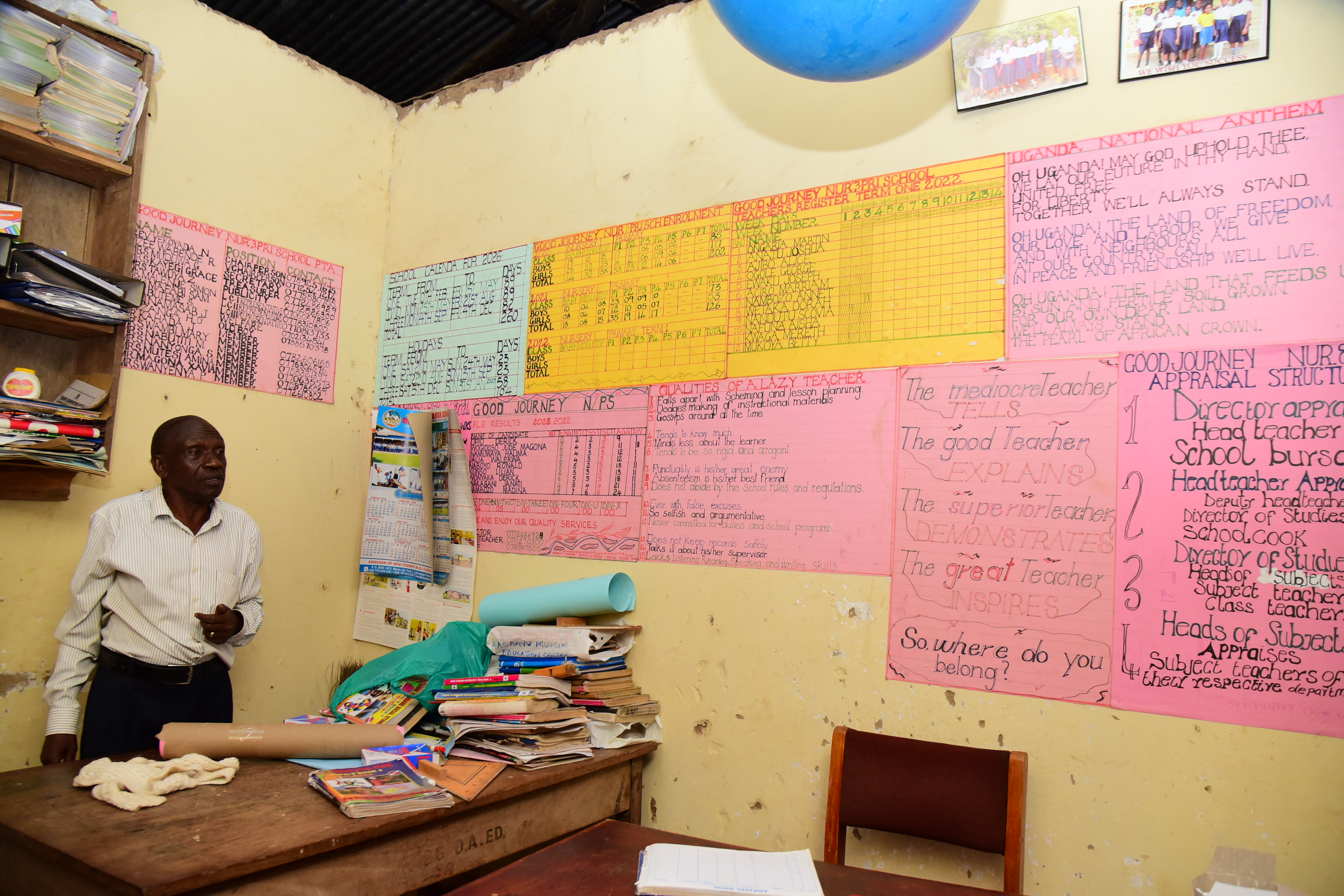
Malenje Simon and Grace Kayegi didn’t wait for a government grant or a foreign donor to bring light to Good Journey Nursery and Primary School— they turned to the sun. Perched in the quiet hills of Kilulu B village in Uganda’s Mbale District, the school has quietly rewritten the future for over 300 children, most from low-income or orphaned families, by solving a crisis that once dimmed their chances: unreliable electricity. For years, blackouts lasting more than six hours hit several times a week, forcing students to abandon evening studies and cutting short precious exam preparation. The rhythm of learning was dictated not by lesson plans, but by the whims of the national grid. “The unstable electricity affected not only study schedules but also enrollment,” says Kayegi, the school’s director. “Learners often had to return home early, and our Primary Seven candidates preparing for national examinations lost valuable study time.” That changed just weeks before the 2025 Primary Leaving Examinations, when the school installed a Home Plus Pro solar system through Sun King, Uganda’s leading solar energy provider. With high-efficiency lighting and a battery that powers classrooms through the night, the system didn’t just restore electricity—it restored ambition. Evening revision classes, once a logistical nightmare, are now routine. The dream of launching a boarding section, previously shelved due to safety concerns, is back on track. And for the first time in years, students preparing for the PLE can study after dark without relying on dangerous, expensive kerosene lamps or flickering candles. The shift is about more than convenience—it’s about equity. In a country where only 43% of the population has access to electricity, and rural schools are often left in the dark, solar power is proving to be a catalyst for educational justice. Good Journey is no longer just surviving; it’s thriving. Parents are enrolling more children, teachers report improved concentration, and the hum of fans and lights has become a soundtrack of progress. This isn’t a pilot project or a temporary fix—it’s a model. As climate-smart solutions gain ground across Africa, Kilulu B shows that sometimes, the most powerful change comes not from above, but from a community that decided to power its own future.
← News
Education Wins Education Wins Society
How Solar Energy is Transforming Education in Mbale's Kilulu Village
2016 School founded
300+ Learners enrolled
Multiple Per Week Power blackouts eliminated
Kilulu B Village, Mbale District Location
6+ hours without power weekly