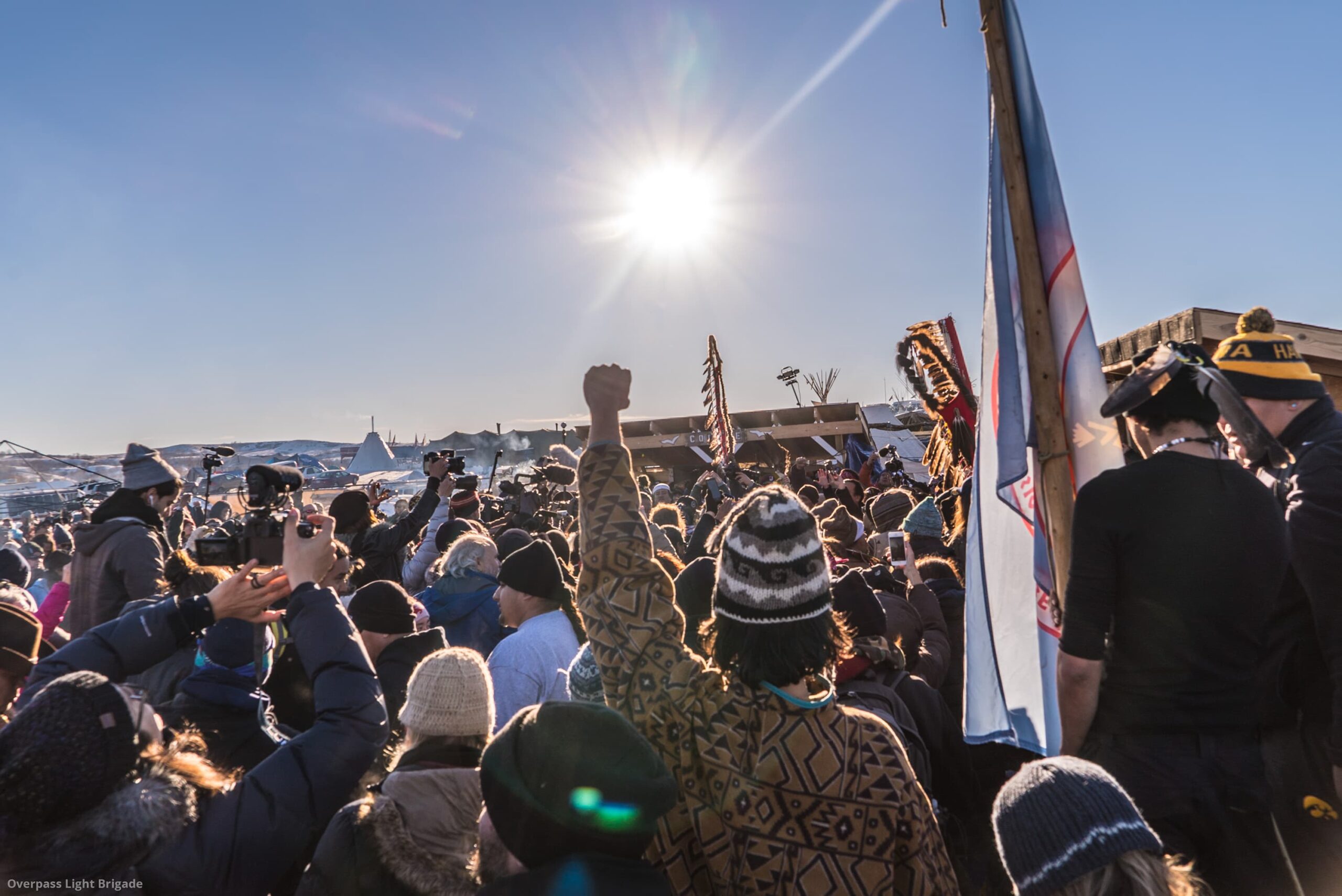
In April 2016, the Standing Rock Sioux tribe planted their flag against the Dakota Access Pipeline, and a movement was born that would ripple far beyond the banks of the Missouri River. What began as a localized fight to protect sacred water from contamination transformed into one of the defining Indigenous-led movements of the decade, drawing thousands of activists and allies to mass encampments and forcing a national reckoning with the intricate links between Native sovereignty and climate survival.
The pipeline that sparked the protest still carries oil today, pumping through the heart of contested territory. Yet the pipeline's continued operation tells only part of the story. When federal agents cleared the Standing Rock encampments in February 2017—just as Donald Trump's first presidency began—they did not clear what had been ignited in the hearts and minds of the thousands who had gathered there. "This Indigenous-led disruption, the awakening resolve that was cultivated at Standing Rock, did not dissolve after February," wrote Jenni Monet in YES! Magazine in 2018. "Rather, it spread in so many different directions that we may never fully realize its reach."
That reach extends across continents and across consciousness itself. Ten years after those spring protests of 2016, Standing Rock's legacy has reshaped how Americans understand the world's most vulnerable people. The movement illuminated the struggles faced by the estimated 370 million Indigenous people globally—people whose lands and resources are extracted while they endure violence from the very corporations and governments that claim to protect the Earth. Standing Rock made visible the theft that accompanies extraction, the collusion that underpins dispossession.
The encampments themselves became universities of resistance. Activists and Indigenous leaders taught connections that mainstream environmentalism had long obscured: that protecting the planet is not separate from protecting Indigenous peoples, that climate change cannot be solved without centering Native knowledge and value systems. Water protectors at Standing Rock did more than occupy land; they reframed the entire conversation about what environmental justice means, grounding it in Indigenous sovereignty rather than in corporate green solutions or government policy alone.
A decade later, those sacred fires still burn, though not always in the places where cameras pointed. The Standing Rock movement seeded organizing across North America—in forests threatened by extraction, in communities fighting fossil fuel infrastructure, in youth climate movements increasingly led by and accountable to Indigenous voices. The movement proved that when Indigenous peoples lead, when they assert their sovereignty not as a demand but as a lived practice, they change not just policy but consciousness itself. They remind the world that the Earth's survival depends not on technological fixes or market solutions, but on honoring the relationships Indigenous peoples have maintained for millennia.
The work of sustaining this awakening falls to a new generation of water protectors, climate advocates, and those who understand that Indigenous liberation and planetary survival are one struggle. Standing Rock did not end in February 2017. It continues wherever people choose to listen, to center Indigenous leadership, and to understand that defending the Earth is an act of Indigenous sovereignty—and that defending Indigenous sovereignty is climate action itself.