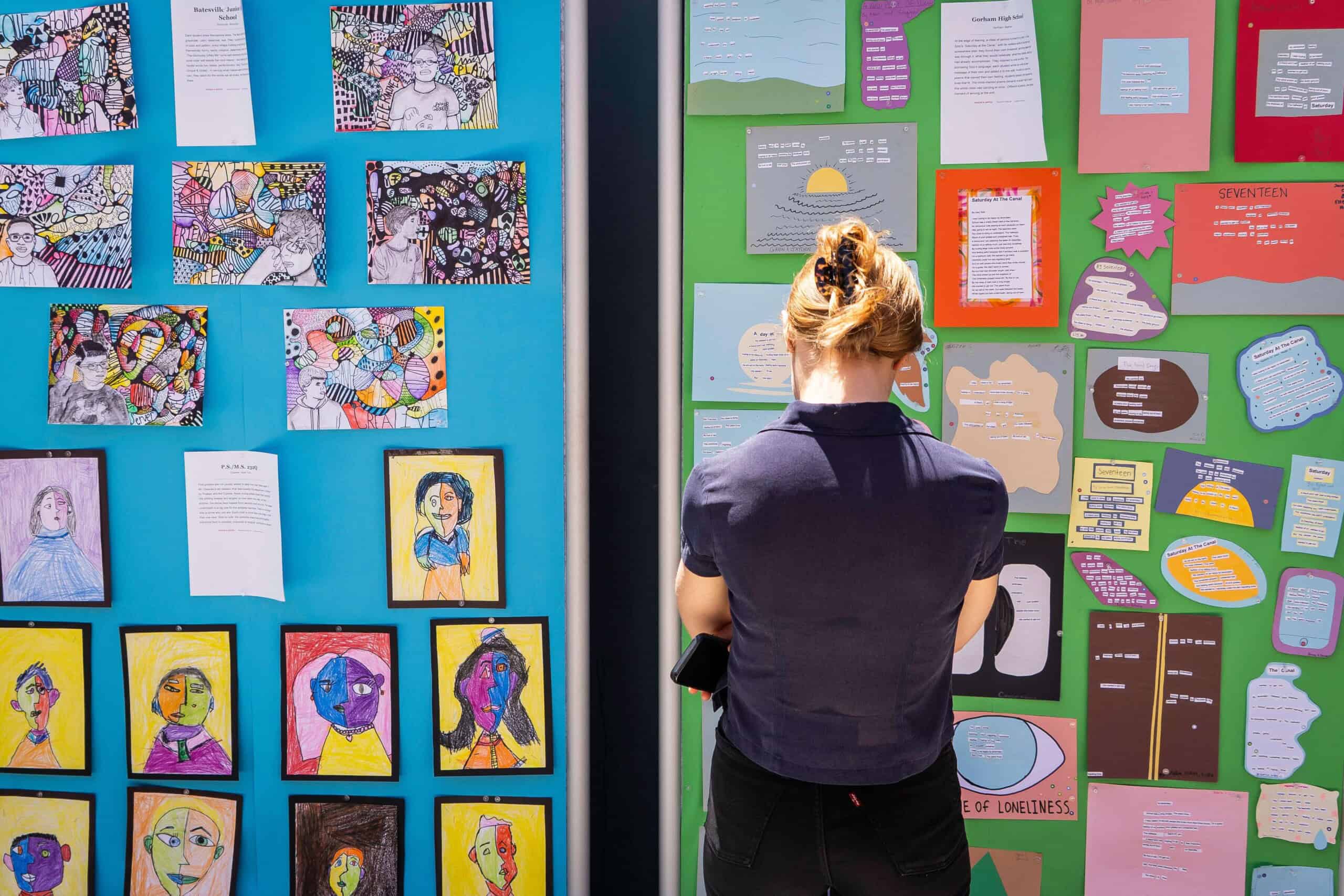
Malak Matar’s hands moved swiftly across the sketchpad, her lines tracing the faces of young people she’d met in refugee camps—faces that would soon become part of a bold new public artwork rising on London’s Southbank. This piece, born from conversations with displaced youth in Greece and Ukraine, is more than art; it’s a symbol of a global movement where creativity fuels change. Through Students Rebuild’s Unique & United challenge, 114,445 young people across 139 countries have turned drawings, dances, quilts, and films into $1 million in funding for organizations supporting displaced communities. The initiative, powered by nonprofit Creative Visions, proves that when students create, the world listens—and gives.
The premise is elegantly simple: for every piece of art submitted or every young person engaged, $5 is donated to frontline groups, up to a $1 million annual cap. This year, that cap was met, with creations ranging from interactive quilts that light up when touched to school-wide culture nights celebrating identity and belonging. The funding flows to vital partners like Choose Love, which uses the support to expand programs with Dobrodiy Club in Ukraine, Refocus Media Labs in Greece, and Free Movement Skateboarding—spaces where displaced youth learn, heal, and create in safety.
The impact stretches beyond dollars. At the launch of Refugee Week London 2026, dancers from Southbank Centre’s youth ensemble took the stage, their movements echoing the resilience of those forced to flee. But the real power lies in what Students Rebuild cultivates in young minds: a sense of agency. "Do young people think they can make a difference in the world?" asks Sarah Fanslau, director of programme impact and evaluation at Creative Visions. The answer, increasingly, is yes. The program measures not just art produced, but shifts in creative self-efficacy—how much students believe their voices matter.
Past challenges have sparked life-sized board games teaching immigration history and an 80-piece youth orchestra in Nairobi uniting after national unrest. Each project threads empathy into education, showing students that their classrooms are connected to communities continents away. As Malak Matar’s mural prepares to debut, it carries with it the fingerprints of thousands—students who didn’t just learn about displacement, but responded with color, sound, and courage. And as the next wave of young creators logs in to submit their work, one truth becomes clearer: art isn’t just expression. It’s action.