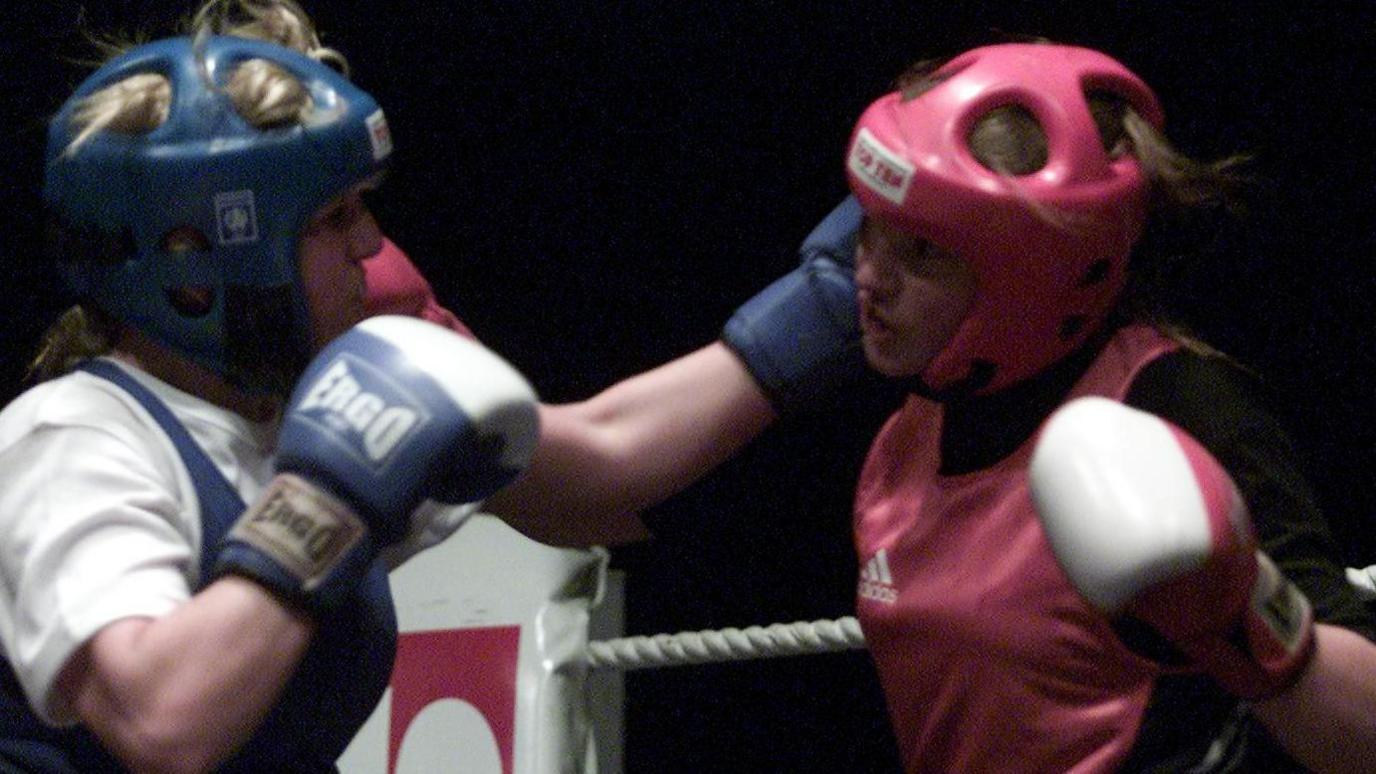
Katie Taylor's voice catches when she speaks of stepping onto the Croke Park pitch on September 5th for the final fight of her career. The 39-year-old boxing legend will face undefeated French challenger Flora Pili in front of an expected 80,000 spectators—a crowd size that underscores not just her dominance in the sport, but her singular place in Irish sporting mythology.
For a fighter who arrived as a 15-year-old in October 2001 to box in Ireland's first sanctioned female amateur bout, against Alanna Nihell, this homecoming represents the full circle of a journey that rewrote what was possible. Taylor became the reason women's boxing made it onto the Olympic programme for the first time—a dream she realised just 11 years after that first bout, winning gold and cementing her legacy before ever turning professional. When she walked into the Matchroom Boxing headquarters in Essex in 2016 with her manager Brian Peters and mother Bridget, she convinced promoter Eddie Hearn to stake his reputation on her vision. World titles followed, opponents fell away, and on April 30th, 2022, she shared the marquee with Amanda Serrano in the first female boxing main event at Madison Square Garden—a sold-out night that some called the fight of the year.
Yet even that iconic moment left something unfinished. Croke Park, home of the Gaelic Athletic Association and untouched by professional boxing since Muhammad Ali defeated Al 'Blue' Lewis there in 1972, became the itch that couldn't be scratched. Three years ago, the dream seemed impossible. Hiring the stadium cost "twice as much as Wembley," according to Matchroom chairman Eddie Hearn, and negotiations stalled. But Taylor's arc—especially her recent fights against Serrano, which unfolded on Netflix under Jake Paul's promotion—had grown her story so large that the financial calculus shifted. Hearn, pragmatic about boxing's bottom line, found himself willing to absorb the cost. "That a female is fighting in front of 80,000 people, I think it's the greatest moment of our boxing history," he said, acknowledging that profit wasn't the point. "We're not going to be making much money on the night, but this is about more than that."
Taylor, a Bray native, approaches the moment with characteristic directness. This will be a test, not a testimonial. Her ambition is to regain the WBC portion of the light-welterweight title—made vacant after her dominant win over Serrano last summer—and retire undisputed across two weight classes. The Frenchwoman Pili stands undefeated in her path, but Taylor's tone suggests emotion won't cloud her focus. "This is going to be the most iconic moment of my career," Taylor said. "We've had the headline in Madison Square Garden, amazing nights in the 3 Arena, the Olympic Games, some amazing moments in my career but this night is going to be the most iconic moment of my career and that's saying something."
Manager Brian Peters could barely contain himself at Friday's press conference when announcing what everyone had waited for. As Taylor and her team begin a four-day promotional tour across Ireland, starting in her home town, the weight of the moment is impossible to ignore. An 80,000-seat stadium sold out for a female boxer's farewell—a barrier that only a handful of athletes, mostly elite heavyweights and stars like Canelo Alvarez and Naoya Inoue, have ever achieved. For Taylor, it represents not just a personal triumph, but a transformation of sport itself.