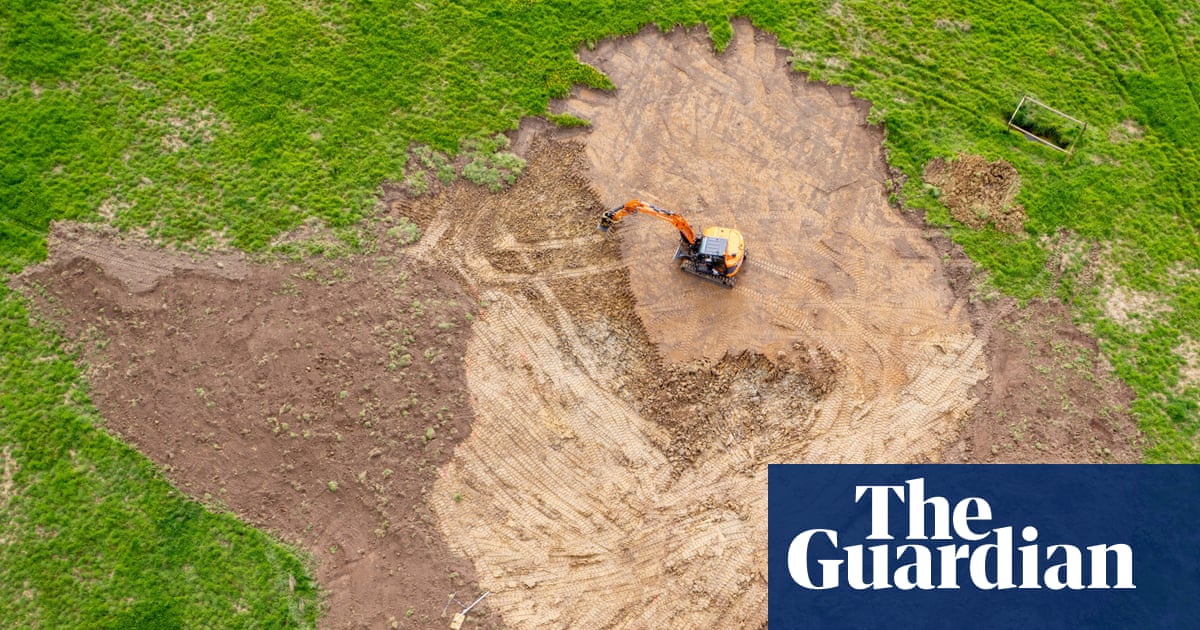
An orange and black excavator rhythmically scoops lumpy clay from a boggy Somerset field, and Shaun Hancox—known as the "Picasso of ponds"—is reshaping Britain's relationship with freshwater. What looks like a scarred building site now will soon become something far more alive. Within months of the first rains, plants seed themselves, invertebrates arrive, amphibians settle in, and life explodes across the newly shaped water.
Britain has lost at least 400,000 ponds over the past century, according to the Freshwater Habitats Trust. A similar number remain, but many are overgrown, degraded, or choked with nutrient pollution. Hancox, who runs Creative Wetlands, has become the country's most sought-after pond sculptor precisely because he understands what modern freshwater habitats desperately need. His work at places like Heal Somerset—a 185-hectare former dairy farm being rewilded by the charity Heal Rewilding—is bringing clean water back to landscapes starved of it.
The journey from golf courses to wetlands conservation wasn't ideological abstraction; it was practical. Hancox spent years as a shaper for his family's groundworks company, sculpting bunkers and drainage systems across Portugal, Germany, Belgium, and Britain itself. "My original job was shaping on golf courses," he explains. "We travelled all over, building bunkers and drainage—everything really that wasn't good for wildlife. I've always had a massive interest in wildlife, so we've got to the stage now where we want to put something back."
That golf course training turns out to be the perfect schooling for pond creation. The same topographic thinking that directs a golf ball's roll applies equally to water movement and retention. "There's a lot more thought that goes into it than digging a hole," Hancox says. When shaping a golf course fairway, you either shed water or guide it into drainage systems. When creating a wildlife pond, you apply the same logic in reverse: read the landscape, give the pond the best chance of holding clean water, and let it do what it should. "The shapes of the ponds are almost golf course bunkers but in a more rustic, natural way."
At Heal Somerset, Hancox is currently digging four new ponds, including one double-bowled pond 30 metres in diameter, specifically designed for great-crested newts found on the farm. Typically, within a year of creation, these ponds fill with damselflies, dragonflies, and aquatic insects that attract moorhens, house martins, and other birds who feed and nest along the muddy shores.
The crucial difference lies in water source. These new ponds are not connected to river systems that carry nutrient-rich or polluted water. Instead, they're fed by clean rainwater and groundwater, allowing delicate aquatic plants to thrive. Pete Case of the Newt Conservation Partnership emphasizes the simplicity: "Pond creation is the simplest and cheapest way of bringing clean water back to the landscape."
Hancox's sculptural approach goes deeper still. He creates "a pond within a pond within a pond, like a Russian doll," with winter depths that retain year-round water alongside shallow summer areas. As water levels drop seasonally, aquatic life can always retreat to the deepest clay-bottomed section. It's engineering disguised as artistry—or perhaps artistry grounded in engineering. Either way, it's working. Under the NatureSpace partnership, which operates across 70 English local authorities, these new habitats receive 25 years of monitoring and maintenance funding, guaranteeing their survival long enough for ecosystems to truly flourish.