Rafael Peels sits in the ILO's studio and offers a simple, unsettling truth: disruption is no longer an exception—it's the new normal. Heat waves. Floods. Geopolitical upheaval. Technological transformation. The shocks keep coming, and workplaces are caught in their wake.
The question isn't whether the next disruption will arrive. It's which one, and whether we'll be ready. Over the past decade, wars, pandemics, and waves of technological change have taught us that uncertainty is permanent. Yet most organizations still react to crises rather than anticipate them. The result: chaos, lost productivity, devastated workers who have no time to prepare.
This is where strategic foresight enters the picture—not as a crystal ball, but as a structured methodology for thinking through complexity. Developed and championed by labour relations specialists at the ILO, including Peels, the approach helps workers and employers build what he calls "the mental muscle to deal with complexity, uncertainty and disruption."
Strategic foresight works in layers. First, it takes a long-term, broad view of the big drivers of change—how artificial intelligence, international trade, and climate shifts will reshape labour markets. It doesn't stop at trends; it explores multiple plausible scenarios, from optimistic futures to pessimistic ones, forcing organizations to genuinely imagine different worlds. Then it moves to roadmapping: asking not just what could happen, but what actions today could lead toward desired futures or help avoid catastrophic ones.
The ILO's current project pushes this further in three ways. It tailors foresight methods specifically to the world of work and the ILO's constituents—workers, employers, and governments. It shifts focus from steady trends toward radical, disruptive change, acknowledging that stability is an illusion. And it explores how artificial intelligence itself can enhance foresight capabilities, turning data into usable insights.
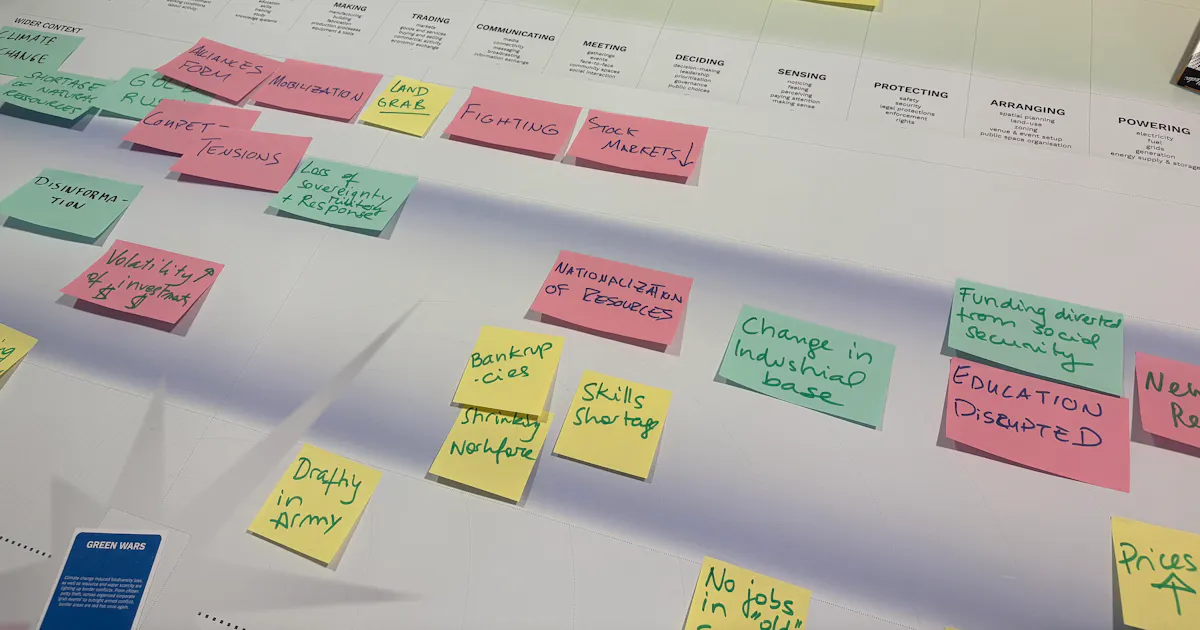
The toolkit is already diverse. Horizon scanning casts a wide net across multiple drivers of change—how technology might impact labour markets, how geopolitical shifts ripple through organizations. Scenario development creates alternative narratives of the future, pushing teams to genuinely inhabit uncertainty rather than pretend it doesn't exist. Roadmapping brings those scenarios back to earth, translating them into concrete decisions people can make today.
This differs fundamentally from traditional contingency planning, which prepares for specific, known disruptions. A company might have a playbook for a cyber attack or a supply chain break. But strategic foresight is broader and more creative. It's about building organizational resilience to kinds of disruptions the organization hasn't yet imagined. It reveals structural vulnerabilities—the hidden weaknesses that make some workplaces fragile and others adaptable.
The ILO, through its Bureau for Workers' Activities (ACTRAV) and its training centre (ITC), is now bringing these tools to workers and employers worldwide. The message is clear: those who prepare for uncertainty will navigate it better than those who are caught flat-footed. In a world where the only certainty is change, the ability to think strategically about multiple futures has become indispensable.
Rafael Peels and his colleagues are offering not guarantees, but something more honest: a way to face the future with intention rather than panic.