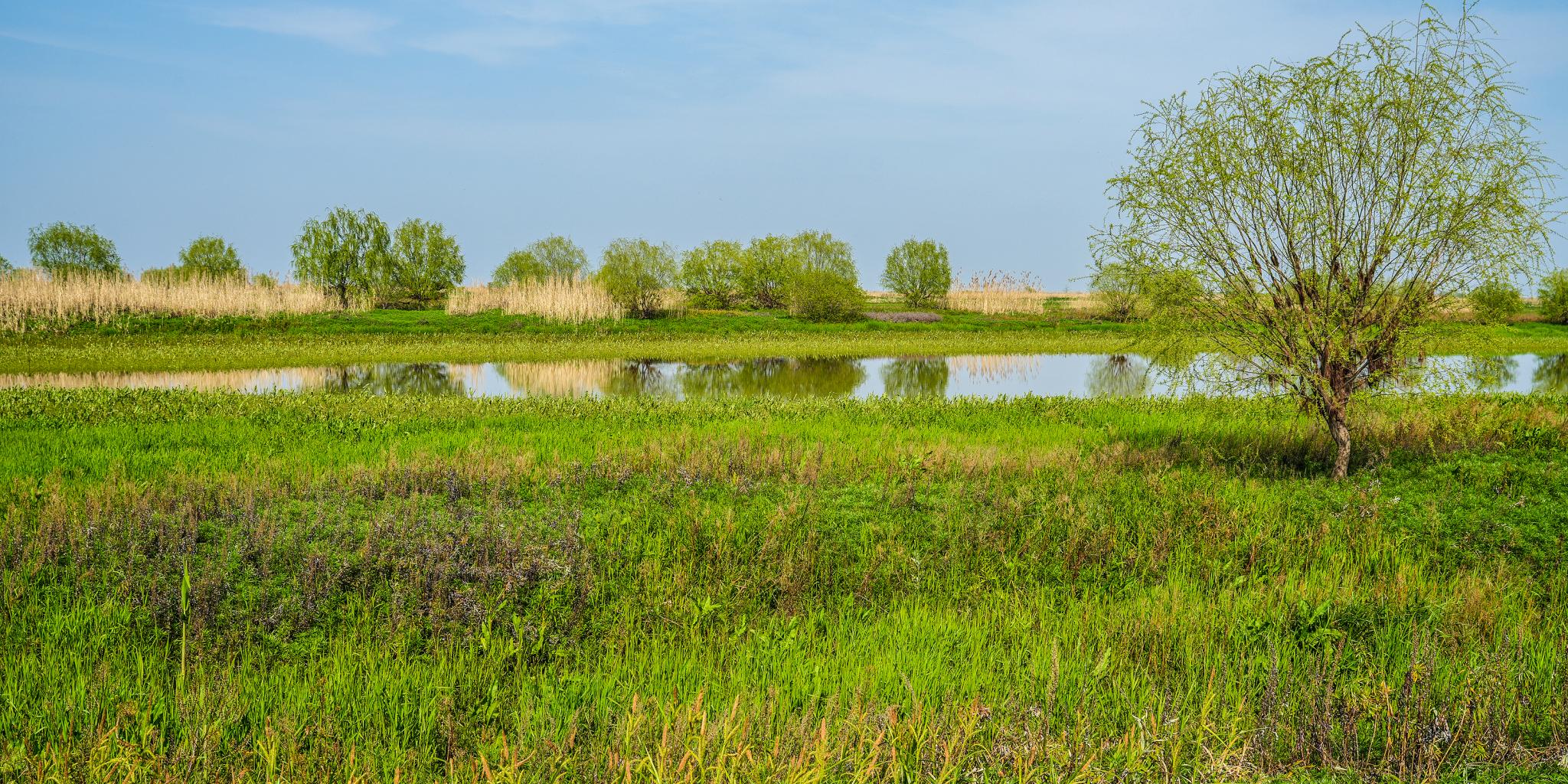
Across Asia-Pacific, governments and communities are recognizing that the marshes, mangroves, and mudflats they once drained and dismissed are actually some of the most valuable infrastructure on the landscape. Wetland restoration is surging through the region—from China's sweeping Ecological Red Lines policy protecting vast tracts of natural capital to small-scale community initiatives in the Philippines that weave together storm protection, food security, and ecological revival in a single project.
The shift reflects a fundamental revaluation of how we measure infrastructure worth. Wetlands perform miracles of free service: they filter water, buffer communities from typhoons and floods, sequester carbon, and support fisheries that feed millions. Yet for decades, development logic viewed them as wastelands to be reclaimed. Now, countries across Asia-Pacific are flipping that calculation, asking not how to convert wetlands for human use, but how to restore and protect them as natural capital that delivers resilience.
China's Ecological Red Lines initiative exemplifies this change in ambition and scale. The policy designates and protects 30 percent of the nation's natural capital—a landscape-level commitment that keeps critical ecosystems off-limits to extractive development and signals that ecological function matters as much as economic output. This isn't merely conservation for its own sake; it's infrastructure planning. The protected zones provide flood control, water purification, climate regulation, and biodiversity security that would cost orders of magnitude more to replace with built infrastructure.
In the Philippines, the picture is more granular but no less significant. Communities are implementing restoration projects that directly link wetland health to livelihood resilience. These initiatives recognize that for families whose livelihoods depend on fishing, aquaculture, and agriculture, wetland degradation isn't an environmental abstraction—it's a threat to survival. By restoring mangrove forests and tidal wetlands, local projects simultaneously reduce vulnerability to the increasingly severe storms driven by climate change, restore fish nurseries that support commercial and subsistence catches, and rebuild the natural barriers that have historically protected coastlines.
The economics are compelling. A restored or protected wetland provides ongoing returns—storm surge reduction, water filtration, fish production—that accumulate over decades and centuries. By contrast, the one-time profit from draining a wetland for shrimp farms or urban expansion evaporates quickly, and often leaves communities worse off when the inevitable floods arrive or the soil collapses.
Across the Asia-Pacific region, this reframing is taking hold. Policy makers are beginning to ask how to account for these natural services in budget decisions. Communities are organizing to demand that restoration happens alongside or instead of further extraction. And the science is getting sharper about quantifying the value that intact wetlands provide: the storms prevented, the food secured, the carbon sequestered, the lives protected.
This doesn't mean wetland restoration is simple or complete. Implementation remains uneven; enforcement of protections faces pressure from competing interests; many degraded wetlands require years of patient work to recover. But the direction is unmistakable. Across Asia-Pacific, wetlands are shifting from a category of land to be exploited to a category of infrastructure to be treasured.