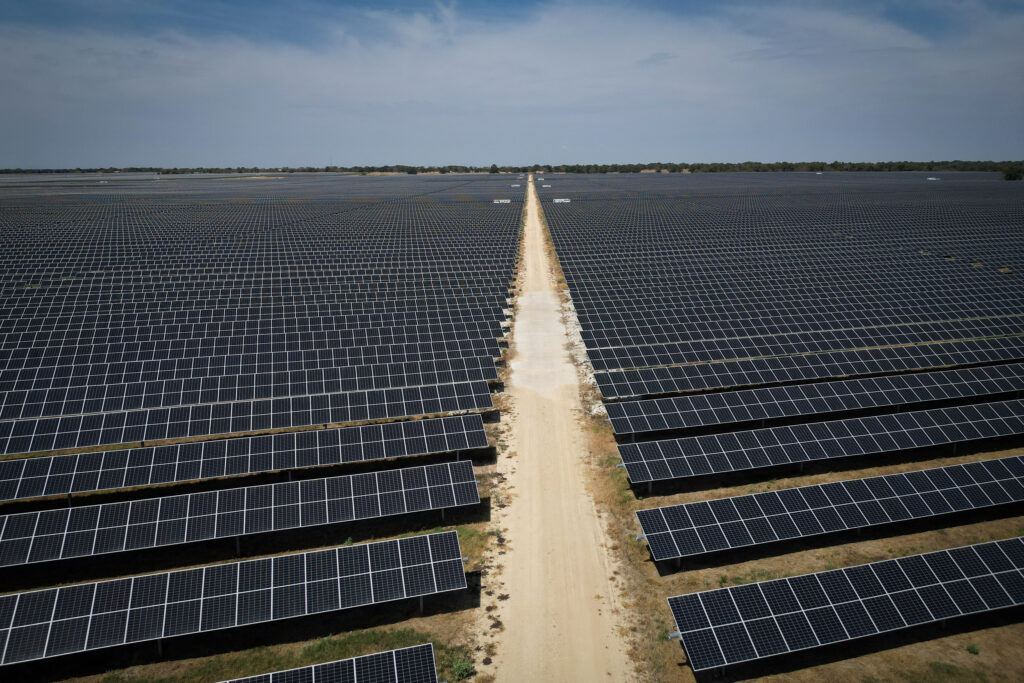
When Iowa passed the first renewable portfolio standard law in 1983, few could have predicted it would become a template for reshaping America's energy landscape. Today, about 30 states have adopted some form of RPS policy—laws that required or encouraged utilities to meet specific benchmarks for obtaining wind and solar power. A new book, "Owning the Green Grid" by Joshua Basseches, examines how these state-level policies became far more influential in driving the clean energy transition than most people realize, and reveals the often-invisible hand of utility companies in writing the rules.
Basseches, an environmental studies and public policy professor at Tulane University who is moving this summer to Case Western Reserve University in Cleveland, spent years studying the actual legislative text behind RPS laws. What he discovered challenges a common assumption: that utilities and fossil fuel companies are interchangeable forces resisting renewable energy. In reality, utilities turned out to be fundamentally different actors—sometimes key enablers of clean energy policy, sometimes obstacles, depending on their existing assets and state regulatory structures.
The RPS trend didn't accelerate until the late 1990s, when Arizona, Nevada, and Texas passed their laws. California followed in the early 2000s with one of the nation's most ambitious targets: requiring power providers to obtain 60 percent of electricity from renewable sources by 2030 and 100 percent from renewable or carbon-free sources by 2045. These laws were designed for an era when wind and solar were expensive outliers on the market, unable to compete with cheap coal and natural gas.
Basseches' central finding is that utility companies wielded their considerable political influence to shape RPS policies in ways favorable to corporate profits. The specifics of this influence varied dramatically by state and by utility, reflecting each state's unique regulatory structure and the political power of fossil fuel companies within that state. This was not crude opposition to renewables—it was far more sophisticated, involving privileged access to state legislatures and public utility commissions that allowed utilities to shape not just the targets and timelines everyone discusses, but the dozens of other provisions embedded in these complex legislative vehicles.
It's worth noting that the RPS heyday has passed. Many states have easily exceeded their legal targets as wind and solar have become some of the cheapest energy sources available. Yet this shift doesn't diminish the historical importance of these policies or what they reveal about American energy politics. States remain the dominant force in determining the pace and costs of the clean energy transition, and utility companies continue to use their lobbying clout to influence state energy policy.
Even as President Donald Trump has made dramatic changes to federal energy policy, the fundamental architecture of American electricity regulation hasn't shifted. The real action, Basseches argues, has always been at the state level—a reality that persists regardless of who occupies the White House. Understanding how utilities shaped the renewable transition isn't just academic history; it's essential for anyone seeking to understand where American energy policy is actually made, and who has a seat at that table.