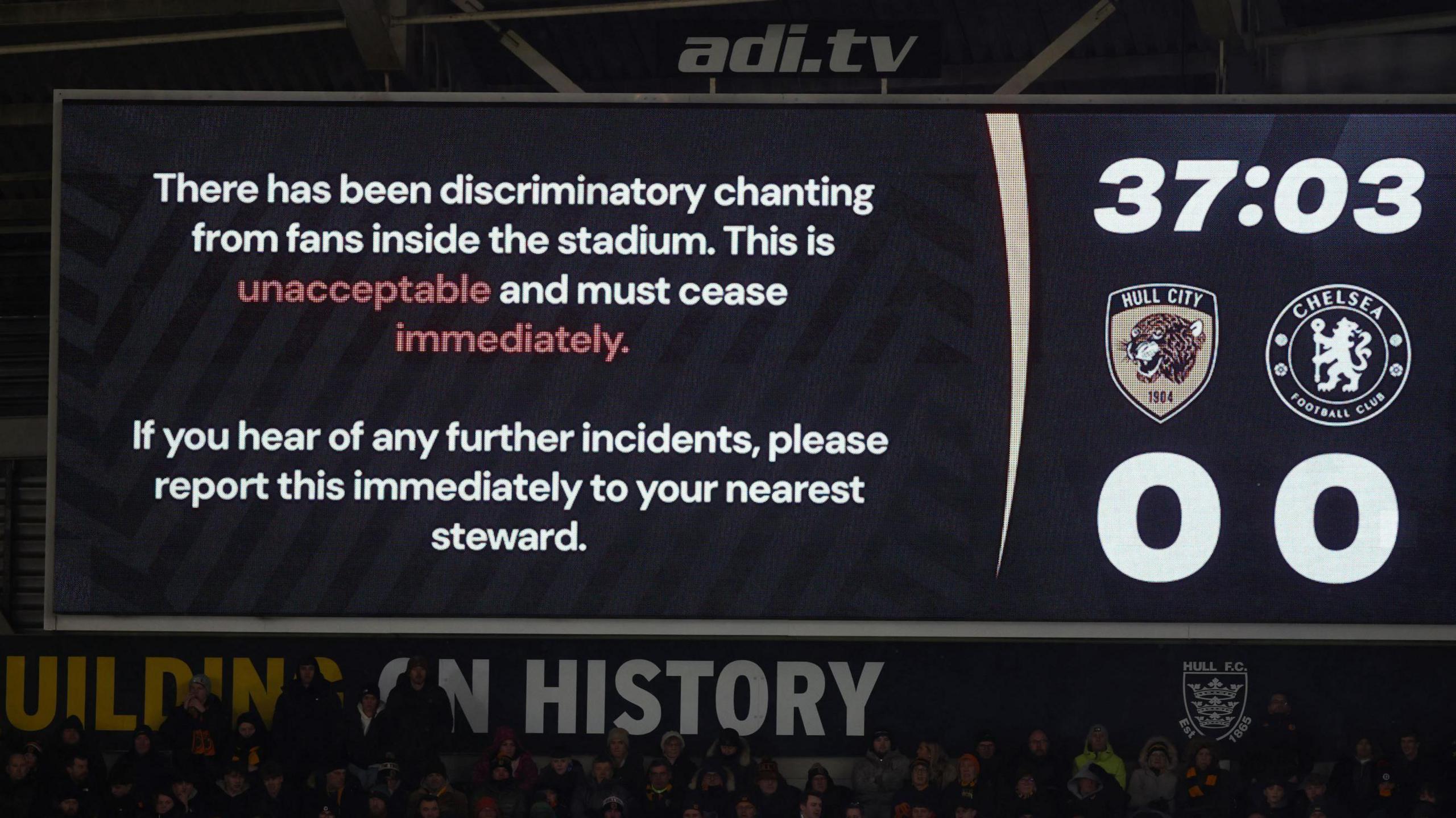
On a February afternoon at Hull's MKM Stadium, Chelsea's thrashing of Hull City—a 4-0 victory—became overshadowed by something far more serious: homophobic chanting from spectators that forced stadium officials to issue warnings over the public address system. Now the Football Association has charged Hull City over the incident, marking another moment when football's struggle with discriminatory conduct has demanded accountability at the institutional level.
This matters because sports carry enormous cultural weight. When homophobic slurs echo through stadiums, they send a clear message to LGBTQ+ fans about whether they truly belong in those spaces. The fact that such chanting still happens in 2026 reflects a persistent problem that clubs cannot ignore—and one that disciplinary action, while necessary, cannot alone solve.
Late in the first half of the FA Cup match, spectators directed discriminatory chanting at Chelsea Pride, the club's official LGBTQ+ supporter group. Hull City responded by warning crowds over the PA system that CCTV was being monitored and that discriminatory behavior would be recorded. Four men were subsequently arrested on suspicion of offensive chanting. Yet despite these immediate interventions, Chelsea Pride issued a statement making clear that the mere presence of such chanting remains unacceptable. "Tonight, homophobic chanting was once again directed at our supporters," they said. "This is utterly unacceptable."
The FA's charge alleges that Hull City "failed to ensure its spectators and/or supporters (and anyone purporting to be supporters) do not use words or behave in an improper, offensive, abusive, indecent or insulting way with a reference—whether express or implied—to sexual orientation." The club, which was promoted to the Premier League on Saturday, has until Tuesday, 2 June to respond. The timing is significant: Hull's promotion represents a moment of institutional pride and renewed focus, making the FA's action both timely and symbolically important.
Chelsea Pride's statement struck a careful balance, acknowledging Hull's stadium announcements and the arrests while insisting that acknowledgment alone is insufficient. "Action matters. Accountability matters. Consequences matter," they wrote. Their message underscores what many in the football community are learning: that stopping discriminatory conduct requires not just reactive measures—announcements, arrests, investigations—but a deeper cultural shift around what is tolerated and celebrated in football stadiums.
The FA charge signals that English football's governing body is willing to hold clubs accountable for the behavior of their supporters, at least when violations are clear. Whether Hull City's response will satisfy regulators, and more importantly whether it will deter future incidents, remains to be seen. But the very fact that such charges exist, and that LGBTQ+ supporter groups have the platform to hold clubs publicly accountable, represents progress in a sport that has long struggled with homophobia. The question now is whether the consequences will be weighty enough to create real change.