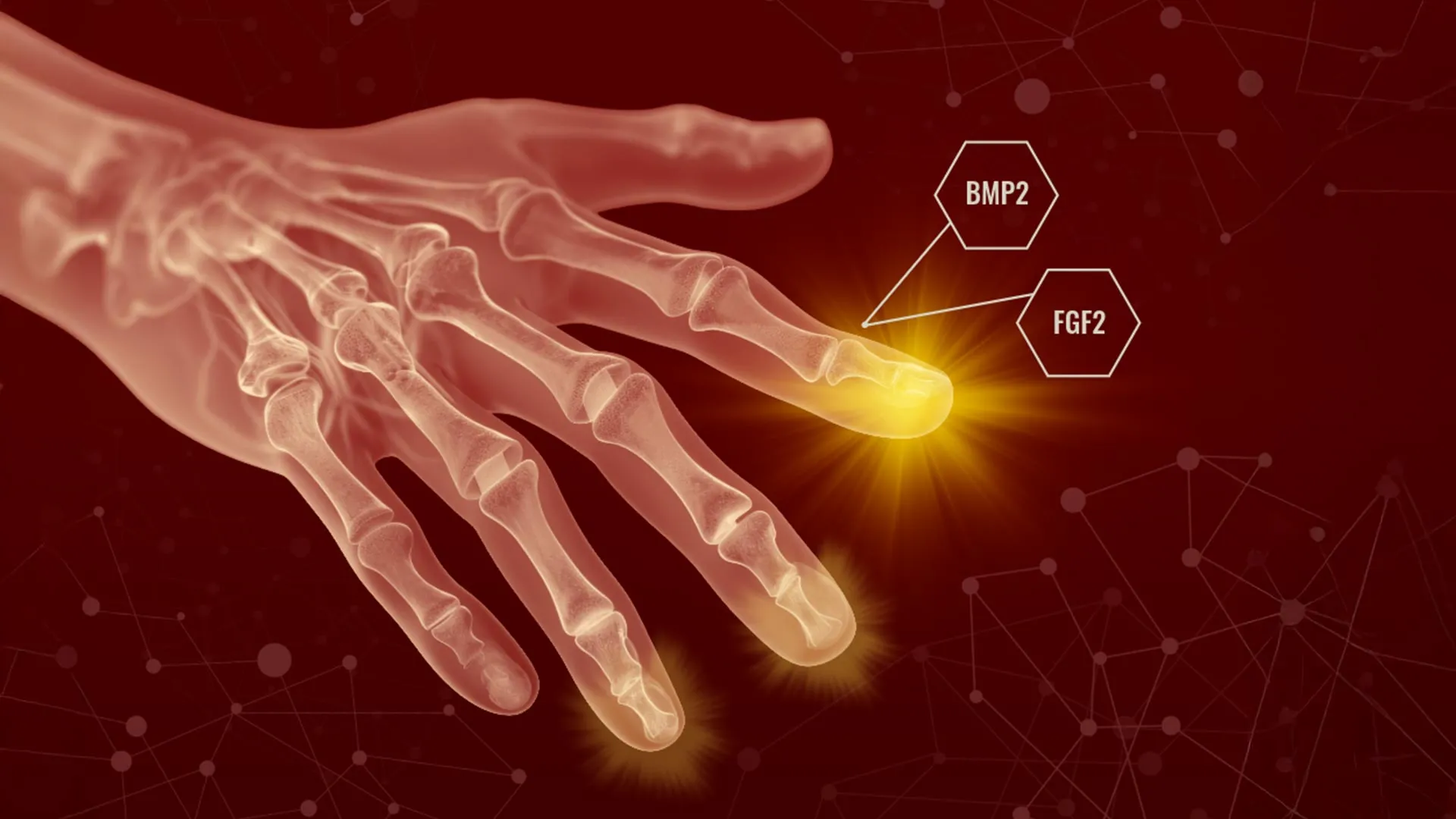
Dr. Ken Muneoka’s lab at Texas A&M once amputated a toe on a mouse, let it heal over, and then brought it back to life—biologically speaking. Not as a perfect replica, but as a functioning patchwork of bone, joint, ligament, and tendon, regrown where science long believed such recovery was impossible. For decades, the story of mammalian healing has been one of scarring, not renewal—humans close wounds with fibrous tissue, not new limbs. But Muneoka and his team at the Texas A&M College of Veterinary Medicine and Biomedical Sciences are rewriting that narrative, showing that the body may already carry the tools for regeneration, buried within its own repair systems. The implications stretch far beyond mice: this could reshape how we treat injuries, amputations, and chronic wounds in humans.
The breakthrough lies in a two-step treatment that redirects the body’s natural healing process. After allowing the wound to close normally, the researchers applied fibroblast growth factor 2 (FGF2), coaxing resident fibroblast cells to form a blastema-like structure—a biological foundation for regrowth, typically seen only in salamanders. Days later, they followed with bone morphogenetic protein 2 (BMP2), instructing those cells to build actual tissue. "You first shift the cells away from scarring, and then you provide the signals that tell them what to build," Muneoka explained. This sequence bypasses the need for external stem cell transplants, a major shift in regenerative medicine.
One of the most striking findings is that the cells capable of regeneration are already present. "You don’t have to actually get stem cells and put them back in," said Muneoka. "They’re already there—you just need to learn how to get them to behave the way you want." Dr. Larry Suva, also of the Department of Veterinary Physiology & Pharmacology, emphasized how this challenges old assumptions: the capacity for regeneration isn’t missing in mammals—it’s just hidden. The team even observed positional re-specification, where cells that would normally form one tissue type were redirected to rebuild another, a phenomenon critical in embryonic development.
Though the regenerated structures weren’t perfect anatomical matches, they restored all major tissues lost in the amputation—bone, tendon, ligament, and joint—in proper spatial arrangement. This suggests regeneration in mammals isn’t a single switch but a symphony of coordinated pathways. While full limb regrowth remains distant, the immediate promise lies in reducing scarring and improving functional recovery. For millions living with traumatic injuries or amputations, even partial regeneration could mean the difference between chronic disability and meaningful restoration. As research advances, the dream of regrowing human tissue may not require sci-fi solutions—just a better understanding of the healing already within us.