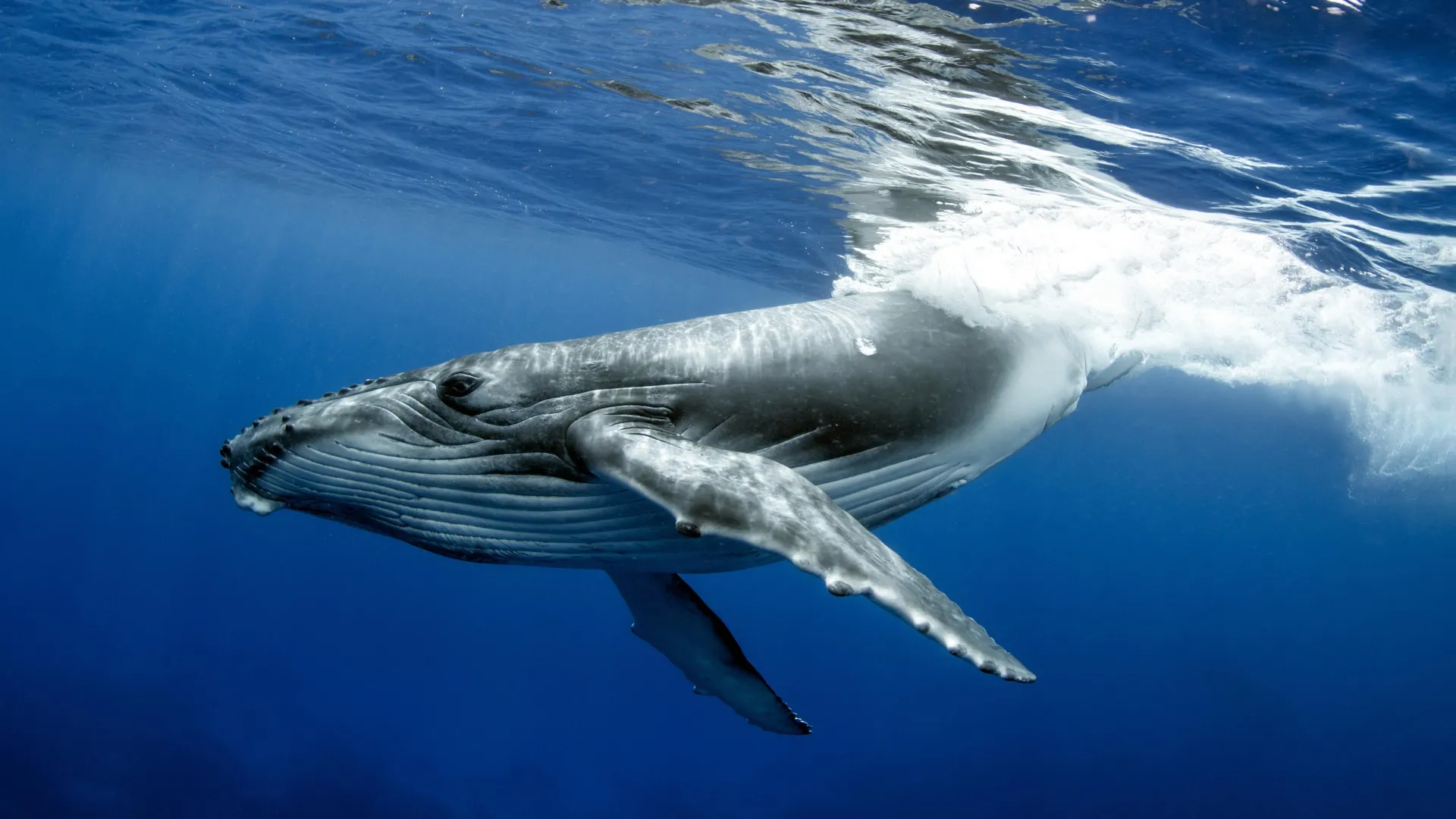
In September 2025, a solitary humpback whale glided into Hervey Bay, Queensland, its fluke rising like a weathered flag from the water — a familiar sight to researchers who had last seen it off the coast of Brazil 22 years earlier. This single whale, first photographed at Abrolhos Bank near Bahia in 2003, had traveled at least 15,100 kilometers across the Southern Ocean, setting a new record for the longest known migration of any humpback whale. The discovery, pieced together from decades of fluke photographs and global collaboration, reveals a rare but vital thread connecting two distant whale populations.
Until now, scientists believed humpback whales were largely faithful to their regional migration routes, traveling between tropical breeding grounds and Antarctic feeding zones along well-established paths. But this finding, based on 19,283 high-quality fluke images collected between 1984 and 2025, shows that a handful of individuals can cross entire ocean basins. The study, published in Royal Society Open Science, relied on both professional researchers and citizen scientists contributing to the platform Happywhale, where automated image recognition helped identify potential matches — later confirmed by human experts.
The 15,100-kilometer journey of the 2003–2025 whale surpasses all previous records, but it wasn’t alone in defying expectations. Another whale, first seen in Hervey Bay in 2007 and again in 2013, was photographed near São Paulo, Brazil, in 2019, covering a minimum distance of 14,200 kilometers. These two cases are the only confirmed instances of movement between eastern Australia and Brazil among nearly 20,000 identified whales — just 0.01 percent of the population. Yet their rarity doesn’t diminish their significance.
"Despite their rarity, these exchanges matter for the long-term health of whale populations," said Griffith University PhD candidate Stephanie Stack. Such long-distance travelers may carry genetic diversity between isolated groups or even spread humpback whale songs — complex, culturally transmitted vocalizations that ripple across oceans like musical memes. The findings also support the "Southern Ocean Exchange" hypothesis, suggesting whales from different breeding populations occasionally mingle in Antarctic waters, then return to new breeding grounds.
As climate change alters sea ice patterns and shifts krill distribution, researchers believe these epic crossings could become more frequent. For now, they remain extraordinary — quiet, solitary voyages that rewrite our understanding of whale behavior. And they remind us that even in a well-studied species, the ocean still holds profound mysteries, revealed only through patience, persistence, and the click of a camera shutter from a citizen scientist halfway around the world.