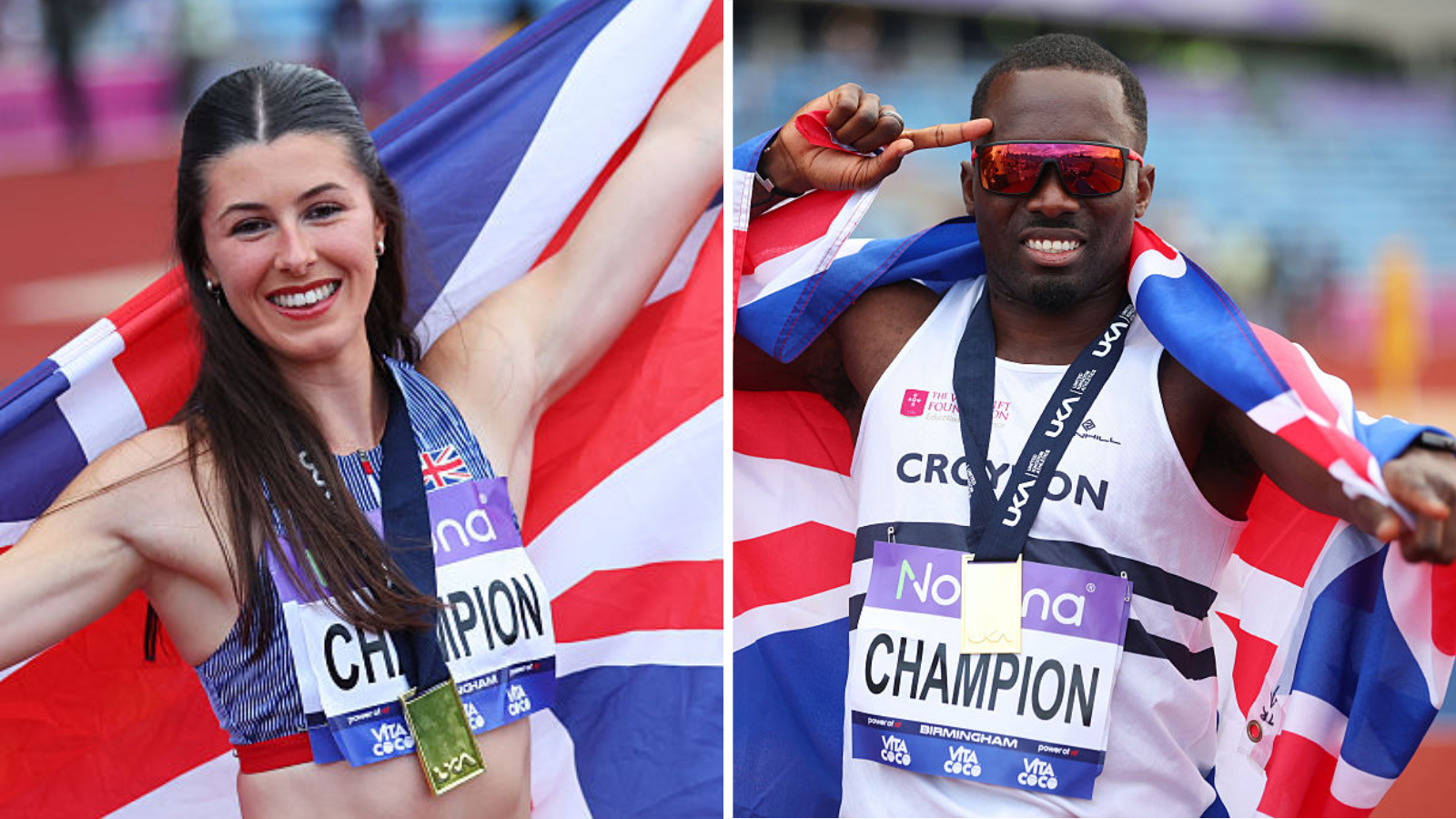
Amy Hunt crossed the line in 11.01 seconds, arms raised and breath visible in the Birmingham evening air, the roar of the Alexander Stadium crowd echoing off the stands named for hometown hero Matthew Hudson-Smith. It was the second-fastest time of her career, and it secured her the British 100m crown once more, fending off reigning European champion Dina Asher-Smith, who clocked a season’s best 11.13. At just 24, Hunt is hitting her stride at the perfect moment—this meet doubles as a final tune-up for the European Championships, set to unfold on the same track in August. “This was a nice dry run for the Europeans,” Hunt told the crowd, smiling. “If you can come out and be my lucky charm again, we can get another gold.”
On the men’s side, Romell Glave made history of his own, breaking the 10-second barrier legally for the first time with a 9.98-second victory—enough to hold off Zharnel Hughes, who finished second in 10.01. The 26-year-old, who once ran a wind-assisted 9.88 in Italy, described his performance as one of “freedom.” “A person that's running with freedom is dangerous,” Glave said. “I executed my best race.” His win marks a new chapter in British sprinting, where speed is no longer borrowed from abroad but forged at home.
The championships revealed depth across disciplines. Joel Clarke-Khan, overcoming 18 months of injury struggles, soared 2.27 metres to claim the men’s high jump title—equaling his personal best and reigniting belief in his comeback. “The 2.27 really makes me believe that I'm back to where I've been before,” he said, tears in his eyes. “I'm really excited for the future.”
Records tumbled elsewhere: Marcia Sey blazed to 100m hurdles gold in 12.65 seconds, a championship record, while Elise Thorner slashed her own mark in the 3000m steeplechase to 9:16.95. Lawrence Okoye dominated the discus with a 68.81m throw, and Scotland’s Stephen Mackenzie leapt 8.15m, setting a new national long jump record. Even Keely Hodgkinson, Olympic 800m champion, dipped into the 400m, qualifying for the final with a 51.62-second run—a sign of her relentless pursuit of edge.
These moments aren’t just personal triumphs—they’re threads in a larger story of resilience, preparation, and homegrown excellence. As Birmingham readies itself for the European Championships, the message from the UK Athletics Championships is clear: British track and field isn’t just competitive. It’s rising.