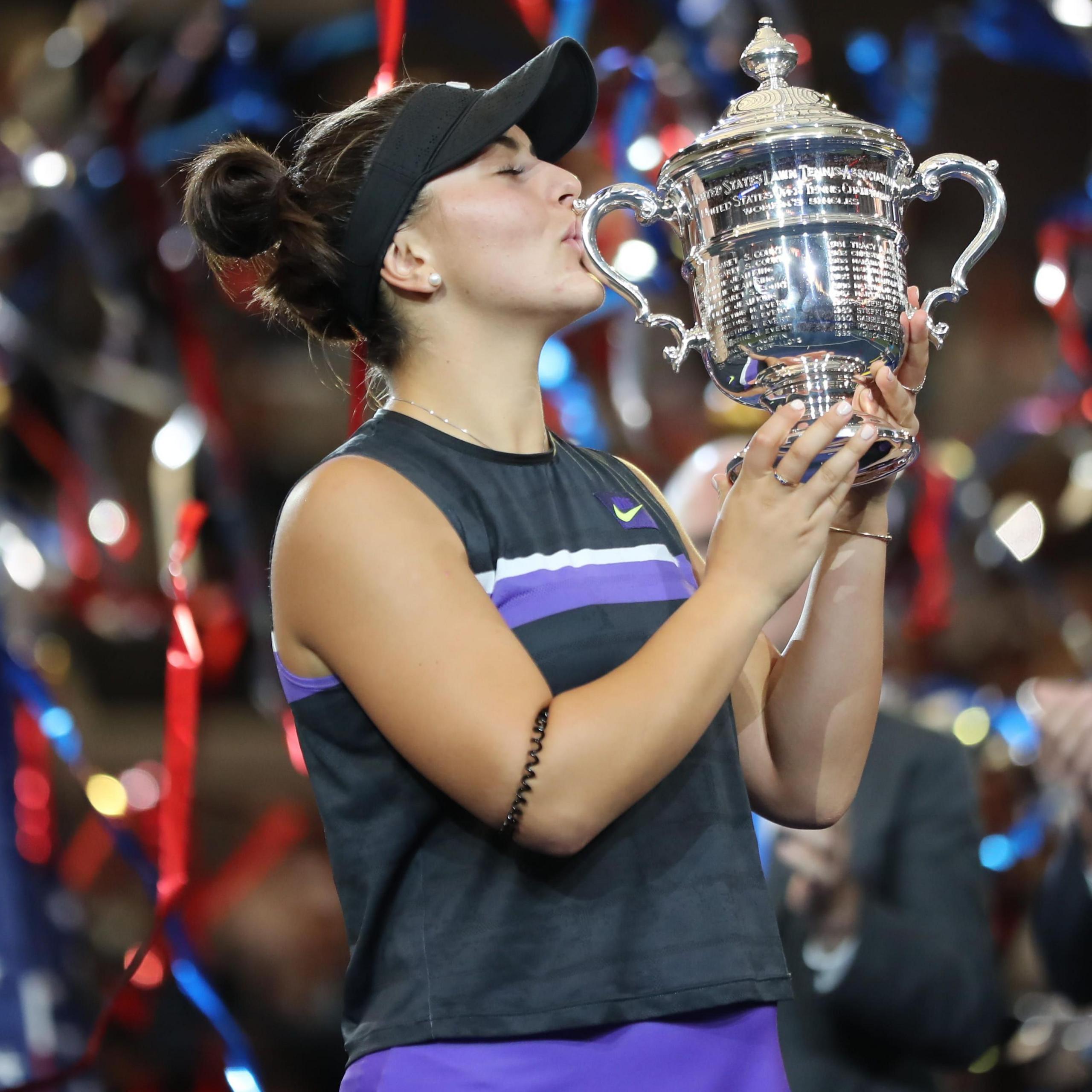
Bianca Andreescu stood on a windswept outdoor court in Bradenton, Florida, her hair clinging to her face in the humid air, as she clinched a $3,000 title — her first trophy in over 2,300 days. It was a far cry from the glittering confetti and roaring crowds of Arthur Ashe Stadium, where, at 19, she had stunned Serena Williams to win the 2019 US Open. Back then, she earned $3.9 million and ascended to tennis stardom; now, she was grinding on the ITF circuit, competing for a fraction of that sum, retrieving her own balls, and adjusting to life without the comforts of the WTA Tour. But this quiet victory in January 2026 was no small thing — it was the hard-won return of a champion who had fought her way back from injury, self-doubt, and the steep cost of sudden fame.
Andreescu’s meteoric rise — highlighted by titles in Indian Wells and Toronto, and a climb to world number four — was derailed by a cascade of setbacks. A knee injury in 2020, followed by abdominal and ankle issues, kept her off the court for months at a time. An appendectomy delayed her 2025 season, and her ranking plummeted to 228. The weight of being a Grand Slam champion, something she says no one prepared her for, only deepened the struggle. "I don’t think it’s possible to really prepare yourself [for a Grand Slam victory], especially if you haven’t gone through that before," she reflects now. "I wish I had a little bit more guidance after the US Open."
In 2026, she made the bold choice to drop down to the ITF circuit, playing in W35 and W75 tournaments — events where prize money barely covers expenses and players often fund their own travel. There, she faced a new kind of competition: young hopefuls, overlooked talents, and fighters clawing for a second chance. "Every match was so difficult," Andreescu says. "I don’t want people to get the idea that the ITF tour is Mickey Mouse compared to the WTA Tour, because that’s not the case."
Her perseverance paid off in Bradenton, where she defeated 325th-ranked Vivian Wolff 6-2, 7-5, overcoming multiple delays from violent coastal storms and a last-minute move to an indoor court. The win wasn’t just symbolic — it was a signal that resilience, not just talent, defines a champion. With her coach Dusan Vemic by her side, Andreescu is rebuilding not just her game, but her perspective. "You become a role model for many youngsters," he says. And now, her comeback story may inspire more than any trophy ever could.