Bianca Andreescu crouched low on a hard court in Bradenton, Florida, the coastal wind howling around her as lightning flickered beyond the fence. It was February 2026, and the Canadian tennis player was competing in a W35 tournament—the kind of modest ITF event where line judges are rare and prize money barely covers expenses. Six and a half years had passed since her last professional singles victory. She was about to end that drought.
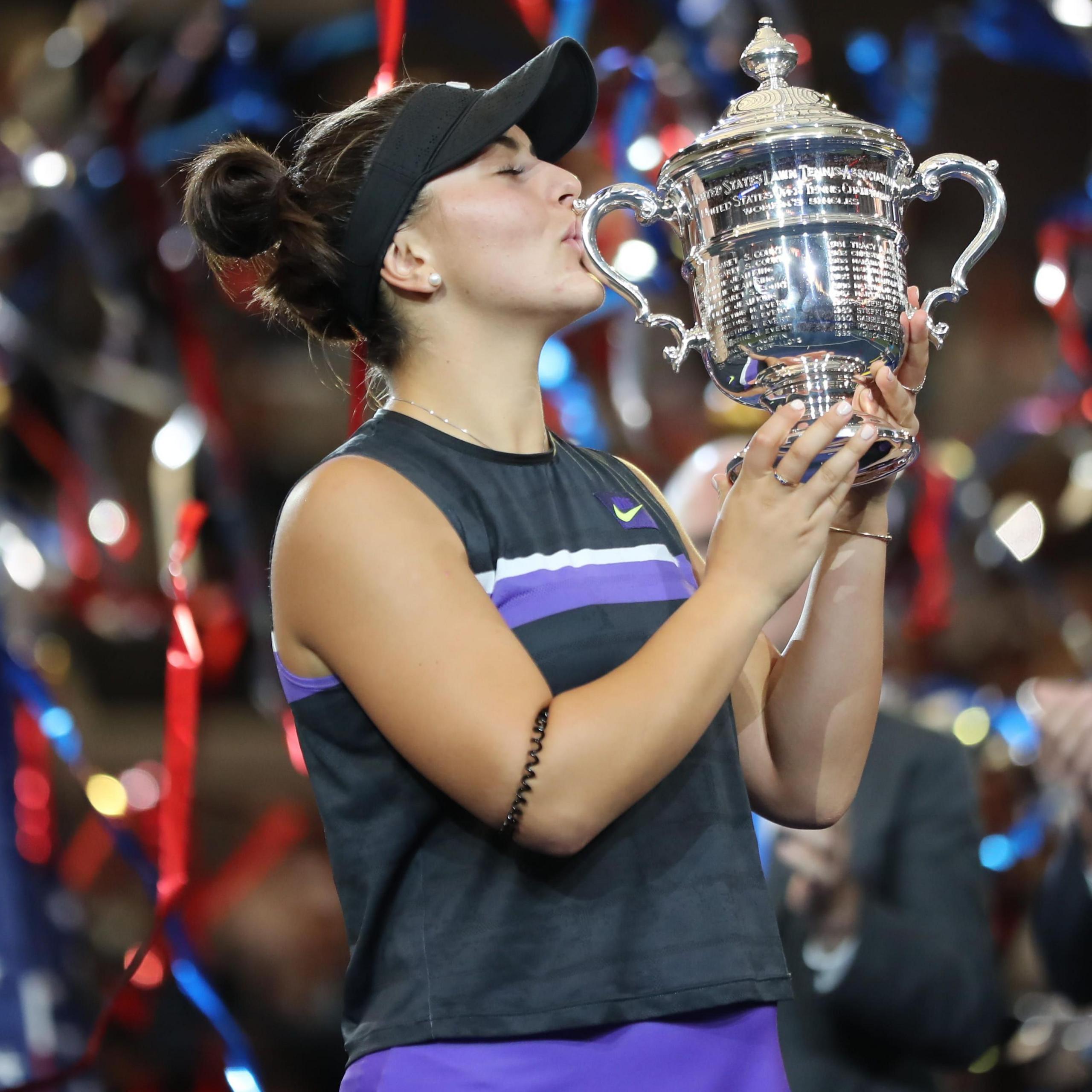
Andreescu's arc from teenage sensation to struggle to comeback feels almost mythical in modern sports. At 19, she won the 2019 US Open, claiming the title in a thrilling final against Serena Williams to become Canada's first Grand Slam singles champion. That same year, she also won Indian Wells and the Canadian Open in her hometown of Toronto, rising to world number four. But success came before she was ready for it. "You think you know everything at 19," the now-25-year-old reflects, "and I just remember I'm not one to ever ask for help."
What followed was relentless injury. A knee problem sidelined her in early 2020, then the Covid pandemic halted the tennis calendar altogether. When she returned in February 2021, it had been 16 months since she last played. Abdominal issues, ankle problems, and appendectomy surgery in 2025 kept pulling her away from competition. Her ranking collapsed from fourth in the world to 228 by early 2026. She hadn't won a Grand Slam match in six and a half years.
Rather than cling to prestige, Andreescu made an unconventional choice. She stepped down from the WTA Tour—where she hadn't competed at the lowest levels since 2018—and returned to ITF tournaments where the total prize purse might be only £26,000. These tournaments are populated by hungry youngsters trying to break through and veterans clawing their way back. The difference in atmosphere, she discovered, was profound. "The hunger the women had that I was playing against, every match was so difficult," she says. "On the WTA Tour, the athletes are maybe a bit more comfortable with certain things. But on that level, nothing's getting paid for, and you're barely breaking even."
In Bradenton, with her new coach Dusan Vemic beside her, Andreescu played match after match in compressed tournaments. She managed 14 matches in 16 days—more consecutive competition than she'd played in years. Her body, miraculously, held up. It was in this unglamorous setting, where violent winds eventually forced her final indoors, that she defeated 325th-ranked Vivian Wolff 6-2, 7-5. That victory marked a turning point not just in wins and losses, but in her relationship with her own body and the sport itself.
"I got my first singles win in six and a half years," Andreescu says with quiet relief. "I like to say 'hopefully, I broke the curse.'" She followed that breakthrough with a semi-final run at another W35 event and then a title at a W75 tournament. Vemic notes she's been playing "even more aggressive than before," channeling the hunger she observed in her younger opponents.
For Andreescu, the path back hasn't been a march toward recovering past glory. It's been a humbler, more deliberate return—one built on playing 14 matches in 16 days, on respecting the grind of lower-level tours, and on finally accepting that champions sometimes need help.