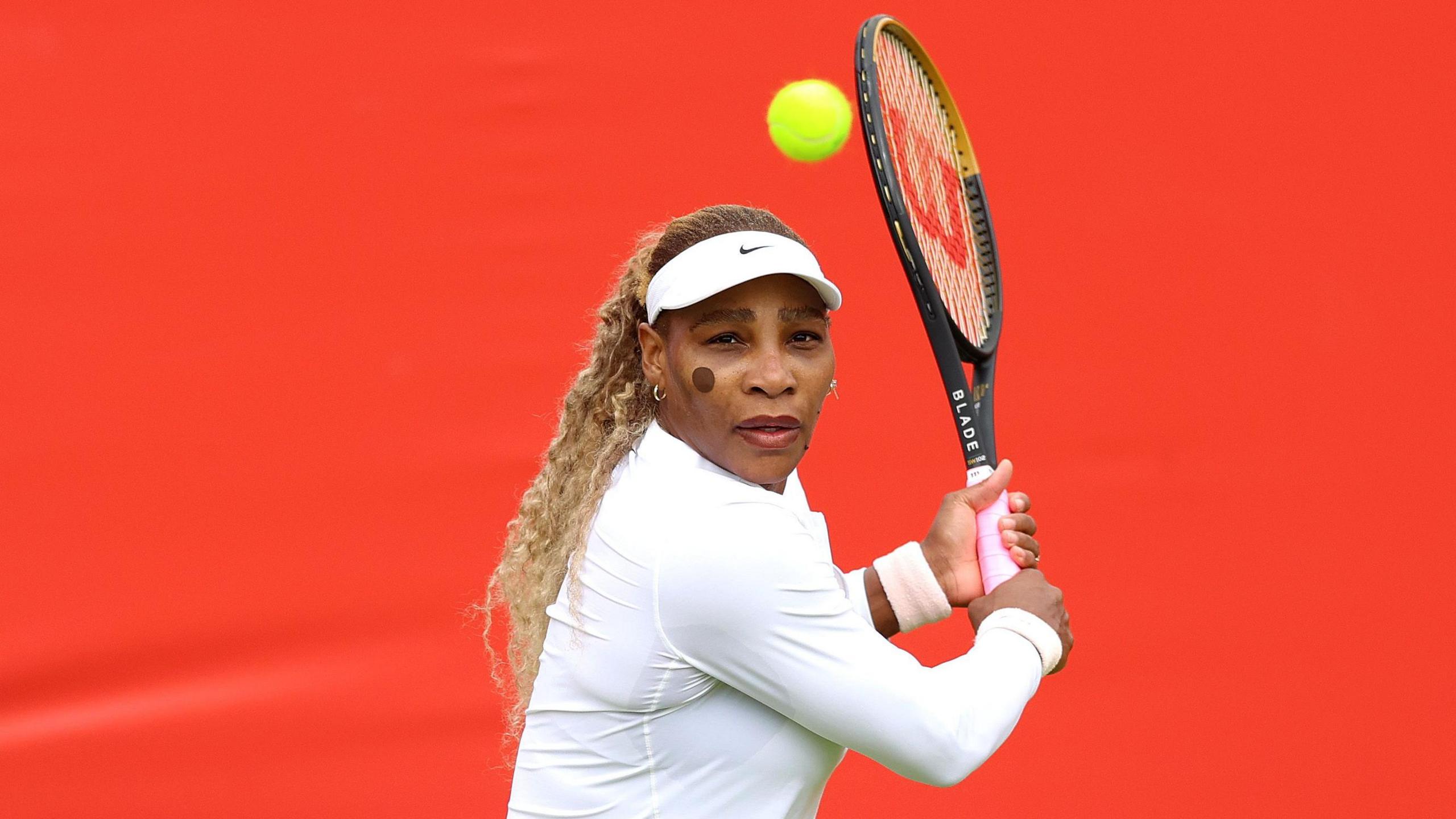
At 44 years old, Serena Williams is stepping back onto a tennis court for competitive play—and she couldn't care less about winning. The 23-time Grand Slam champion will partner with Canadian teenager Victoria Mboko in the doubles event at Queen's Club in London, marking her return to professional tennis after nearly four years away. But don't mistake this comeback for a hunger to prove something to the world. Williams has already proven everything she could possibly prove.
This return is deeply personal. Adira, Williams's second daughter born in 2023, has never seen her mother play on the professional tour. Her older daughter Olympia, now eight, was born in 2017 and did witness her mother's earlier comeback—one that led to four major singles finals despite having a child. For Williams, allowing her daughters to experience her as an athlete, in the moment, matters far more than any title. "It's really about my kids getting to see me play," she said simply. "I've had enough pressure."
Williams has never been someone who settles into definitions. When she walked away from competitive tennis after losing in the third round of the 2022 US Open, she rejected the word "retirement" altogether, preferring instead to say she was "evolving away" from the sport. But evolution, it seems, has a way of looping back. Over recent months, she began training more seriously at home in Florida, and in December came a telling sign: she re-registered for the tennis anti-doping pool. By January, during a television interview, she stopped ruling out a return entirely. Last week, the speculation ended. She was coming back.
The path ahead is uncertain, even for someone who dominated the sport for two decades. Williams has not won a major championship since the 2017 Australian Open, when she was 35 and before she had two children. The professional game has moved on. The world number one, Aryna Sabalenka, is 28. Wimbledon champion Iga Swiatek is 25. The average top player is roughly two decades younger than Williams, with reflexes, recovery times, and modern training methods that represent a different era of tennis entirely.
Yet those who know her best see something formidable still there. Victoria Mboko, 19, has been practicing with Williams at Queen's and observed that her veteran partner possesses an almost preternatural ability to find her rhythm again. "She has such clean ball striking. She could take years off and once she steps on the court she could probably find her rhythm and timing again," Mboko said. Former world number one Lindsay Davenport noted that Williams "looks in incredible shape and better shape than arguably when she left the sport."
Williams herself is pragmatic about the journey ahead. She's leaving the door open to singles play but isn't committing to it yet. "I feel like I probably need to train a little bit more if I want to play singles and we'll see if I get there," she said. "If not, that's not my journey right now." There's a lightness to her approach that suggests someone who has genuinely shed the weight of needing to win. "I don't have anything to prove, I don't have anything to lose and everything here is just to gain," she said. At Queen's, that's enough.