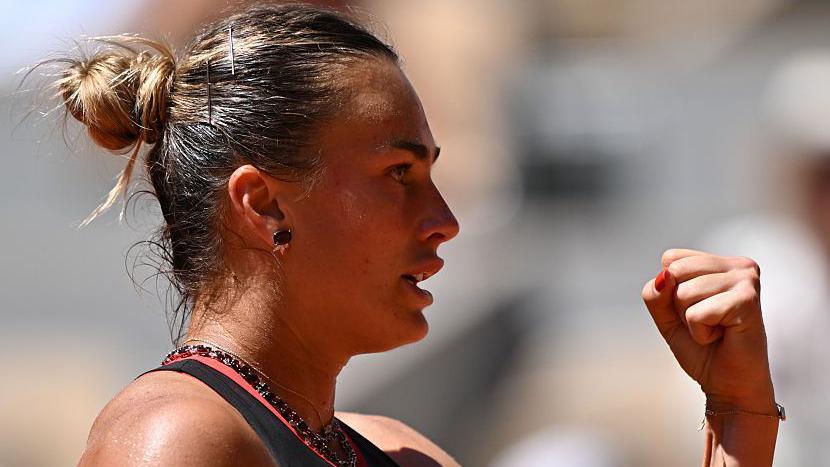
Aryna Sabalenka stepped onto Court Philippe Chatrier with the weight of 84 weeks of dominance behind her—and chose not to feel it. The 28-year-old Belarusian, who has held the world number one ranking since replacing Iga Swiatek last October, cruised past Spain's Jessica Bouzas Maneiro 6-4, 6-2 in her opening match at the French Open, keeping her undefeated streak intact while her title hopes and top ranking remain firmly in view.
For Sabalenka, the pressure is real. She arrives in Paris as a four-time Grand Slam singles champion with her position genuinely at stake—something that doesn't happen to many players at the sport's highest level. Elena Rybakina, who beat Sabalenka in January's Australian Open final, sits just 1,255 ranking points behind in second place. The mathematics are clear: if Rybakina reaches the semi-finals in Paris, she would become the 30th woman in WTA history to claim the number one ranking. The spotlight is intense, the narrative compelling, the stakes measurable in points and rankings and historical significance.
But Sabalenka's response to the situation reveals something about how elite athletes manage the mental architecture of professional sport. Rather than deny the pressure or downplay it, she acknowledged it openly, then moved past it. "I think we all feel pressure—that is just part of our lives, so I have learned to ignore it," she told the crowd after her first-round victory, a statement that carries more wisdom than it might initially seem. She is not pretending pressure doesn't exist; she is simply choosing not to let it direct her attention or her racket.
The performance itself was clinical. Against Bouzas Maneiro, Sabalenka gave little away, converting her opportunities with the aggressive baseline play that has defined her rise to the top of the rankings. The scoreline—a double bagel second set—suggests dominance, not merely victory. Yet in a tournament where the stakes are personal as well as professional, where the defending champion she failed to beat last year (Coco Gauff) and her closest rival remain in the draw, the real test lies ahead.
Roland Garros carries particular weight in Sabalenka's narrative. Last year, she reached the final only to lose to Gauff in straight sets, a result that seemed to deflate her chances of claiming the French title that has eluded her. This year, she begins as the favorite, the world number one, the player with the most to lose and perhaps the clearest path to reclaim momentum. Whether Rybakina's challenge materializes or fades, Sabalenka's approach suggests she has already decided how she will meet it: with focus, with acknowledgment of pressure, and with the deliberate choice to move through it rather than around it.
The first round is always a formality for top seeds, a warm-up rather than a test. But for Sabalenka, it was a statement—that the world number one ranking is not a burden to be managed but a position to be claimed, defended, and held with clear eyes and unbent will.